

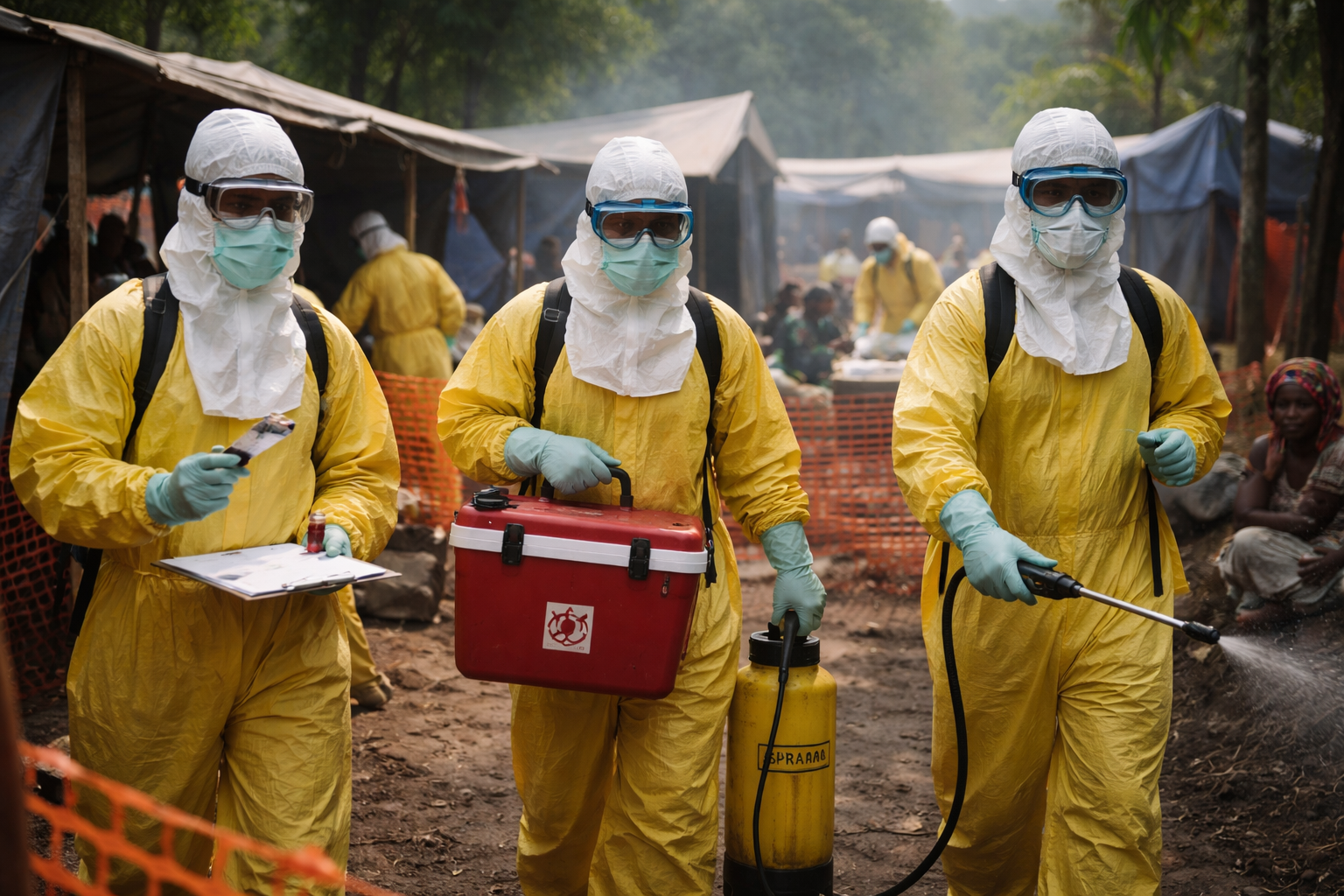
The Democratic Republic of Congo continues to grapple with one of the deadliest Ebola outbreaks in history, centered in the insecure eastern regions. Since the World Health Organization (WHO) officially declared the Bundibugyo strain outbreak on May 15, more than 1,900 deaths have been reported among over 4,200 confirmed cases, making this the second-worst Ebola crisis on record.
According to the WHO, the virus began spreading around February but was initially mistaken for diseases like malaria or typhoid, delaying an effective response. The ongoing insecurity in the region has further hindered efforts, with healthcare workers managing to reach only about 30% of cases, while many others die at home.
Despite these obstacles, dedicated treatment centers have been established in the outbreak’s epicenter near Bunia, improving diagnosis speeds and patient care. Still, the absence of an approved vaccine or recognized treatments for the Bundibugyo strain, combined with local burial customs that involve touching the deceased and suspicions toward health authorities, complicate control efforts.
Challenges in Reaching Patients and Communities
The eastern DR Congo faces significant security issues that limit the reach of healthcare workers. The WHO’s Africa director, Dr. Mohamed Janabi, highlighted that “we are chasing the virus, the virus is ahead of us,” emphasizing how the outbreak’s early undetected spread has allowed Ebola to gain a foothold before full response measures could be implemented.
Traditional burial rites and mistrust toward medical teams have also slowed containment strategies. These factors contribute to the virus transmitting within communities and complicate contact tracing and patient isolation.
Healthcare Efforts and Safety Measures
Health workers operating in treatment centers are adopting protective protocols to minimize their risk of infection while providing care. While no specific vaccine or approved antiviral drugs for the Bundibugyo species exist, the teams focus on supportive care and rapid testing to identify cases early.
The establishment of multiple treatment centers and quicker diagnosis represent important progress. These centers facilitate isolation of infected individuals to reduce transmission and improve survival odds through monitoring and symptom management.
Context and Comparisons to Past Outbreaks
This outbreak is the deadliest since the 2014-2016 West Africa Ebola epidemic, which resulted in over 11,300 deaths. The WHO warns that the current situation remains volatile due to ongoing transmission, demanding sustained international and local effort to control.
The ongoing crisis underscores the difficulty of dealing with Ebola in conflict-affected areas, especially with limited therapeutic options and complex cultural factors influencing community response.