
Brussels’ ambitious Schuman Square redevelopment turns into a sprawling concrete space lacking greenery and iconic shade, amid political turmoil and budget crises
The heart of the European Union quarter in Brussels was meant to be transformed into a vibrant, green urban space named Schuman Square, envisioned as an “urban agora” symbolizing European unity and offering shade, calm, and social connection amid hectic city life.
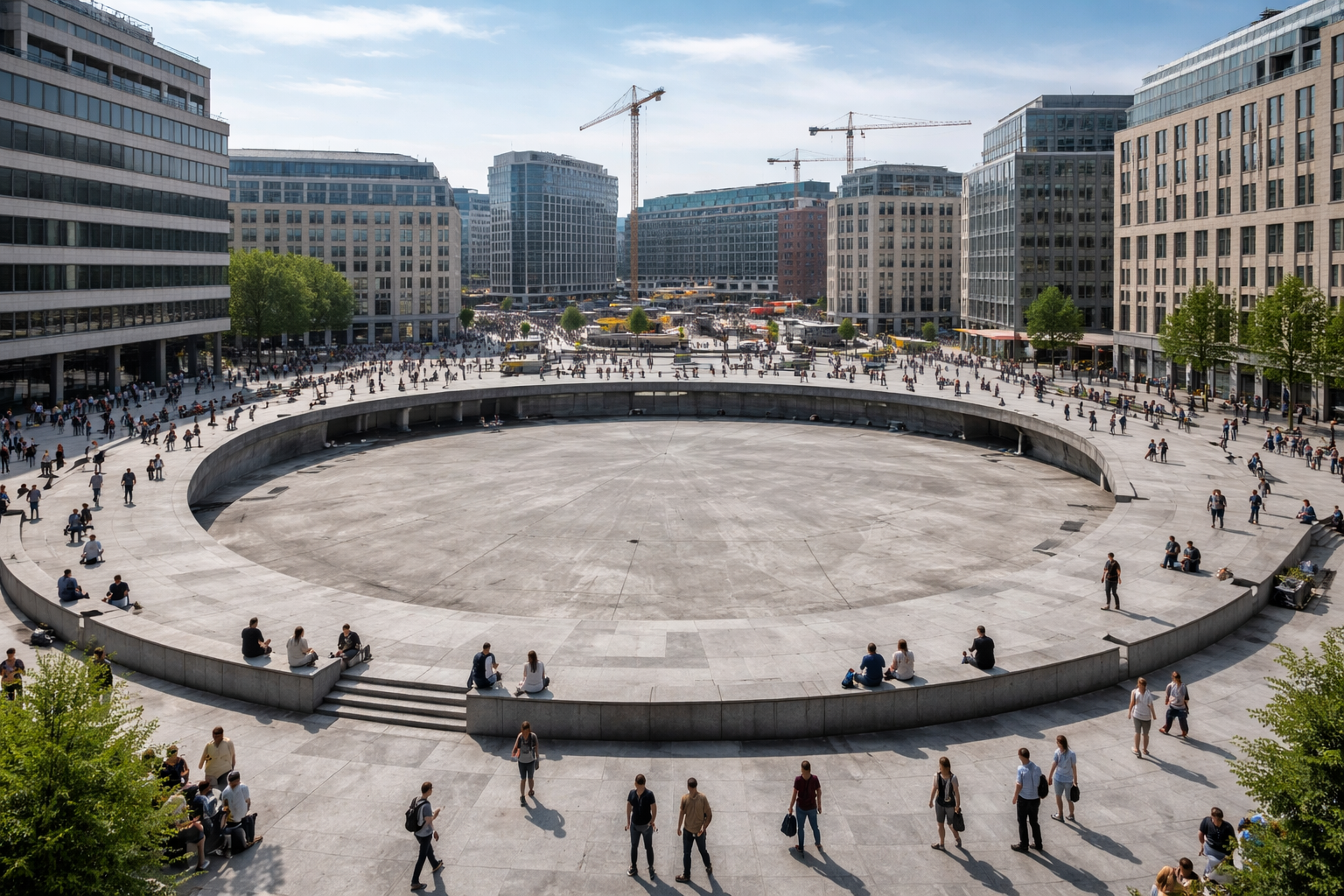
However, the final result has been widely criticized as a vast, sun-soaked expanse of grey concrete, dubbed Europe’s largest frying pan for its lack of greenery and the absence of the planned steel canopy with a green roof. The canopy, designed to reflect the European Parliament’s hemicycle chamber and provide shade and respite from weather, was cancelled after soaring costs and political deadlock halted its construction.
This story reveals how Brussels’ complex governance, inflation, and budgetary challenges have reshaped the vision for Schuman Square, leaving citizens and officials divided and the project unfinished, despite its significance for the EU community. These details come from reports by Le Soir and statements by involved officials, highlighting a missed opportunity at the symbolic EU hub.
An Ambitious Plan for a European Symbol
Named after Robert Schuman, a founding father of the European Union, Schuman Square was redesignated to become “an urban agora,” a greener and calmer space replacing a traffic-clogged roundabout. The aim, according to Pascal Smet, the former Brussels mobility minister who launched the project in 2015, was for the square to be “the calling card of Brussels” and a meeting place for people reflecting European values.
The design competition picked a Belgian-Danish architects consortium promising a transformation crowned by a striking steel canopy with a green roof. This canopy was envisioned as a social space where EU officials, locals, and tourists would gather, enjoy shade, and connect. Its green roof was intended to counterbalance the surrounding glass-and-steel EU buildings and provide shelter from both scorching heatwaves and frequent rain typical of Brussels’ climate.
Challenges and Political Turmoil Disrupt the Vision
The project’s complexity was heightened by underlying infrastructure, including underground tunnels, metro stations, and utility lines limiting tree planting. Security considerations due to proximity to EU institutions and frequent demonstrations further complicated design choices.
By the time construction started in 2023, six years after the design selection, inflation fueled by the Covid pandemic and the Ukraine war had surged project costs dramatically. The budget stood at €25 million, with a large share funded by EU Covid recovery money. Soon after, a protracted political crisis in Brussels froze significant public works and investments, as a fragmented parliament delayed forming a government for over 600 days.
During this caretaker period, officials could not allocate additional funds to cover the canopy’s rising cost, which escalated from €5 million to €13 million. The government faced a tough deadline to complete works or risk losing EU funds, but funding restrictions and political stalemate created an impasse. Brussels’ Prime Minister Bart De Wever publicly called Brussels a “failed state” for political dysfunction and refused extra EU financial aid requests.
Canopy Cancelled, Future Plans Focus on Greener Alternatives
Upon taking office in early 2026, the new Brussels government opted to cancel the canopy, citing cost overruns and governance difficulties. Officials announced plans to pursue “something greener, something cheaper” that would still provide shade and cooling, respecting the square’s architectural and security constraints.
Brussels is currently negotiating with architects to develop alternative solutions featuring greenery and possibly water features, aiming for completion by summer 2028. Details are expected by the end of the year. Meanwhile, public opposition remains strong, with over 2,100 citizens signing a petition supporting the original canopy initiative led by the Flemish Socialist Party branch.
Pascal Smet remains hopeful but pragmatic, stating, “If the alternative is better, that allows demonstrations, addresses security issues, is green, iconic, and symbolic of European unity, I will not say no.” As Brussels seeks new ways to balance symbolism, practicality, and budget, the debate over Schuman Square’s future continues amid broader challenges of urban planning in a politically complex environment.