
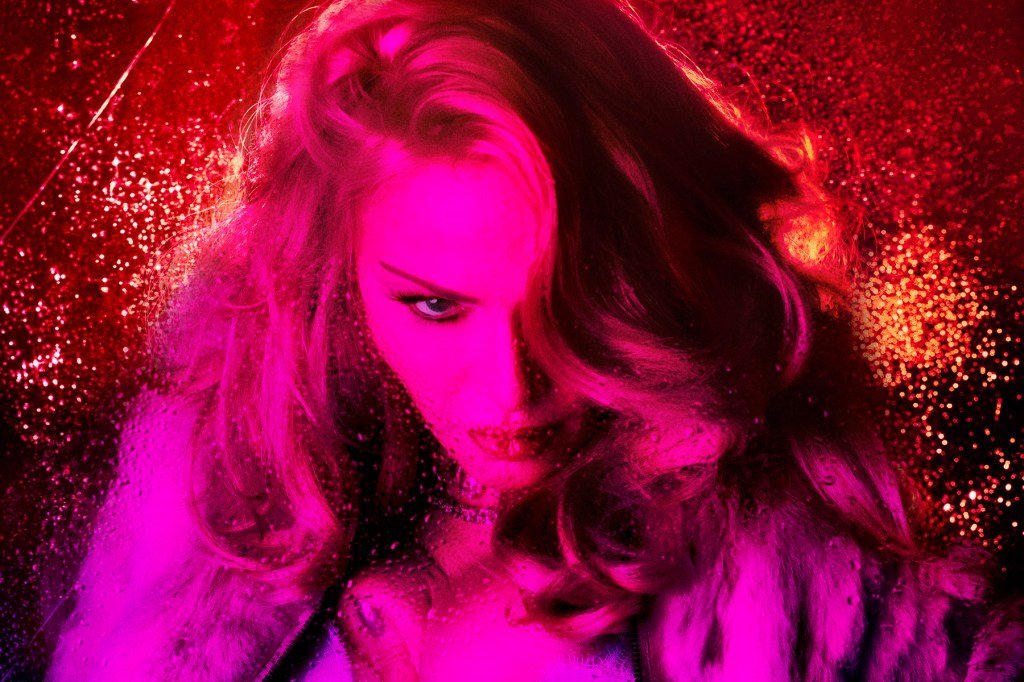
21 years after Confessions on a Dance Floor, Madonna returns to the club.

Madonna
Rafael Pavarotti
From murmurs to reality, Confessions II is upon us. Years of online whispers – which typically mean nothing – have somehow inadvertently culminated in the creation of the sequel to Madonna’s 2005 classic Confessions on a Dance Floor. It’s the first sequel album she’s ever made – though in truth, Confessions II has, at points, nearly as much in common with albums like Ray of Light and Bedtime Stories as it does that 21-year-old disco classic.
What it does have in common, however, is Stuart Price. The man behind the boards of Confessions on a Dance Floor – which topped the Billboard 200 and produced the Billboard Hot 100 top 10 hit “Hung Up,” among other enduring dance classics – is back with Madonna after serving as the musical director on her career-retrospective Celebration Tour. (As he cagily explained to Billboard in 2023 of the renewed connection, “You measure a working relationship not by the gaps between but by how easily you pick up again from when you left off. As soon as we started to work together on this tour, the shorthand was there. We were able to create productively.”)
With a trusted collaborator at her side (among other producers), Madonna comfortably veers between insecurity and omnipotence, candor and camp, spiritual fortification and libidinous release on her most compelling release since, well, Confessions on a Dance Floor. (Madame X was fantastic, but c’mon, there’s no beating Madonna when she’s in the club.)
From two lifelong Queen of Pop acolytes, here’s our ranking of every song on Madonna’s Confessions II, from least to best.
“Bizarre” ft. Martin Garrix
The album makes its hardest turn into modern commercial dance music via this collaboration with Dutch mainstage mainstay Martin Garrix, who teams up with Madonna for a thumping track that seems to be about her ex-husband Sean Penn, the song’s lyrical “movie star with deep blue eyes.” “He drove way too fast/Shelby Cobra wasn’t built to last,” Madonna sings on the track in an apparent reference to the Shelby GT500 she bought for Penn when they were together from 1985 to 1989, “Only love can be so bizarre.” While the song is well produced and certainly enticing in terms of subject matter, it’s cluttered with sonic ideas that almost get there but never fully gel. — KATIE BAIN
“Fragile”
“People really think that there’s a beginning and an ending to this thing called life / Energy never dies, this is just a portal we’re going through / Still it’s hard to let go.” On one hand, that introduction hits hard, especially in light of her near-death experience in 2023. Sadly, that other hand doesn’t toss back the ball with the same dexterity. The vocal melody doesn’t quite get there, and the production feels meaningful but not entirely memorable. In truth, it’s not a flop – this is a strong album – but it’s correctly relegated to the second half. — JOE LYNCH
“My Sins Are My Savior” ft. Stromae
Parts of this album will undoubtedly disappoint those hoping for Confessions on a Dance Floor redux – fair enough. But also, deal with it. “My Sins Are My Savior” is a worthwhile journey that goes from Belgian rapper Stromae’s legato verses to percolating rhythms that evoke Brian Eno/David Byrne soundscapes to whispered R&B circa Madonna in the ‘90s to random piano meandering. A true album track, this one enriches the experience without standing on its own. — J.L.
“Read My Lips” ft. Feid
Colombian reggaeton star Feid has had a busy year in dance music, appearing on recent albums by John Summit and Skrillex and now, Madonna. A song to dance to if not necessarily a straight-up dance song, “Read My Lips” is centered on pretty, urgent acoustic guitar that adds to the Latin mood fostered by Feid’s presence on the second half of the song, when it becomes an impassioned bilingual duet about lies and love gone wrong. “Shut your mouth,” Madonna eventually commands as she naturally gets the last word. This one doesn’t seem likely to be an eventual fan favorite, but does its job in terms of the album’s overall tone-setting, and on a strong project, that’s enough. — K.B.
“Betrayal”
Musically, “Betrayal” is quite interesting – shades of Carl Craig, Miles Davis and Massive Attack. An amalgamation of stop-start minimalism, lonely trumpet playing and trip-hop. Lyrically, it’s also interesting: “Take the hammer hit the nail / You’ll never take my mother’s place” (plenty to unpack there). On a weaker album, this might be in the top half – here, it’s a credit to Confessions II’s strength that “Betrayal” fades into the background but also stands as one of the LP’s most arresting, lonely moments. — J.L.
“Love Without Words”
“Call it trance / call it house / call it love without words,” Madonna declares at the opening of the album’s ninth song, evoking the same reverence for clubland and its possibilities of transcendence as she did on “Future Lovers” from Confessions on a Dance Floor. Here she and Price, with additional production help from Italian dance duo Parisi, create a track that grows layer by layer, taking a turn from punchy house to digital noise at its middle point and then building into an Italo-disco drop in which Madonna beckons to “come into the club, come into the club” with the conviction of someone who knows what’s available within its walls. This message is all over the album, but which we don’t mind hearing again here. — K.B.
“L.E.S. Girl”
For a song (presumably) about Madonna’s pre-stardom musical life in New York City in the early ‘80s, “L.E.S. Girl” sure sounds like it could have been recorded in Williamsburg back in the indie sleaze era. It’s wistful without being romantic, simple without naivety and sweet without sugarcoating. Coming from someone who has seen NYC change over four decades, lines like “he played guitar on St. Marks place / had Marlon Brando face / painted nails the same shade as his boots” hit hard, touching upon the way that a New York romance can feel ephemeral and sempiternal depending on your mood while reminiscing. “Everything fades away,” Madonna concludes at the end of the album. True, but when you commit to posterity on songs like this, it lasts a helluva lot longer. — J.L.
“One Step Away”
“One Step Away” opens with the album manifesto heard in some of the Confessions II promo: “People think dance music is superficial / But they’ve got it all wrong / The dance floor is not just a place / It’s a threshold / A ritualistic space where movement replaces language.” The sumptuous track then proves a sentiment that could otherwise feel trite by melting strings, throbbing percussion and flourishes of piano into a low simmer production upon which Madonna beckons about being “one step away from your freedom.” It then ramps up in urgency and, like a good night out, leaves you wanting more. — K.B.
“The Test” ft. Lola Leon
One of the album’s most interesting and delicately powerful songs is “The Test,” Madonna’s first collaboration with her eldest daughter Lola Leon. Written by Madonna and Leon and produced by Price with additional work from Arca, the song finds Madonna looking at the ways her fame affected Leon, who inspired Ray of Light and who was nine years old when the first Confessions came out. “You didn’t ask for all the flashing lights,” Madonna sings. “I didn’t think of how it could disturb / Or how it hurt / I wish I knew the pain I’ve caused / My butterfly was always being watched.”
The sentiment becomes even more powerful when Leon comes onto the song, calling Madonna her “reason to be” in a gorgeous, slightly husky voice, acknowledging and relating to her mother’s struggles in saying that “I know they try to put you to the test / I’m not so different / time is knocking on my doorstep.” The emotion heightens further when they together sing “I know they’re trying to put us to the test,” a moment that sounds like they’re simultaneously confessing to and comforting each other. A soft, twinkly production reminiscent of a lullaby elevates this one to standout status. — K.B.
“Bring Your Love” ft. Sabrina Carpenter
Perhaps the sweetest declaration of “I know where the bodies are buried / Don’t try to shut me up” in all of pop music history, “Bring Your Love” was premiered at April’s Coachella when Madonna appeared as a surprise guest during Sabrina Carpenter’s headlining set. The song is reminiscent of Madonna dance music outside the Confessions on a Dance Floor, Ray of Light, Bedtime Stories canon that Confessions II largely references, instead evoking the house tendencies of all-timer “Vogue.” That, of course, is fabulous, with the sly, frothy duet functioning as another moment of Madonna bridging generations of the pop A-list. — K.B.
“I Feel So Free”
Confessions II opens with a song that is far more confessional than “Hung Up,” the hooky slingshot that opens Confessions on a Dance Floor. After all, the sentiments “safety in numbers” and “I wish I just could be like other people” are not things one associates with the unapologetic Queen of Pop (for that matter, one doesn’t usually expect the damn Queen to tell them “thanks for coming” at the start of an album). But if this is what a loss of confidence sounds like, we should all be so uncertain – “I Feel So Free” is an irresistible, arpeggiated volley of retro synths about the dance floor as a place of escape, release and self-actualization. More than anyone, Madonna continues to make the case for pop music as a means of self-expression and spiritual fortification. — J.L.
“School”
Here we find Madonna declaring that “school is in session” as a euphemism for sexual education, a subject she’s been studying for decades. “Please someone,” she purrs at the beginning, “teach me something I don’t already know.” The track matches the overt, lip-biting desire of Erotica and Bedtime Stories, with the swirly, pulsing production elevating the saucy lyrical content. So much noise is made about Madonna’s aging, or as some say her refusing to age or, as she puts it, her just refusing to go away. Here she again defies the haters, proving that Madonna at 67 is as proudly lusty as she was in any other era, and that she’s not only refusing to apologize for it but, as is her legacy, insisting on making it sound and feel good. — K.B.
“Love Sensation”
“Love Sensation” is a perfect encapsulation of why Madonna and Stuart Price work so well together – the swirling melodies, the throbbing beat that never feels forced, the natural exuberance over the dancefloor. This is a duo with a shared love for the dancefloor that verges on religious worship. “Love Sensation” begins in medias res, soaring with an indie disco flavor (think dance music circa 2008 – tunes influenced in large part by the O.G. Confessions) on a track that ebbs and flows with a sweet, irresponsible abandon. “There’s nothing that we cannot do” would sound trite as a refrain for most – but when Madonna says it, who could argue? — J.L.
“Danceteria”
In 2005, Madonna caught some side-eye for the rapped lyrics on “I Love New York,” a decade later, the song was canon, a camp masterclass in how to revel in a city without whitewashing it. “Danceteria” sees that song and raises it, finding Madonna in an unusually nostalgic (and literal) mood as she walks us through a night in the fabled Manhattan club in her pre-fame days, when Debi Mazar ran the elevators and you had to hide coke from the nose-hungry DJs (some things never change). “Everyone here is a work of art” could sound trite until you hear M list off the regulars in classic “Vogue” style — Fab 5 Freddy, Basquiat, Keith Haring, David Byrne, Nile Rodgers – with flavors of Lou Reed’s “Walk on the Wild Side” and some of the rhythms you’d find on the Ultimate Breaks & Beats comps from the ‘80s. You either get it or you don’t: if you don’t, move on and shut up; for those who do, “everybody get up and dance.” — J.L.
“Everything”
Given what a party it all was, it’s easy to forget that Confessions on a Dance Floor was, in its way, a reaction to current events, with Madonna just wanting to get her sillies out after the 9/11-era horrors she captured on its predecessor, American Life. “I was angry. I had a lot to get off my chest. I made a lot of political statements,” she told MTV in 2005. “But now, I feel that I just want to have fun; I want to dance; I want to feel buoyant.”
On Confessions II, “Everything” bridges the gap between processing the sadness of the world and trying to avoid it via clubland escapism, with Madonna acknowledging that “When I close my eyes / Everything is crystallized / No one wants to go outside / It’s not okay / It blows my mind” over a track that feels like her offering the opportunity for catharsis. “It’s not okay, I don’t f– with it!” she spits out as the stuttering house track grows, building to a place of poignant urgency in which she insists “so come outside into the light” in a genuinely emotional high point that makes good on all of the album’s other promises of dance floor salvation. — K.B.
“Good For The Soul”
“Everything begins in consciousness,” Madonna intones at the start of “Good for the Soul,” the second track on Confessions II. “Interstellar helix unwinds.” Wait, are we back in Bedtime Stories? Lyrically perhaps, sonically, no. “Good for the Soul” is a bit of a sonic marvel, traversing introspective electronica (evocative of Ray of Light) while touching on urgent strings (not unlike a few of the entries on her 1995 ballad comp Something to Remember) and propulsive, syncopated beats that split the difference between Giorgio Moroder and Avicii. It’s hard not to read lines like “the ones that you love will keep you above” through the context of Madonna’s near-death experience in 2023; if that’s the case, her message of dance music’s power to succor the soul, connect us to our transient environment and link us with our loved ones shouldn’t be taken lightly. — J.L.