

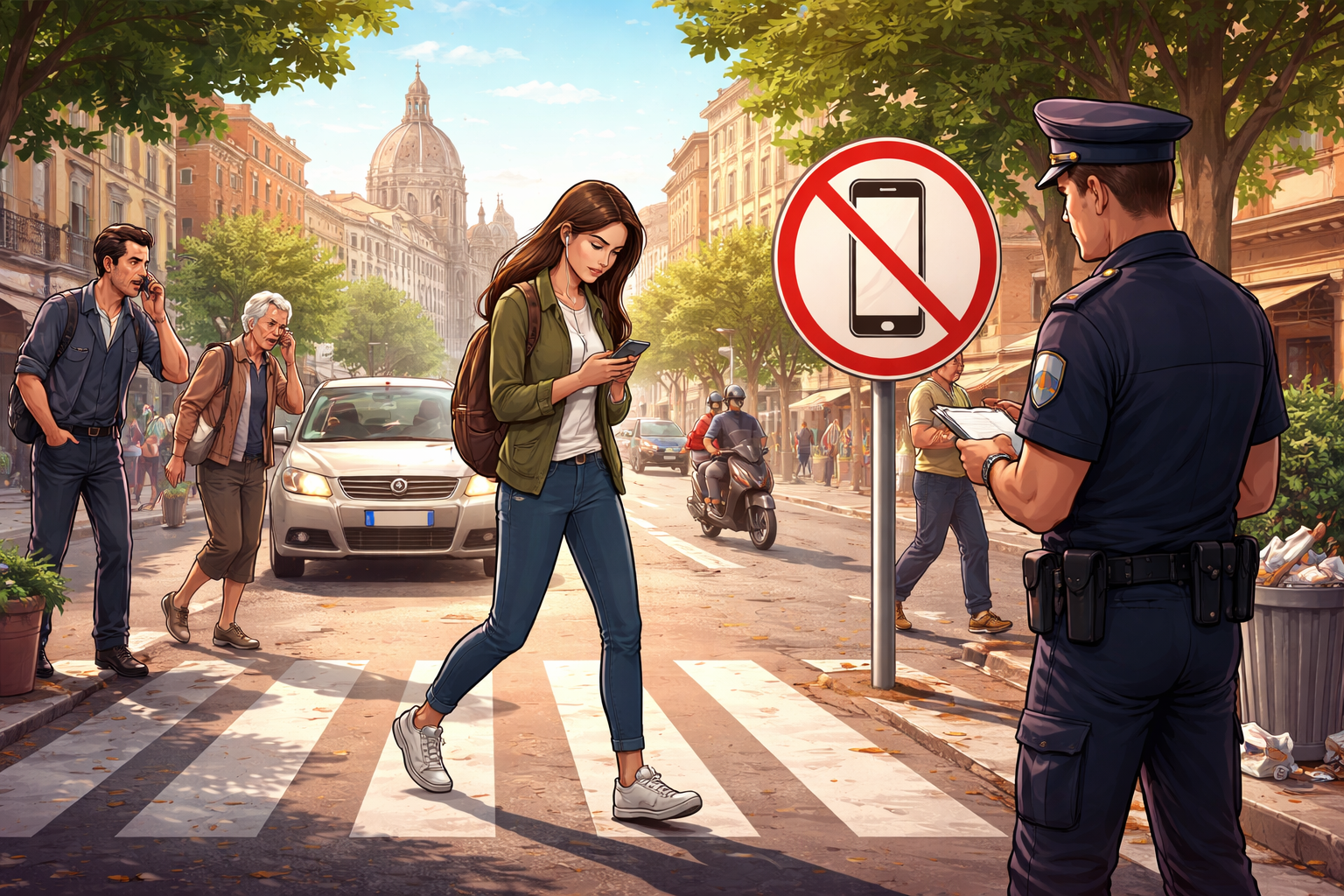
Italy plans to fine pedestrians distracted by phones at crosswalks, sparking debate on tackling common public nuisances for safety and consideration
Navigating busy city streets is challenging, especially when distracted by phones. Italy is taking a bold step by proposing fines for pedestrians who use their phones while crossing the street. This initiative aims to reduce accidents in the country’s historic, narrow streets often crowded with scooters and cars.
More than just a safety measure, this move has sparked discussions about addressing other everyday behaviors that can be irritating or unsafe in public. Beyond Italy, distracted walking and other distractions are a growing problem in cities worldwide.
Author Dave Schilling, writing from Los Angeles, applauds Italy’s approach and suggests expanding fines to other common annoyances like loud ringtones, interrupting conversations, leaving chairs out in restaurants, and riding electric scooters on sidewalks. These changes could enhance public safety and courtesy in shared spaces.
Source: Analysis based on a report by Dave Schilling on Italy’s draft highway code and urban etiquette challenges.
Italy’s Proposed Ban on Phone Use While Crossing Streets
Italy’s updated highway code draft proposes a fine of at least €75 for pedestrians caught texting, sending messages, or engaging with their phones while crossing streets. The goal is to prevent injuries caused by inattentive walking amid busy vehicular traffic. Italy’s narrow, cobbled roads make it particularly crucial to stay alert.
This proposal reflects growing concerns about pedestrian safety in Europe as modern distractions collide with ancient urban layouts. Most people may still risk the fine to send messages, but the law signals that paying attention in traffic is essential.
Wider Problem of Distracted Pedestrians Worldwide
The issue of distracted walking isn’t unique to Italy. In cities like Los Angeles, drivers frequently encounter pedestrians engrossed in their phones, oblivious to approaching vehicles. Such behavior is not only dangerous but also frustrating for drivers who must compensate for distracted walkers’ inattention.
Schilling highlights how drivers often feel like guardians of safety, forced to make split-second decisions for themselves and distracted pedestrians. This strain showcases the need for public responsibility and possibly stricter regulations globally.
Criminalizing Everyday Annoyances to Improve Public Life
Inspired by Italy’s initiative, Schilling humorously recommends expanding penalties to address other widespread but often overlooked nuisances that affect daily social interactions and safety.
Examples include:
- Using ringtones loudly in public: Years past the novelty of fun ringtones, audible phone rings are now a nuisance, interrupting shared spaces. Suggested fine: $200.
- Interrupting conversations: Showing respect by letting others finish talking could be mandated, also with a $200 fine.
- Leaving chairs out in restaurants: This seemingly minor act causes safety hazards, risking injury to servers and diners. Suggested fine: $250.
- Riding electric scooters on sidewalks: Despite clear warnings from scooter services, many disregard rules, endangering pedestrians. Proposed fine: $500.
Schilling’s call frames these issues as both safety and social courtesy concerns and argues for legal support to enforce more thoughtful behavior.
The Importance of Public Attention and Courtesy
Italy’s potential law and Schilling’s suggestions emphasize that public safety goes hand in hand with respect and common sense in shared environments. As technology increasingly competes for our attention, communities need clear rules to protect everyone.
Fines may seem minor, but they raise awareness about the risks of distraction. Ultimately, laws like Italy’s aim to cultivate a culture where focusing while crossing streets or engaging in social spaces becomes the norm rather than the exception.
By promoting attentive and considerate behavior through sensible regulations, cities worldwide can aspire to be safer and more pleasant for all inhabitants and visitors.