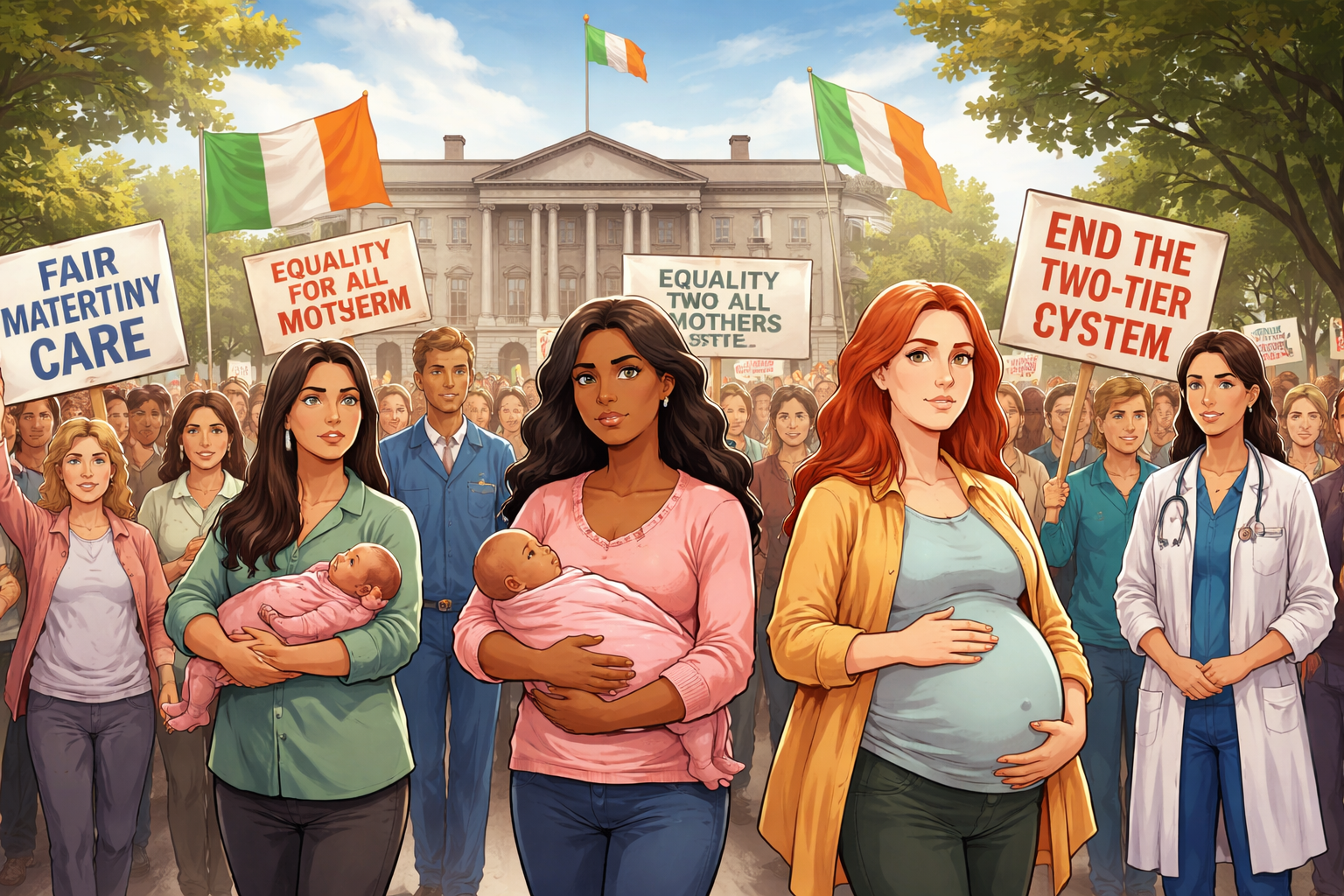
The ongoing debate in Ireland over maternity care reform highlights the clash between private interests and the push for universal, state-funded healthcare ensuring equal access for all mothers
Giving birth in Ireland is still entangled in a complex battle between a long-standing two-tier healthcare system and efforts to deliver equal, safe maternity care to every woman. At the heart of this is the Rotunda Hospital, one of the world’s oldest maternity hospitals, which illustrates the pressure and contradictions facing Ireland’s public maternal health services.
Women who can afford it currently pay fees up to €4,500 for private care within public hospitals, gaining benefits like continuity with private consultants, private scans, and private rooms after birth. However, the government’s sweeping Sláintecare reform plan aims to dismantle this system by making all maternity care fully public, removing unfair advantages that favor paying patients.
This reform is encountering pushback from highly paid hospital consultants and exposes deeper workforce shortages, especially in obstetrics, as Ireland faces a critical doctor shortage and an emigration of medical talent. This information was presented in detail by journalist Caelainn Hogan, capturing the human impact and institutional struggles behind Ireland’s healthcare evolution.
From a Two-Tier System to Universal Maternity Care
Ireland stands out in Europe as one of the few countries without universal free primary healthcare. While maternal healthcare is state-funded, private care still exists inside public hospitals because of the separate contracts that consultants hold to provide private services alongside public ones.
The Sláintecare plan, initiated nearly ten years ago with broad political support, demands that hospital consultants on new public-only contracts cannot work privately within public hospitals. More than 60% of consultants have agreed to these contracts with salaries exceeding €300,000, including overtime. However, obstetrics and gynecology show the lowest uptake at barely half, revealing reluctance in key maternity services.
This mixed system has led to troubling revelations, such as consultants secretly treating private patients within public hospitals and billing insurers, sometimes with payments between colleagues to manage private births on weekends. The government threatened to cut funding to enforcement-resistant institutions, including the Rotunda Hospital, underscoring the disputes fueled by a desire to retain private revenue streams.
The Strain on Public Maternity Services and Its Impact on Mothers
Despite Ireland’s low maternal mortality rate, the country has one of Europe’s highest C-section rates. Midwife-led care, proven to reduce interventions and supported by WHO guidelines, is inconsistently available due to ongoing staffing crises from state budget cuts.
Pregnant women relying on the public system may experience disparities. Midwives provide vital, hands-on support during labor and postpartum, but recent reductions in free antenatal classes and limited access threaten the quality of care. Approximately a quarter of expectant mothers still opt for private or semi-private care, although this option is increasingly restricted in practice, as seen in the National Maternity Hospital rejecting 150 private care requests within just six weeks.
Why True Equity in Maternity Care Matters
The debate is not just about choice but fairness and safety. If consultant availability is limited, their time should focus on women with complex or high-risk pregnancies regardless of payment ability. A staff member at the Rotunda explained that births and care happen in the same wards by medical need, not payment status, but admitted that private care offers a revenue stream hospitals are reluctant to lose.
The experience of patients varies widely. Some women like the journalist who shared these insights have trusted public midwife-led care and experienced vital, compassionate support. Others have felt forced into private care after missed complications or lack of consultant presence in public care. This highlights the urgency of ensuring high-quality public-only maternity services that every mother can safely access.
The Path Forward for Ireland’s Maternity Healthcare System
For Ireland to truly cherish all children equally as envisioned in its revolutionary history, it must fully implement a fair, transparent, and adequately resourced public maternity system. This means expanding midwife-led services, retaining obstetric consultants in public-only roles, and ending private profit within public facilities.
Expecting mothers should never feel they must pay extra for safe, continuous care. As one midwife put it, only a perfectly public system can guarantee equitable maternity care for every woman. This landmark reform will require political will, resource commitment, and accountability to realize a healthcare system that truly serves all mothers and babies, equally and safely.