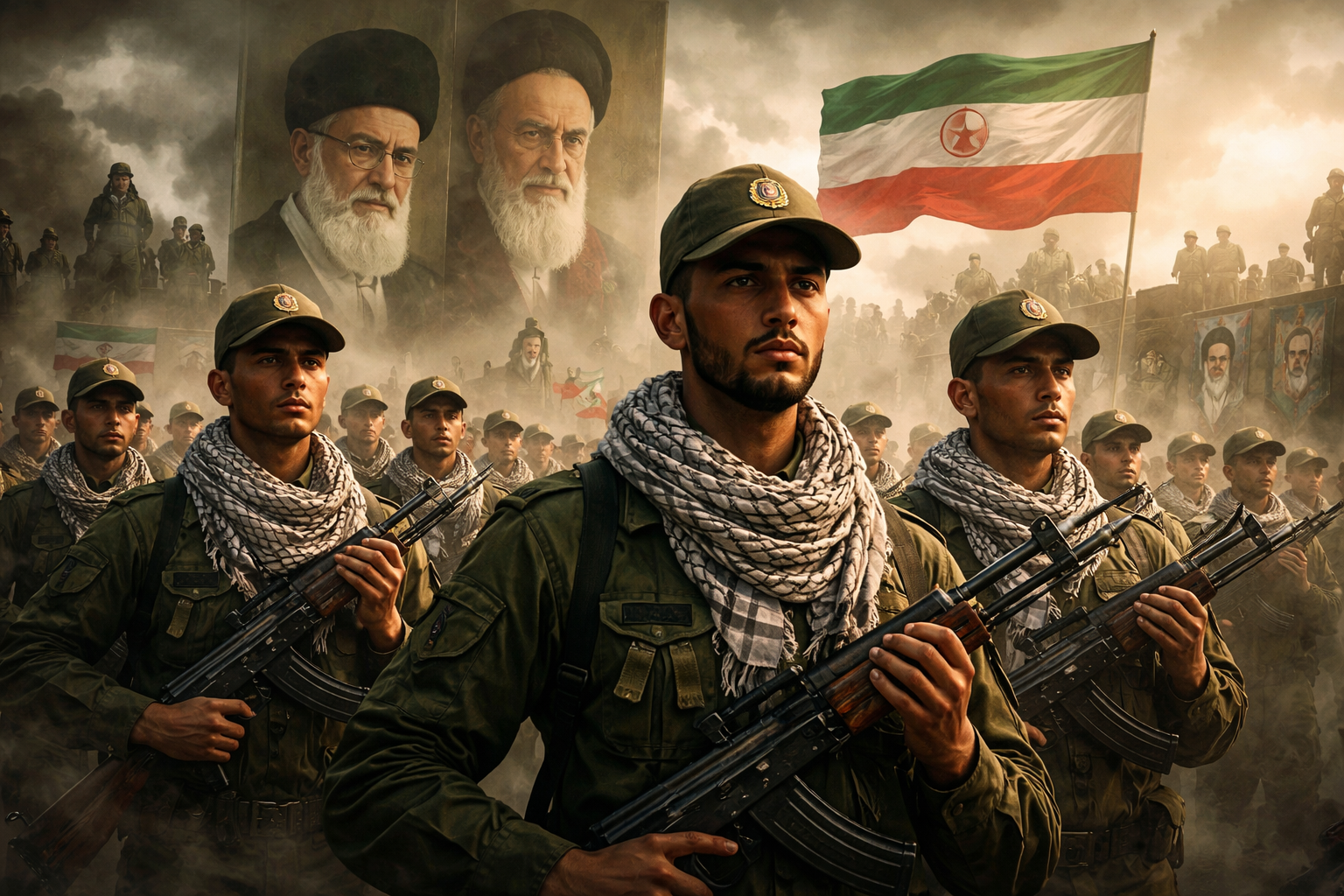
Iran’s elite security forces tightly control and indoctrinate young cadets from the moment they join their ranks, according to the testimony of high-ranking defectors. Cadets at military academies undergo continuous supervision that extends beyond training to religious observance, reinforcing unwavering loyalty to the regime’s supreme leader.
Two senior defectors provided unprecedented insight into the inner workings of Iran’s secretive security apparatus. Their accounts reveal a system where recruits are molded into officers who orchestrate covert operations, including abductions and assassinations both inside and outside Iran.
These revelations offer a deeper understanding of how the Islamic Republic sustains such loyal forces despite widespread protests, economic turmoil, and targeted attacks by Israel and the United States against its top leadership.
Comprehensive Control and Privileges
The regime grants high-ranking members of the special forces extensive privileges, such as special housing compounds with segregated amenities including mosques, schools, and hospitals where satellite dishes are forbidden and religious discipline strictly enforced. However, these benefits come with intense oversight, including restrictions on travel, personal relationships, and even children’s schooling.
Defector Omid described that all aspects of a soldier’s life are regulated to maintain loyalty and prevent dissent. Separation from the general population also enables peer pressure and more effective indoctrination, making the forces more likely to comply with orders to use force against civilians.
Surveillance and Suppression Infrastructure
Both defectors detailed high-tech command centers where senior officials monitor protests via extensive CCTV networks, drones, and social media channels. These centers coordinate responses to demonstrations, deploying plainclothes agents to infiltrate protest groups and redirect marches. When regular police struggle to control unrest, special units from the Revolutionary Guard and police enter to aggressively suppress dissent.
Human rights groups have documented the use of military-grade weapons against unarmed protesters, underscoring the regime’s intent in crackdown efforts. Amnesty International highlights the deliberate nature of these actions as part of Iran’s chain of command during past protests.
Secret Operations and the ‘Killing Machine’
Omid identified a secretive location known as Dakhme, described as a concealed prayer hall on Tehran’s outskirts used for off-the-books meetings of high-ranking officers. These sessions reportedly involve planning extrajudicial killings and abductions, bypassing official government structures. Defectors believe Dakhme functions as a clandestine command center orchestrating targeted operations to protect the regime’s interests.
Religious ceremonies often mask these meetings’ true purpose. Attendees surrender mobile devices before discussing sensitive, violent missions against perceived threats to the Islamic Republic’s supreme leader. While further independent verification of Dakhme’s current activities remains limited, its existence fits expert analyses of Tehran’s covert security practices.
Personal Reckoning and Defection
Both Omid and another defector, Reza, formerly of Iran’s intelligence agency, expressed growing disillusionment with the regime as they witnessed the brutal suppression of protests and violations of human rights. Their decisions to speak out came after years serving within this tightly controlled system, motivated by remorse and the deadly efficiency of the forces they once commanded.
The testimonies paint a complex picture of a security apparatus that shapes individuals from cadet training through their careers to become instruments of a regime prioritizing survival over civil liberties.