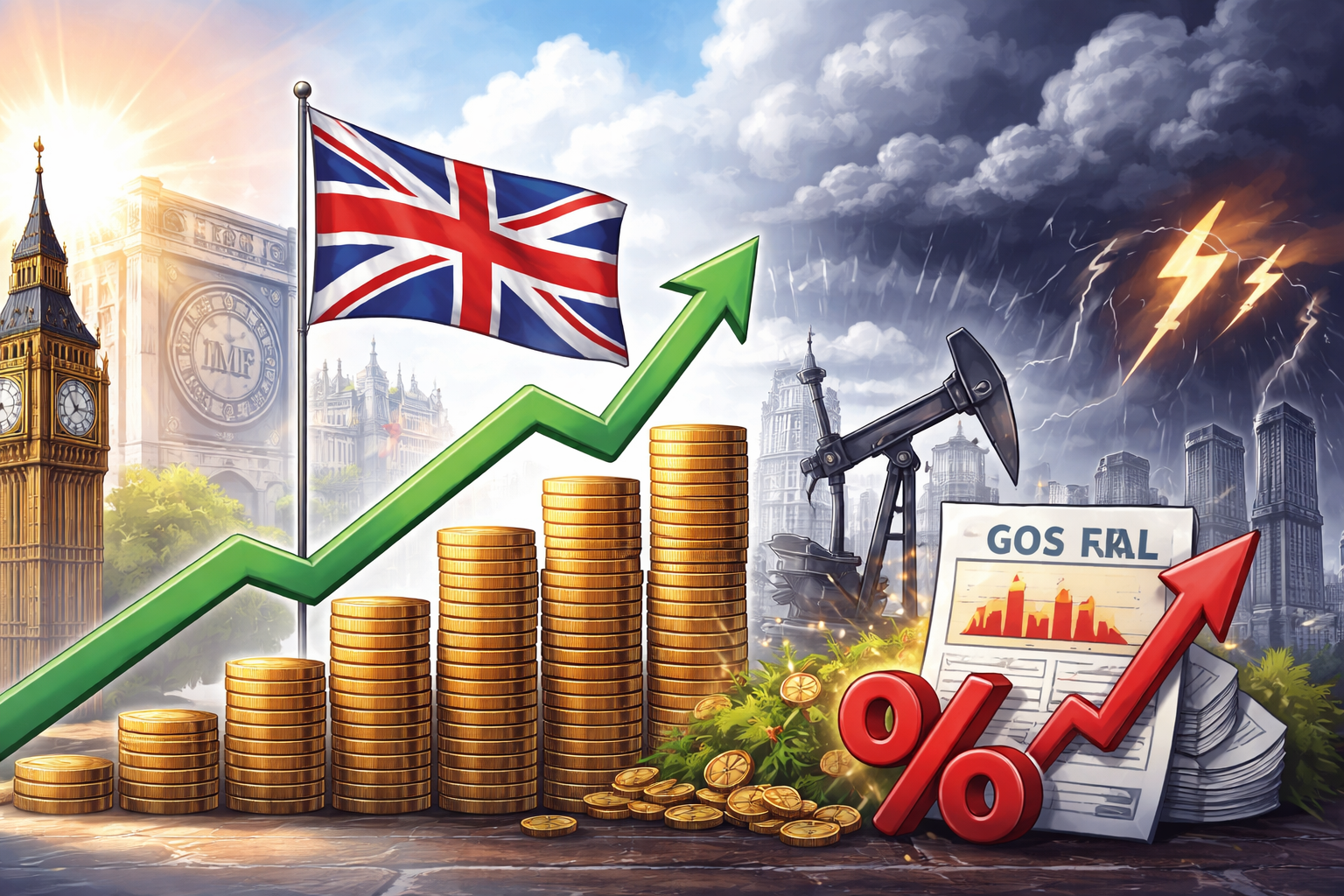
The International Monetary Fund (IMF) has upgraded its forecast for UK economic growth in 2026, now expecting an expansion of 1.3%, higher than the 1.0% it predicted in July. However, this growth is set to slow to 1.2% in 2027 due to pressures from rising energy prices and higher long-term interest rates.
The IMF’s latest outlook highlights the UK economy’s resilience amid global uncertainties, particularly the economic shocks stemming from the ongoing conflict between the US and Iran. Despite these challenges, the UK is among the only major economies poised to stabilize its national debt levels and reduce annual borrowing by nearly four percentage points of GDP from 2025 to 2031, a sharper consolidation than most other G7 countries.
Government Response and Fiscal Challenges
The UK’s Chancellor, John Healey, is preparing for the upcoming budget set for October 28, promising measures to ease financial pressure on households. The government faces the dual challenge of managing soaring borrowing costs while maintaining public spending and defense commitments. Financial markets’ scrutiny has intensified, making credibility in fiscal planning a top priority.
Healey acknowledged the impacts of international conflicts on domestic households but emphasized the country’s economic resilience. He is expected to discuss the global economic fallout with fellow finance ministers at the IMF’s annual meeting in Bangkok.
Debt Management Leading the G7
IMF Chief Economist Silvana Tenreyro pointed out that the UK, alongside India, stands out among major economies for its progress in debt consolidation. The UK is anticipated to have the lowest annual borrowing in the G7 by 2031 while securing longer maturity debt to lock in lower interest rates.
The IMF underscores that the UK should continue its efforts in managing public finances diligently to maintain this trajectory.
Inflation and Household Impact
Inflation in the UK is expected to average 3.3% in 2026 and remain above the Bank of England’s 2% target at 2.8% in 2027. The Bank has warned that inflation might rise above 4% early next year, potentially leading to further interest rate hikes. Such economic factors are likely to weigh on household spending and business investment, contributing to slower growth.
Experts and groups like the Resolution Foundation emphasize the need for targeted support for families facing higher living costs, particularly regarding energy expenses during the upcoming winter.
Political and Economic Outlook
Opposition figures caution that further tax increases could hamper growth and place more burdens on workers. Meanwhile, Prime Minister Andy Burnham has committed to generating equitable economic growth across all regions, although his approach has met internal criticism.