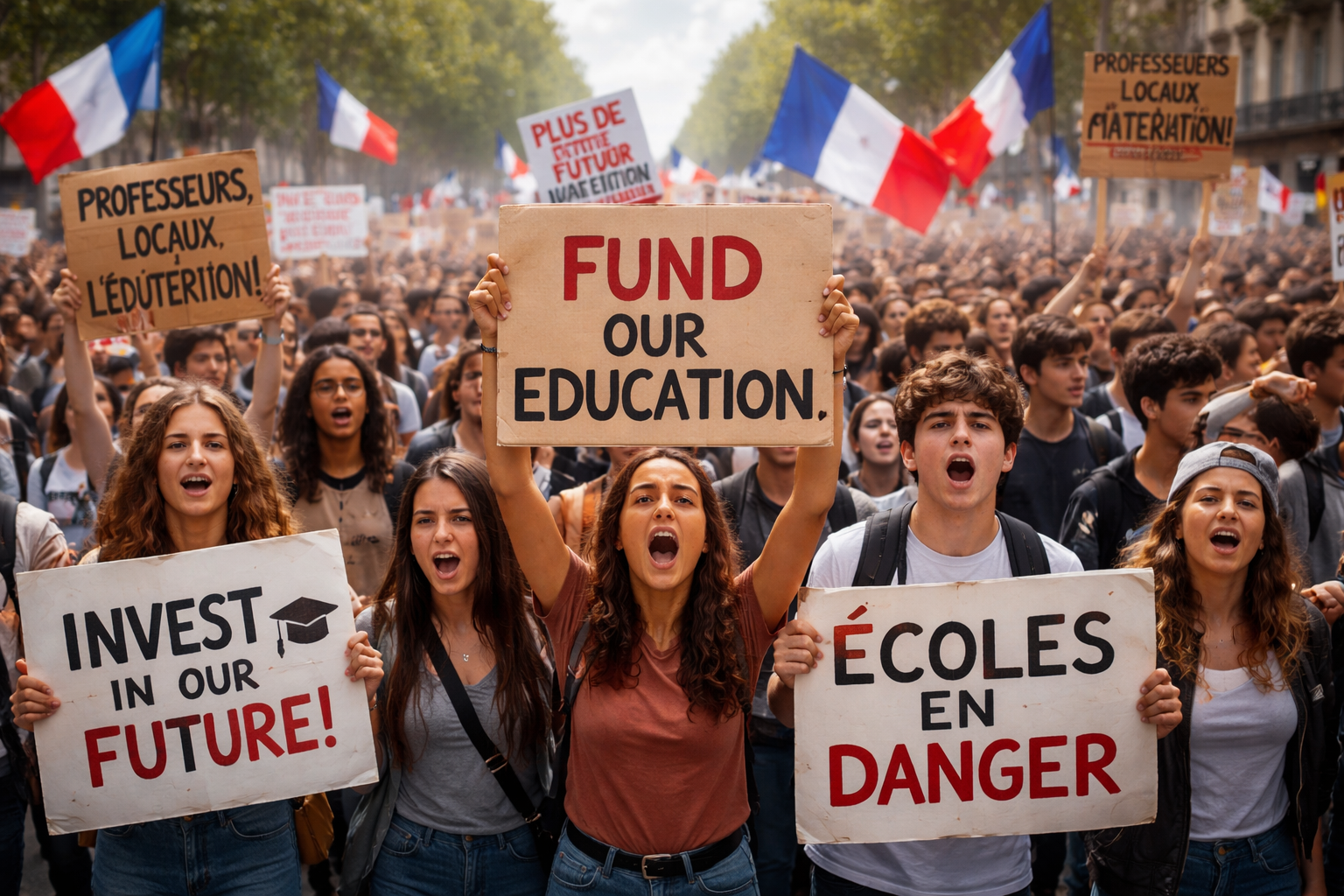
Hundreds of thousands of students, along with parents and teachers, mobilized across France in widespread protests to demand better funding and resources for the education system. The unrest, fueled by years of budget cuts, has exposed the difficulties facing a generation grappling with social and economic uncertainty.
Demonstrators voiced concerns ranging from deteriorating school facilities and large class sizes to insufficient staffing and inadequate measures to cope with extreme heat in classrooms. A particular point of contention is the opaque, algorithm-driven process governing university admissions, which many see as unfair.
Escalating Confrontations and Significant Injuries
The government responded with a heavy-handed security approach that escalated tensions and resulted in violence. More than 200 students and over 700 police officers have been injured since protests intensified. Reports include severe injuries such as a 15-year-old losing a hand and another student losing an eye. Authorities have taken into custody more than 4,000 minors, nearly 1,500 of whom face prosecution.
Political Fallout and Budgetary Challenges
The protests underscore the consequences of ongoing austerity policies implemented to reduce the national deficit. The current administration, during its second term, has pushed through multiple austerity budgets despite public unrest. Although government officials have recently acknowledged the core demands of the students, proposed budget cuts include a real-terms reduction in education funding, raising doubts about future improvements.
Broader Social and Political Implications
With the French presidential election approaching and far-right candidate Marine Le Pen leading in the polls, the protests have heightened political polarization. Le Pen has linked the demonstrations to hard-left agitators and called for tougher anti-riot laws. Meanwhile, public sector workers protested wage freezes alongside the school demonstrations, and major unions plan further actions later in the year, signaling potential ongoing unrest.
The scale and intensity of the protests highlight the urgent need for policymakers to listen to student concerns as the social contract in France faces mounting strain.