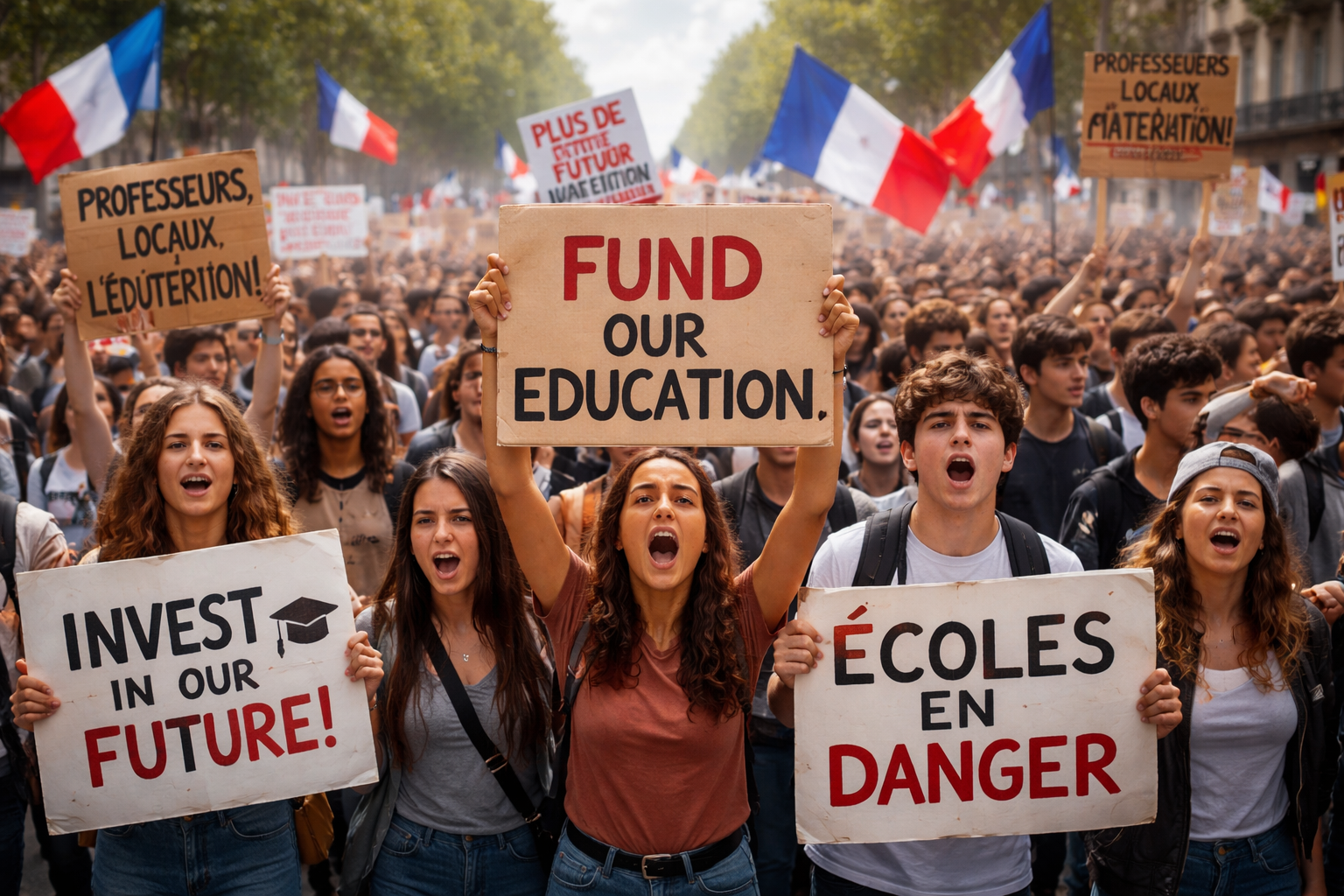

France’s interior minister has announced a temporary suspension of police use of stun grenades in high school protests following a serious injury to a 15-year-old boy who lost his hand during a demonstration.
The injury occurred on Monday in Lens, in northern France, amid widespread protests by students against chronic teacher shortages, overcrowded classrooms, deteriorating school conditions, and lengthy school days. Authorities have not yet confirmed the exact circumstances around how the injury occurred.
Details of the Incident and Police Response
Laurent Nuñez said in an interview that up to 200 protesters were throwing projectiles at police officers when riot squads intervened. Officials remain unclear whether the injured student was struck directly by a stun grenade or if the boy handled the grenade himself. The boy’s mother, speaking to BFMTV, confirmed her son’s hand had been amputated and denied that he had tried to pick up the grenade, expressing deep anguish over the injury.
Nuñez emphasized the suspension of stun grenade use would remain in effect until investigations clarify the incident. He also revealed that authorities have opened 18 internal investigations into police conduct amid numerous allegations of disproportionate force during the protests, which have resulted in injuries to at least 215 teenagers and 85 school staff, as well as around 750 police officers.
Protests and Broader Impact
The protests are the largest yet in a two-week period marked by frequent clashes between students and police. Demonstrators have blamed inadequate funding and declining conditions in the school system for their actions, including burning trash bins and vandalizing property near educational institutions. Since the start of the unrest, twenty-four schools have been damaged or destroyed, and over 6,500 people—mostly minors—have been arrested. The justice ministry reports more than 1,800 prosecutions are underway, with nearly 1,500 involving individuals under 18 years old.
Despite many peaceful marches, some protests, including those in Paris, escalated to riots requiring tear gas and baton charges by law enforcement. In response to the violence and growing unrest, President Emmanuel Macron convened an emergency cabinet meeting on Tuesday. Prime Minister Sébastien Lecornu condemned the violence and rejected claims that the government ordered police repression, stressing that law enforcement’s role is to protect students.
Reactions and Political Context
Amnesty France has expressed alarm over videos and eyewitness accounts of forceful policing tactics, including the use of tear gas and batons. The government has faced criticism from unions and rights groups alleging excessive police force. The protests have also fueled political debate, with accusations from the government that the radical-left party La France Insoumise has supported and possibly orchestrated the movement, a claim the party denies, advocating for nonviolence despite its backing of the demonstrations.
The education ministry reported that, as of Wednesday, classes had been partially or fully suspended in 528 of France’s 3,700 high schools, a decline from the previous day. The disruptions and violence come as the government grapples with significant budget deficits and economic challenges ahead of upcoming presidential elections.