
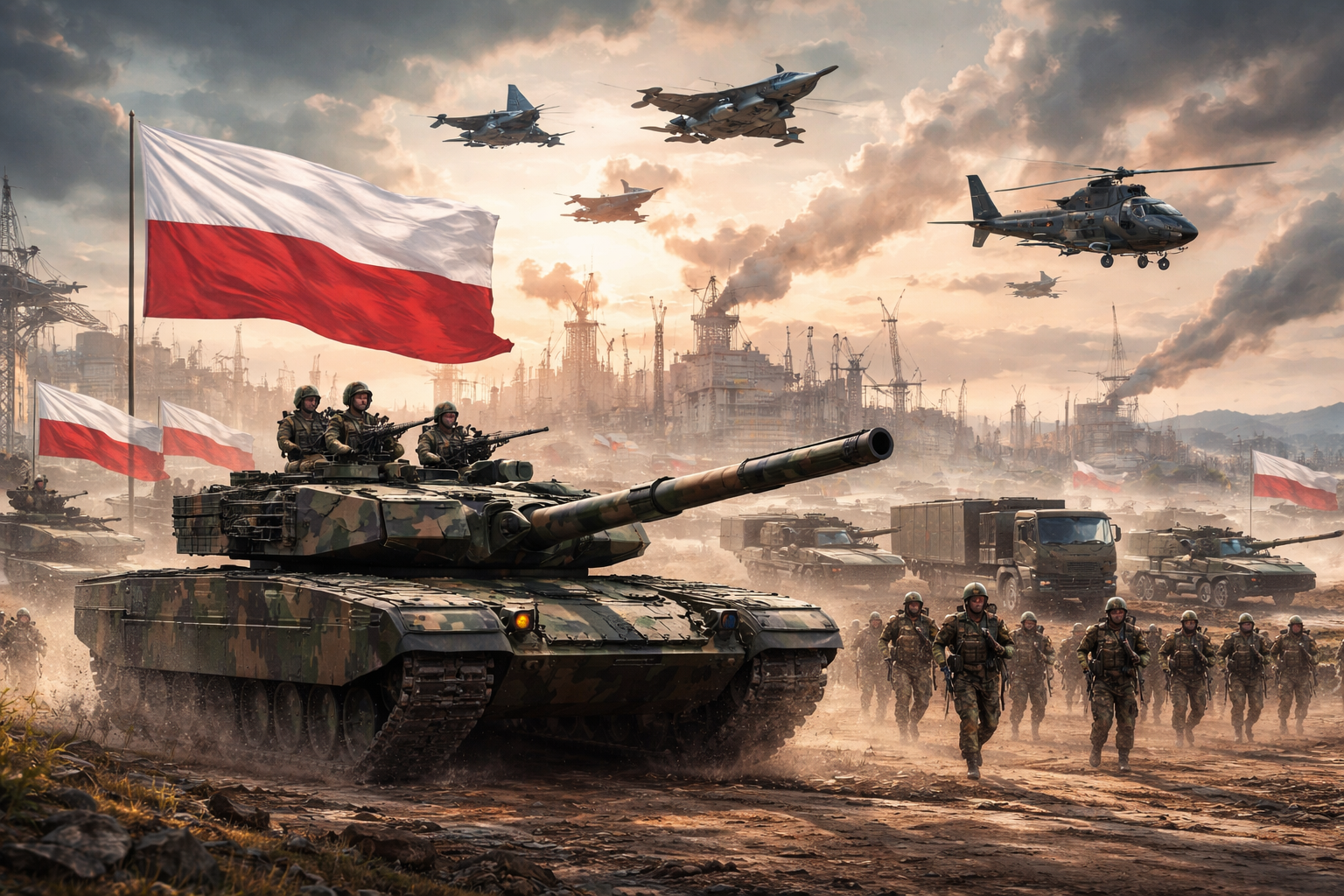
Poland is rapidly expanding its military spending in response to Russian aggression and shifting international alliances, turning former farmland near Warsaw into advanced manufacturing hubs. This defense buildup is reshaping the nation’s economy while raising questions about its long-term fiscal health and political unity.
Since the beginning of Russia’s military incursions into Ukraine nearly five years ago, Poland’s defense budget has surged from 2.2% to 4.8% of its gross domestic product, amounting to $53 billion this year—the fourth highest in the European Union after Germany, France, and Italy. Behind these figures is a strategic pivot from reliance on imported weapons systems to developing domestic manufacturing capacities. Facilities like the new high-tech MBDA Polska missile plant near Czosnów exemplify this shift, generating local jobs and expertise.
Investing in Security and Economic Growth
Polish officials emphasize that increasing defense spending serves dual purposes: deterring Russian threats and driving economic growth. Marcin Bosacki, Poland’s deputy foreign minister, linked the militarization effort to enhanced national security and economic benefits, underscoring the importance of solidarity within NATO and the European Union to dissuade further Russian provocations.
Alongside domestic initiatives, Poland is partnering with international defense firms such as Britain’s Babcock and BAE Systems to expand military production, including frigates and ammunition factories. These collaborations support Poland’s stated goal of channeling nearly 90% of EU-backed defense loans into local industry, notably through the state-owned Polska Grupa Zbrojeniowa conglomerate.
Challenges of Fiscal Deficit and Political Tensions
However, the rapid military escalation carries economic risks. Poland is projected to run the EU’s largest fiscal deficit next year, reaching 7.1% of GDP. Moody’s recently downgraded Poland’s sovereign credit rating to its lowest since 2002, citing insufficient fiscal safeguards amid mounting expenditures.
Political divisions have emerged, particularly regarding Poland’s relationship with the EU. Disputes over accessing €44 billion of EU defense investment loans highlight tensions between the right-wing opposition and the liberal pro-EU government. Nationalist protests against EU-backed support for Ukraine and defense spending further complicate the domestic landscape ahead of forthcoming elections.
Economic Impact and Outlook
The defense investment is reshaping Poland’s industrial base, supporting high-tech firms such as Advanced Protection Systems, which has expanded its workforce amid growing demand for counter-drone technology. Such companies reflect Poland’s evolving economic profile as it builds technical expertise and domestic production capacity.
The country’s investment spree in defense, while enhancing military readiness and signaling NATO solidarity, presents a complex balancing act between security imperatives and economic sustainability. As Poland proceeds with ambitious defense projects and international partnerships, its ability to maintain growth and fiscal stability remains under close scrutiny.