

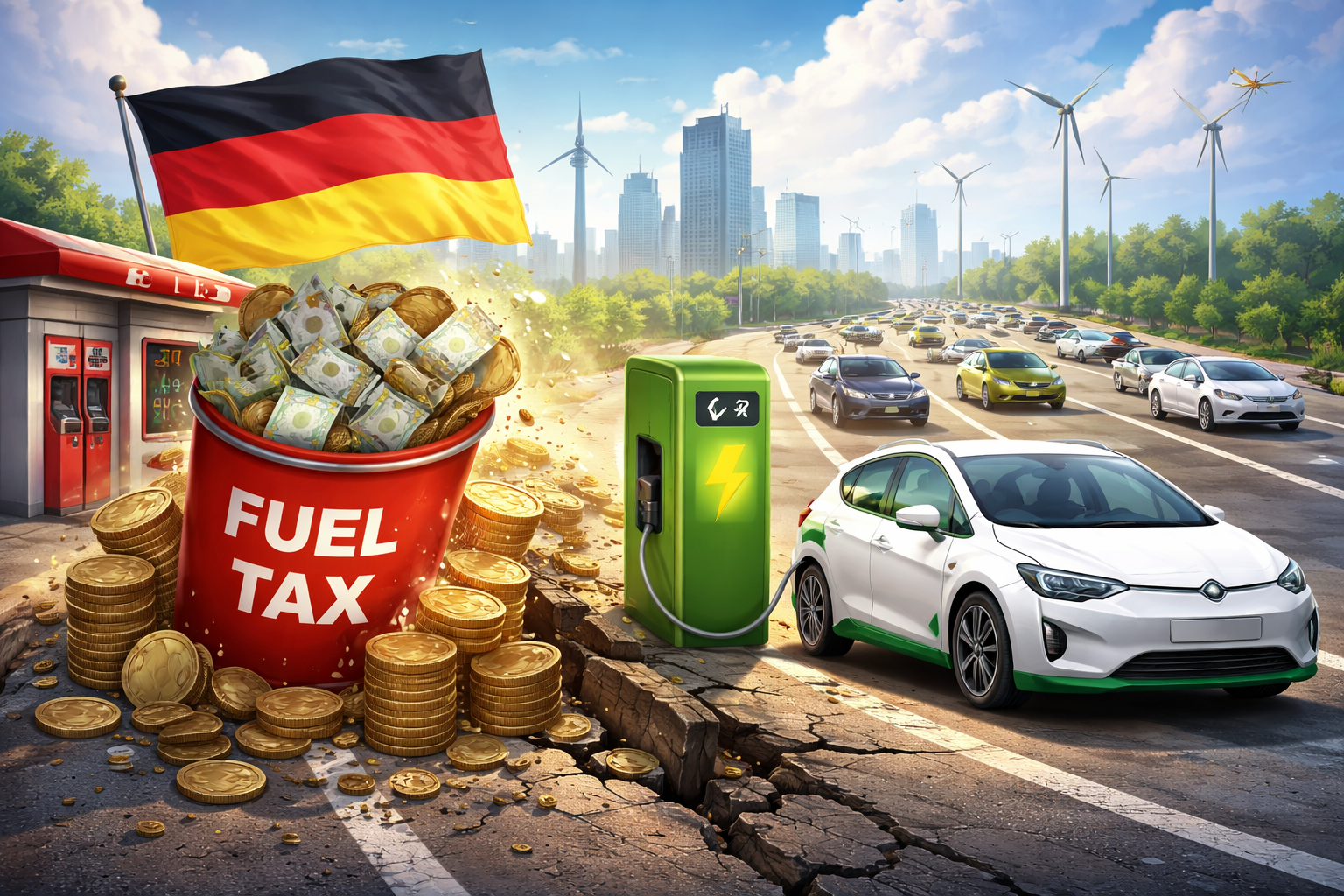
Germany is experiencing a rapid increase in electric vehicle (EV) adoption, a trend that experts say is sharply reducing revenue from traditional fuel taxes. According to Jens Boysen-Hogrefe, a tax and transportation expert at the Kiel Institute for the World Economy (IfW), the surge in electric car purchases accelerated by high fuel prices is hastening the planned transition away from gasoline and diesel-powered vehicles.
Data from the International Energy Agency (IEA) shows EV sales in Europe climbed nearly 30% in the first quarter of 2025 compared to the same period the previous year, with Norway leading where electric cars accounted for up to 95% of new registrations. This transition, while environmentally significant, presents a fiscal challenge to the German government given the current tax structures.
Declining Fuel Tax Revenue and Fiscal Impact
Germany’s energy taxes on gasoline and diesel remain a significant source of government revenue. Diesel is taxed at 47.04 euro-cents per liter, gasoline at 65.45 euro-cents, excluding additional carbon levies and value-added tax. With fuel priced around €2.10 per liter, more than half of that price goes directly to government coffers.
However, because electric vehicles do not incur these energy taxes—and only pay minimal electricity taxes—fuel tax income has declined from €37 billion in 2016 to €33 billion in 2024. Projections from a 2022 Transport Ministry advisory report estimate this could fall to as low as €5 billion by 2050 if the tax system remains unchanged, potentially creating billions in losses for the government’s road funding.
Current Incentives and Calls for Reform
Although government incentives for buying electric vehicles, which amounted to thousands of euros per car, were discontinued at the end of 2023, electric cars remain exempt from vehicle taxes through 2035. Companies investing in EVs also continue to benefit from tax advantages. Experts warn that fiscal pressures will intensify unless the government adjusts its taxation mechanisms.
Boysen-Hogrefe and other transportation economists advocate for reforms such as a distance- and traffic-based road toll system to compensate for the fuel tax shortfall while better reflecting road usage. A vignette system charging a flat fee over a set period is suggested as a politically more realistic alternative. If resistance to these approaches persists, raising motor vehicle taxes may be the only remaining option.
International Responses to Funding Challenges
Other countries facing similar declines in fuel tax revenue have started implementing new policies. The UK plans to introduce an “Electric Vehicle Excise Duty” in April 2028 that charges electric vehicle owners per mile driven. New Zealand and Iceland have initiated annual odometer checks to calculate mileage-based fees since 2024. Switzerland will require EV owners to pay road-use fees starting in 2030, either based on vehicle weight or electricity consumed at charging stations.
Norway has begun limiting VAT exemptions on electric cars, implemented weight-based purchase taxes, and established tolls to address fiscal impacts. These measures reflect growing awareness that road funding must evolve alongside the shift to electric mobility.