
Jewish heirs of Holocaust victims and their representatives have filed lawsuits in California courts seeking the return of artworks taken by the Nazis during World War II that remain displayed in prominent institutions. These legal actions follow recent legislative changes in California and the U.S. Congress aimed at reinforcing claims to recovered Nazi-looted art.
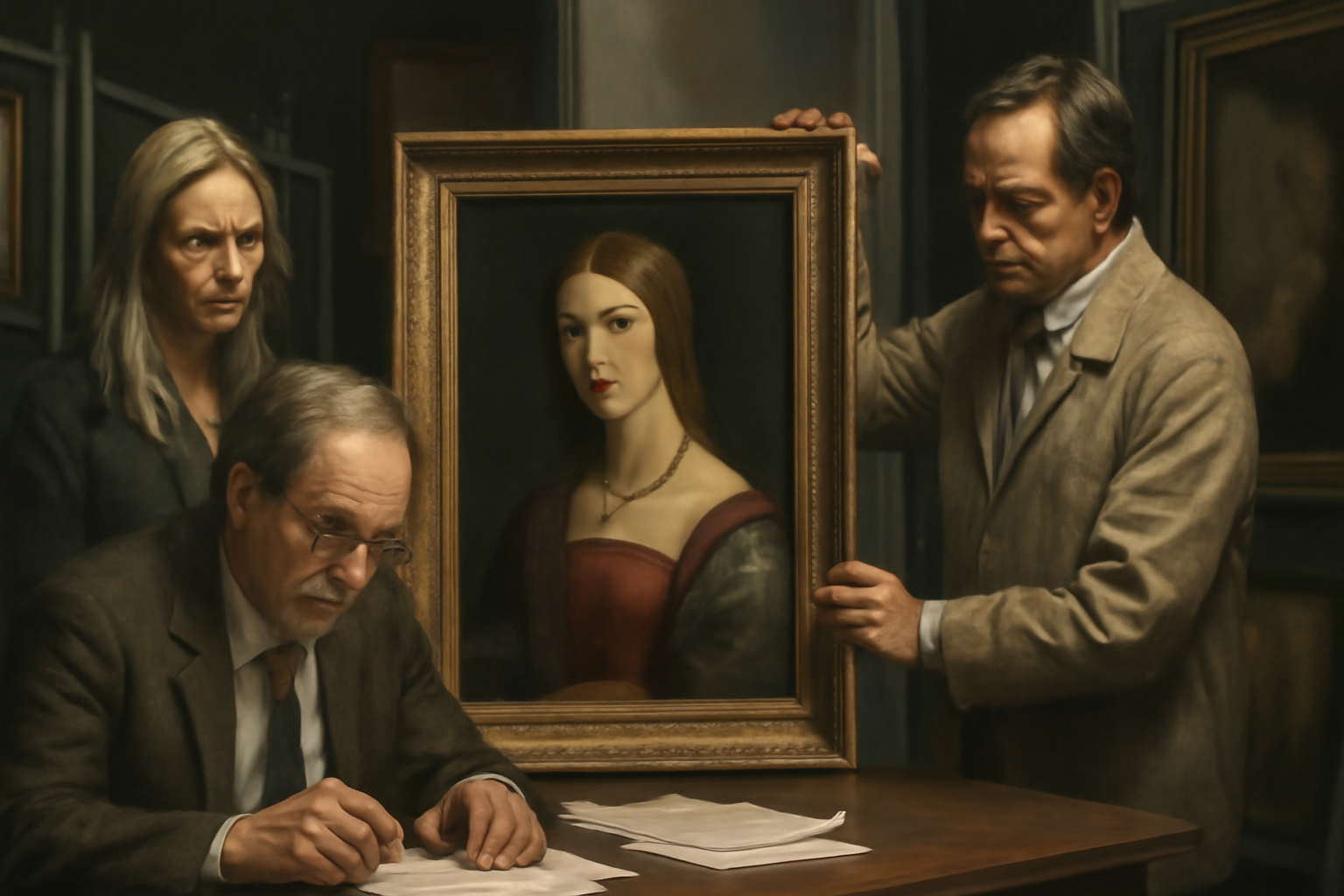
One lawsuit, filed in Los Angeles Superior Court, involves the Jewish Federation of Greater Los Angeles and its board chair, Daniel Gryczman. The suit demands the return of two Lucas Cranach the Elder paintings, “Adam and Eve,” from the Norton Simon Museum in Pasadena. These life-size oil-on-panel paintings date back to 1530 and are claimed to have been seized from the Dutch Jewish art dealer Jacques Goudstikker’s collection by Hermann Göring during the Nazi regime.
Claims seek restitution of heritage and survivor support
Rabbi Noah Farkas, president and CEO of the Jewish Federation of Los Angeles, explained that proceeds from any recovered sales would provide aid to the approximately 2,500 Holocaust survivors living in the Los Angeles area. Marei von Saher, the sole heir of Goudstikker, has delegated her rights to the federation and expressed gratitude for their efforts toward justice.
Museum responses and legal background
The Norton Simon Museum maintains legal ownership of the Cranach paintings. The museum cited a 2018 federal court ruling that confirmed its title to the works and noted the U.S. Supreme Court declined to intervene in 2019. They emphasized the paintings’ complex provenance, including an illicit Soviet auction in 1931 where the paintings were initially sold, and subsequent sales and restorations before their acquisition by the museum.
In a separate lawsuit filed in federal court in Los Angeles, the daughters of Dina Gottliebova Babbitt, a Holocaust survivor and California-based animator imprisoned in Auschwitz, are demanding the return of watercolors she was forced to paint depicting fellow prisoners. These works are held by the Auschwitz-Birkenau museum in Poland and are argued by the museum to be necessary historical documentation of Nazi crimes, not property subject to restitution.
Emotional, legal, and ethical complexities of Nazi-looted art restitution
The lawsuits underscore the complex and emotionally charged nature of Nazi-looted art restitution, which often pits descendants of victims against museums that argue for preserving important historical records. Between 1933 and 1945, the Nazis confiscated over 600,000 artworks from Jewish families and institutions across Europe. Many of these pieces remain in museums, complicating efforts to return them.
The Auschwitz-Birkenau museum spokesperson highlighted that the paintings by Gottliebova Babbitt document Josef Mengele’s experiments and underscored their significance in memorializing victims. The museum contended that the artist did not own these watercolors, having created them under coercion, and asserted that losing such items would cause irreparable harm to the memorial’s mission.