
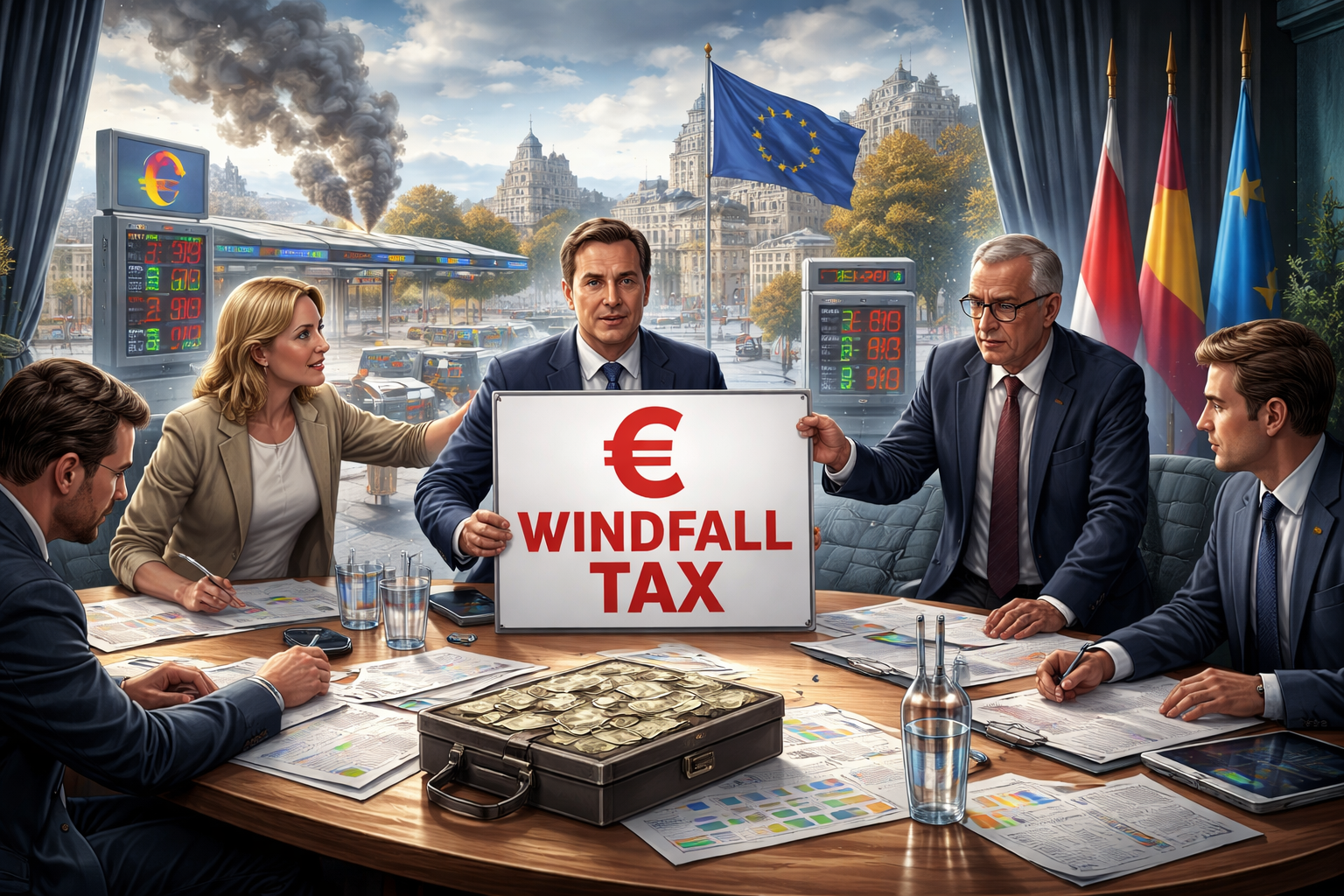
European finance ministers are considering imposing a windfall tax on energy firms as fuel prices near record highs amid escalating tensions in the Middle East. The surge in oil futures above $100 per barrel and sharply increased pump prices have intensified pressure on national governments to act, with domestic unrest and upcoming elections heightening the political stakes.
Germany’s finance minister, Lars Klingbeil, urged the European Commission to propose measures next month to tax what he characterized as excessive profits that oil companies are reaping by escalating prices. Several EU member states have long advocated for such a model as consumers face unprecedented fuel costs.
Fuel Prices Reach Unprecedented Levels Across Key EU Countries
Fuel prices have hit all-time highs across Europe, with diesel reaching an average of €2.45 per liter and petrol €2.31 per liter in Germany. The Netherlands and Nordic countries report even higher prices, with Dutch petrol averaging €2.73 per liter. Overall, EU petrol prices are up 24% year-on-year, diesel is up 38%, and jet fuel costs have more than doubled.
Natural gas prices have also soared, trading at €81 per megawatt hour—more than 150% above last year—with forecasts suggesting further increase risks to €100.
Varied National Responses Amid Political and Social Pressure
Governments across Europe are taking swift but varied approaches to mitigate the impact on consumers. Italy’s ruling coalition announced plans to eliminate road taxes for millions of vehicles starting next year and has implemented significant diesel tax cuts costing billions of euros.
France faces intense domestic protests, including fishers blocking ports over soaring diesel costs near €2.37 per liter. The French government extended targeted emergency subsidies for key sectors but remains cautious about broad fuel price reductions to avoid indiscriminate fiscal burdens.
In Germany, Chancellor Friedrich Merz’s government announced a fuel tax cut for petrol and diesel effective October through the end of the year and is negotiating with oil producers about implementing a fuel price cap by 2027. The move comes as the center-right CDU recently suffered electoral setbacks attributed in part to energy-related voter dissatisfaction.
EU Commission and Political Outlook
At present, the European Commission has no immediate plans for an EU-wide windfall tax but signaled willingness to engage in dialogue, allowing member states to pursue their own taxation schemes.
With critical elections looming next year in eight EU countries, including France, Italy, Spain, and Poland, leaders are under pressure to balance economic support with public demands amid soaring living costs driven largely by energy prices.
The ongoing Middle East conflicts threaten oil supply routes, adding uncertainty to the energy market and underscoring the urgency for coordinated and national responses to protect consumers and stabilize economies.