

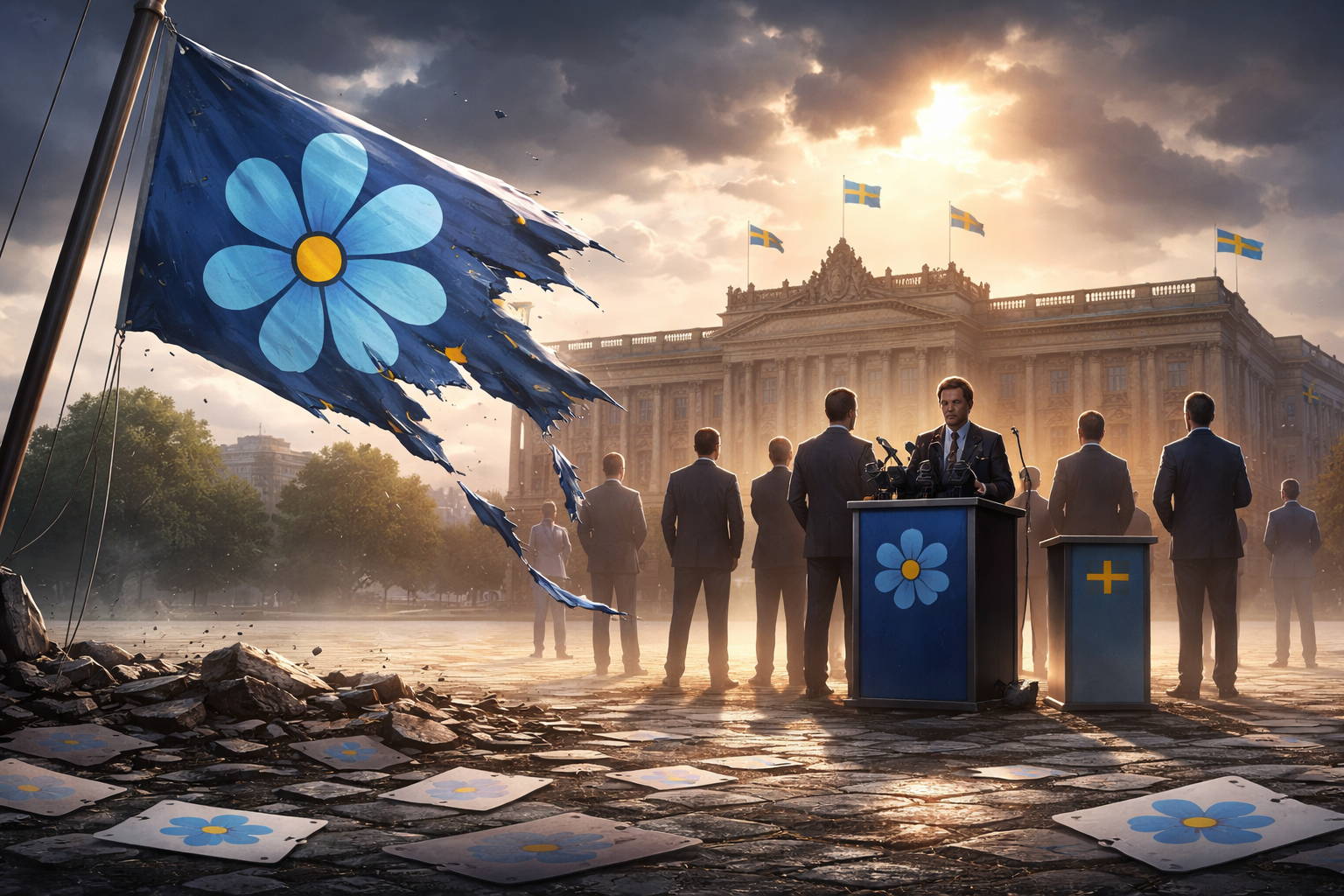
The recent Swedish general election marked a historic setback for the Sweden Democrats (SD), a far-right party that had seen steady growth since its founding in 1988. For the first time in decades, the party fell from its position as the country’s second largest to third place, jeopardizing its path into government.
The Sweden Democrats, known for their hardline stances on immigration, crime, and integration, had gained significant influence after supporting Prime Minister Ulf Kristersson’s coalition government in 2022. Their neo-Nazi roots notwithstanding, the party had become accepted as a mainstream political force within Sweden’s right-wing alliance.
Election Results and Immediate Effects
Early in the campaign, Kristersson promised key ministerial positions for the SD if his coalition remained victorious. However, Sunday’s election results suggest that the right-leaning parties may struggle to form a coalition, effectively blocking the SD’s direct access to government roles for now.
The SD’s leader, Jimmie Åkesson, appeared visibly shaken when addressing supporters on election night. He acknowledged the loss of votes but maintained the party was still among the winners. Åkesson suggested his cooperation with coalition partner the Liberals might have cost some support.
Factors Behind the Vote Shift and Political Impact
Analysts speculate several reasons for the SD’s loss of support. Some voters likely shifted to the Moderates, who had a strong showing. Additionally, the SD’s recent participation in government may have eroded their appeal as an anti-establishment party, a key driver of their previous gains.
Voter turnout, around 80%, was relatively low for Sweden and may have influenced outcomes. Importantly, many of the SD’s core policies—tough anti-immigration measures, strict law enforcement, and demanding cultural assimilation—have become normalized across Sweden’s political spectrum, including among the center-left Social Democrats.
Future Role and Risks for Swedish Politics
If the Moderates eventually join a coalition government with the Social Democrats, the Sweden Democrats will lead the opposition and continue to hold a prominent position nationally. Alternatively, if the Social Democrats govern alone, the SD risks political marginalization, potentially curbing their influence on national discourse.
Observers caution that how the SD responds to this moment is critical. Without the need to accommodate coalition partners, the party might shift further right to energize its base, potentially intensifying political polarization and raising concerns about far-right extremism in Sweden.
Support for far-right ideas persists beyond parliamentary politics through unregulated far-right groups and active clubs, which continue to recruit and promote their agenda regardless of the SD’s official standing.