
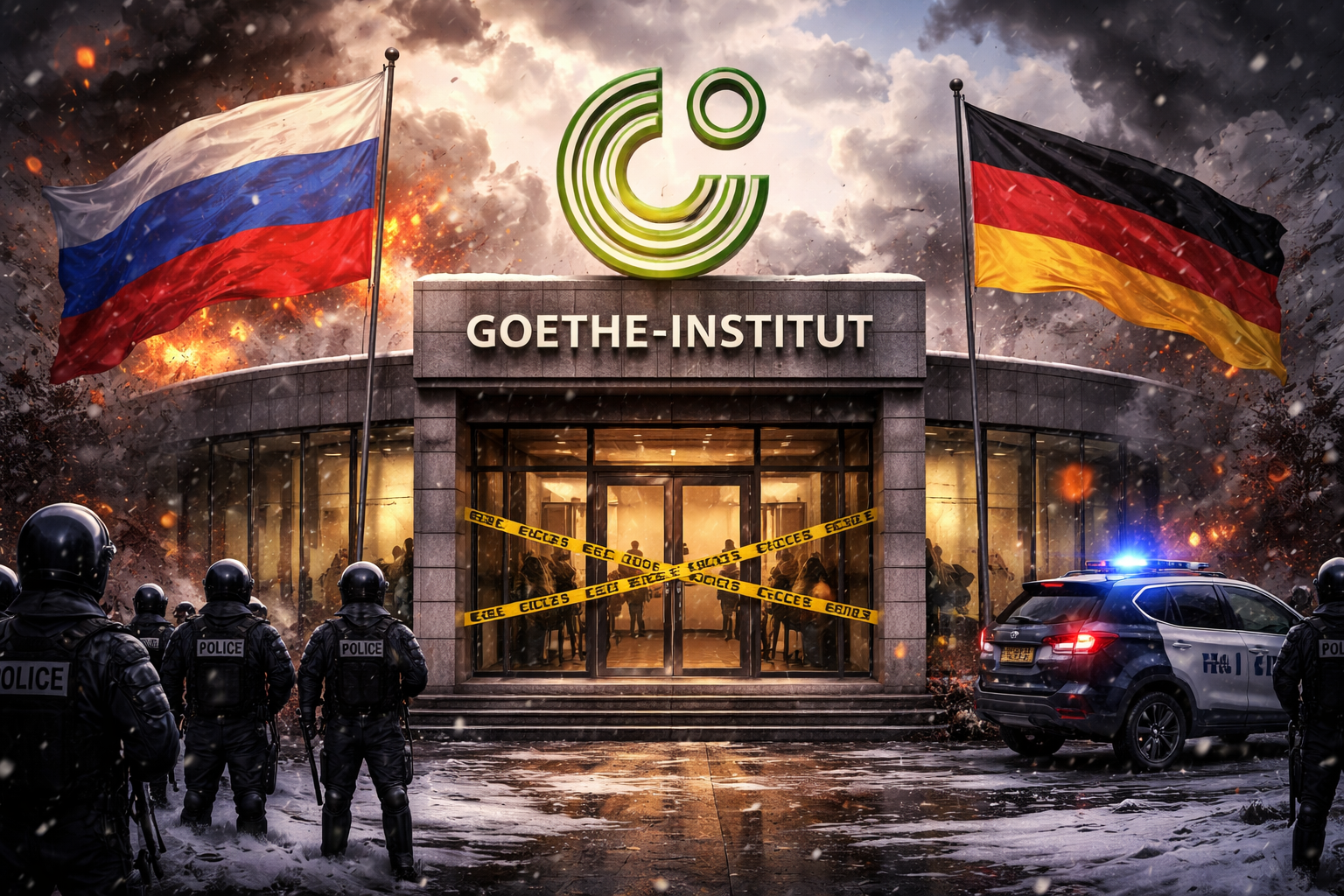
Germany’s Goethe-Institut is scheduled to shut down all its branches in Russia by September 13, 2026, marking a significant setback in cultural exchange between the two nations. This decision follows the Russian Foreign Ministry’s order to close German cultural centers in Moscow, St. Petersburg, and Novosibirsk, a response to Berlin’s measures against Russia after an alleged drone attack at Leipzig airport earlier this year.
The escalating diplomatic tensions originated in early September when German officials accused Moscow of orchestrating the attempted attack and imposed sanctions on Russia. These measures included closing the Russian culture and education center in Berlin known as the Russian House, the Russian Consulate General in Bonn, and tightening visa regulations for Russian citizens.
Impact on Language Learners and Educators
The closure of Goethe-Institut branches in Russia is disrupting opportunities for thousands of Russians who study German or plan to move to Germany for education or resettlement. Many individuals expressed concerns about losing access to internationally recognized German language exams within Russia, with some indicating they would now need to travel abroad to take these tests, adding logistical and financial burdens.
For ethnic Germans living in Russia and preparing for repatriation, as well as parents of children attending German schools, the institute’s closure represents a major obstacle. German language teachers also report significant professional setbacks, as the institute had supported them with teaching materials, courses, and certification programs for more than 15 years. Some report feeling professionally stranded amid limited job prospects in Russia.
Cultural Relations Strained by Politics
Many Russians view the closures as another casualty of deteriorating German-Russian relations, lamenting that cultural and educational exchange has become entangled in political conflicts beyond the influence of ordinary citizens. Comments from affected users reveal frustration over the politicization of cultural institutions and the impact on non-political individuals. Others noted the rationale behind Moscow’s reciprocal closure of German centers in response to Berlin’s actions.
Contrastingly, some Russian respondents blamed Germany for the breakdown in cultural cooperation, pointing to Germany’s closure of the Russian House in Berlin as the initial provocation. A bilateral agreement from 2011 regulates the operation of each country’s cultural centers and calls for reciprocity but does not mandate automatic shutdowns in retaliation.
End of an Era in German-Russian Cultural Exchange
Gesche Joost, leader of the Goethe-Institut, described the closures as marking the end of an era for German-Russian cultural relations. According to the Goethe-Institut’s data, in 2025 approximately 10,000 people engaged with its programs in Russia, down from about 16,000 before 2023. The institute administered around 22,000 language exams and served 6,700 library visitors that year, underscoring its significant role in fostering cultural and educational ties that are now under threat.