
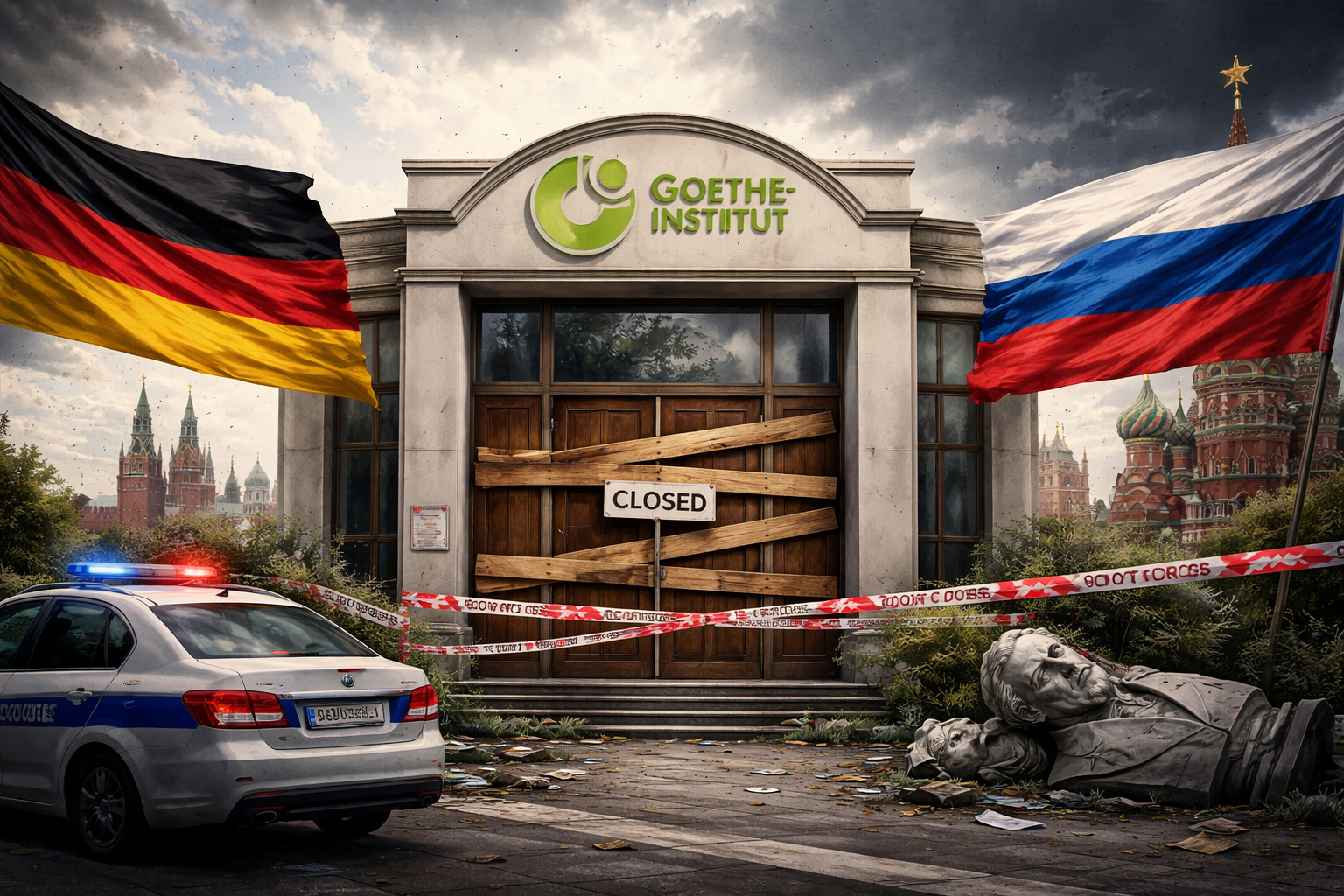
Germany’s Goethe-Institut is set to shut down all its branches in Russia by Sunday amid escalating tensions between the two countries. The move follows Russia’s order to close German cultural centers in Moscow, St. Petersburg, and Novosibirsk in retaliation to Berlin’s sanctions tied to the alleged drone attack on Leipzig airport in August. These events mark one of the most severe deteriorations in German-Russian relations with broad cultural consequences.
The Goethe-Institut’s Secretary General Gitte Zschoch announced that all employees in Russia must stop their work by September 13, 2026. This closure cuts off access to German language training, cultural information, and resources once provided by the institute’s libraries and courses. The interruption not only affects language students but also German language teachers in Russia, many of whom rely on the institute’s support for professional development and teaching materials.
Impact on Language Learners and Emigrants
Many Russian learners of German expressed concerns over the loss of local opportunities to take internationally recognized Goethe language exams. Some readers explained that ethnic Germans living in Russia, particularly late repatriates planning to move to Germany, will face additional burdens traveling abroad for language certification required for immigration and university admission.
Parents with children attending German-language schools have also raised worries. They mentioned that with the closures, families will have to arrange travel to neighboring countries to complete language exams. Some hold out hope that German courses or exams might continue through online platforms or partner institutions, though concrete plans remain unclear.
Consequences for Educators and Cultural Exchanges
German language teachers voiced their concerns about losing critical support and job opportunities as the Goethe-Institut’s activities end. A teacher from the Moscow region described the partnership with the Goethe-Institut as a key element in providing high-quality teaching resources and opportunities for students to pass recognized exams. Others reported feeling professionally isolated with fewer prospects to continue teaching German in Russia.
Despite wartime restrictions and political tensions since 2022, thousands continued to engage with Goethe-Institut programs in Russia. In 2025, approximately 10,000 people studied German through its courses and partnerships, and the institute administered roughly 22,000 exams professionally, showing sustained demand for its services.
Political and Cultural Fallout
The closures have been widely viewed as symbolic of the worsening political climate between Germany and Russia. Several readers lamented how cultural cooperation has become entangled in geopolitical disputes, effectively making culture a hostage to political decisions. Some criticized Russian leaders for isolating the country while their own families benefit from European education.
Others in Russia blame Germany for escalating tensions by closing the Russian House cultural center in Berlin. The bilateral agreement between Russia and Germany, established in 2011, obligates both countries to maintain conditions that allow their cultural institutions to operate reciprocally. However, this agreement does not mandate mutual closures in response to sanctions or political disputes.
The president of the Goethe-Institut, Gesche Joost, described this development as the “end of an era in German-Russian cultural relations.” The Goethe-Institut operates 154 branches across 100 countries, but the closure of its three Russian branches underscores the broader suspension of cultural dialogue amid worsening diplomatic relations.