

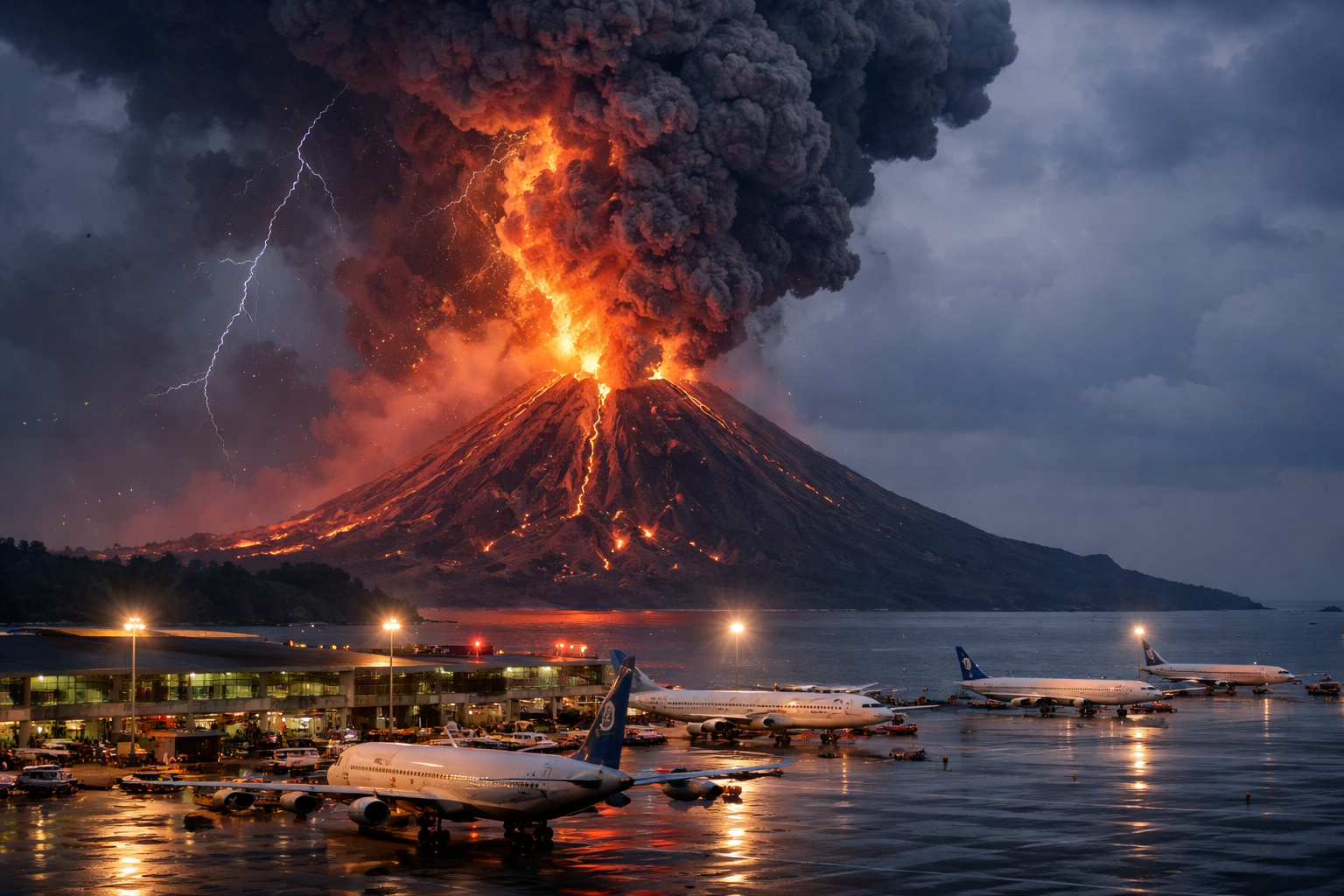
An eruption of the Anak Krakatau volcano has forced the suspension of 209 flights at Indonesia’s primary international gateway, Soekarno-Hatta International Airport near Jakarta, stranding over 22,000 passengers as of Sunday morning.
The volcano’s activity began late Friday night and intensified with persistent seismic tremors, lava fountains, and loud explosions continuing into Sunday, when two additional eruptions were recorded.
Flight Disruptions and Impact on Passengers
The Indonesian transport ministry reported that operations would remain paused until 1:30 p.m. local time (6:30 a.m. GMT), affecting flights primarily to and from Singapore, as well as international routes including Doha, Sydney, and Kuala Lumpur.
Authorities confirmed no tsunami warning was issued despite the eruptive activity, which is located in the Sunda Strait between Java and Sumatra islands.
Health Concerns and Local Response
The health minister advised residents in impacted areas to stay indoors and use face masks to minimize respiratory, eye, and skin irritation risks from volcanic ash.
Local reports detailed eye irritations leading several schools to suspend activities on Saturday. Fishermen also canceled trips due to the thick ashfall causing sore eyes and discomfort.
One resident described the sensation as if “small grains of sand had gotten into my eyes,” requiring frequent use of eye drops and repeated sweeping of ash accumulation outside his home.
Anak Krakatau’s Historical Context and Volcanic Activity
Anak Krakatau, meaning “Child of Krakatoa,” has been intermittently active since emerging in the early 20th century within the caldera formed by the catastrophic 1883 Krakatoa eruption.
Notably, its collapse in December 2018 triggered a deadly tsunami that killed over 400 people and caused widespread displacement and injuries along nearby coastlines.
The region lies within the Pacific Ring of Fire, known for intense seismic and volcanic activity due to tectonic plate boundaries encircling much of the Pacific Rim.