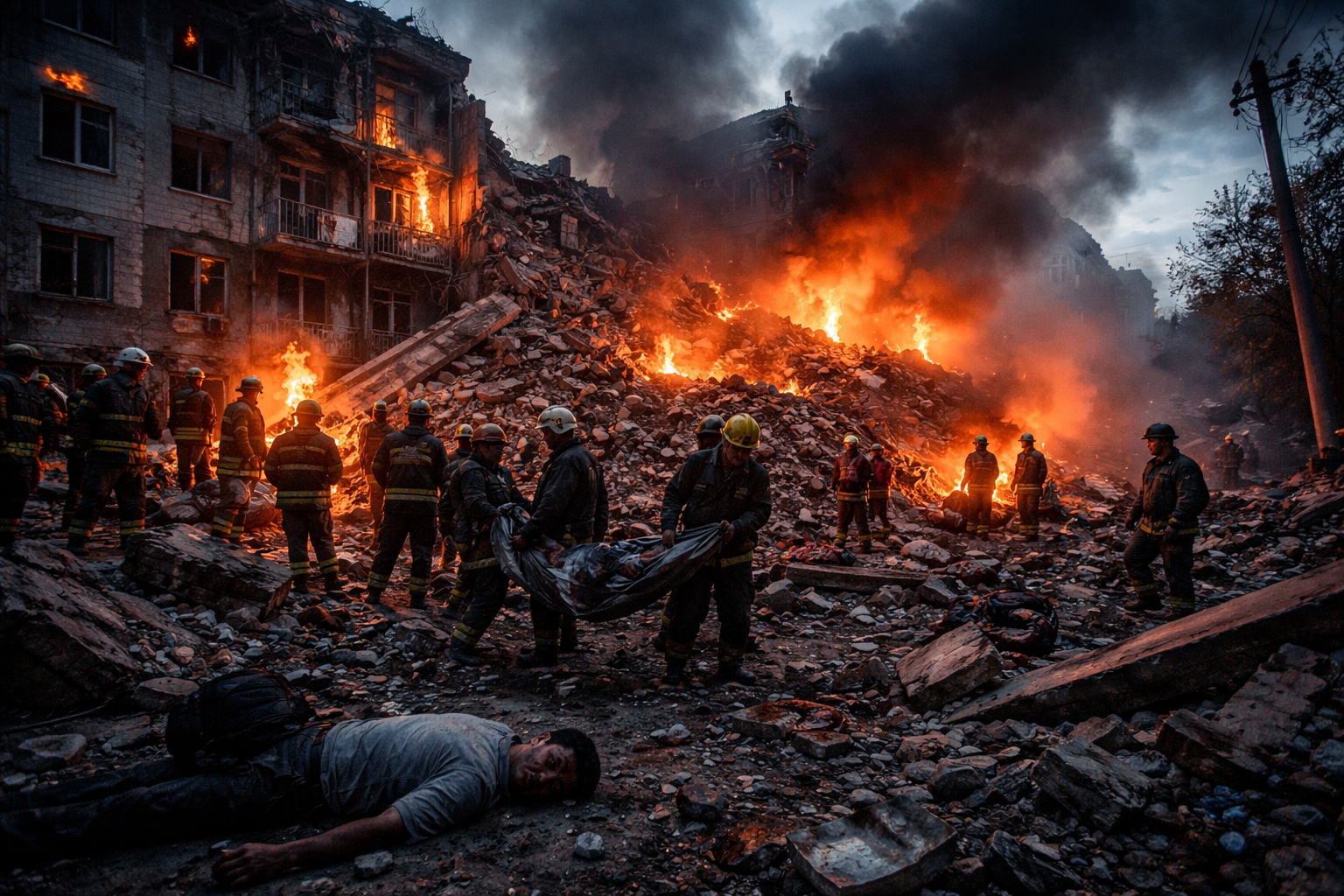

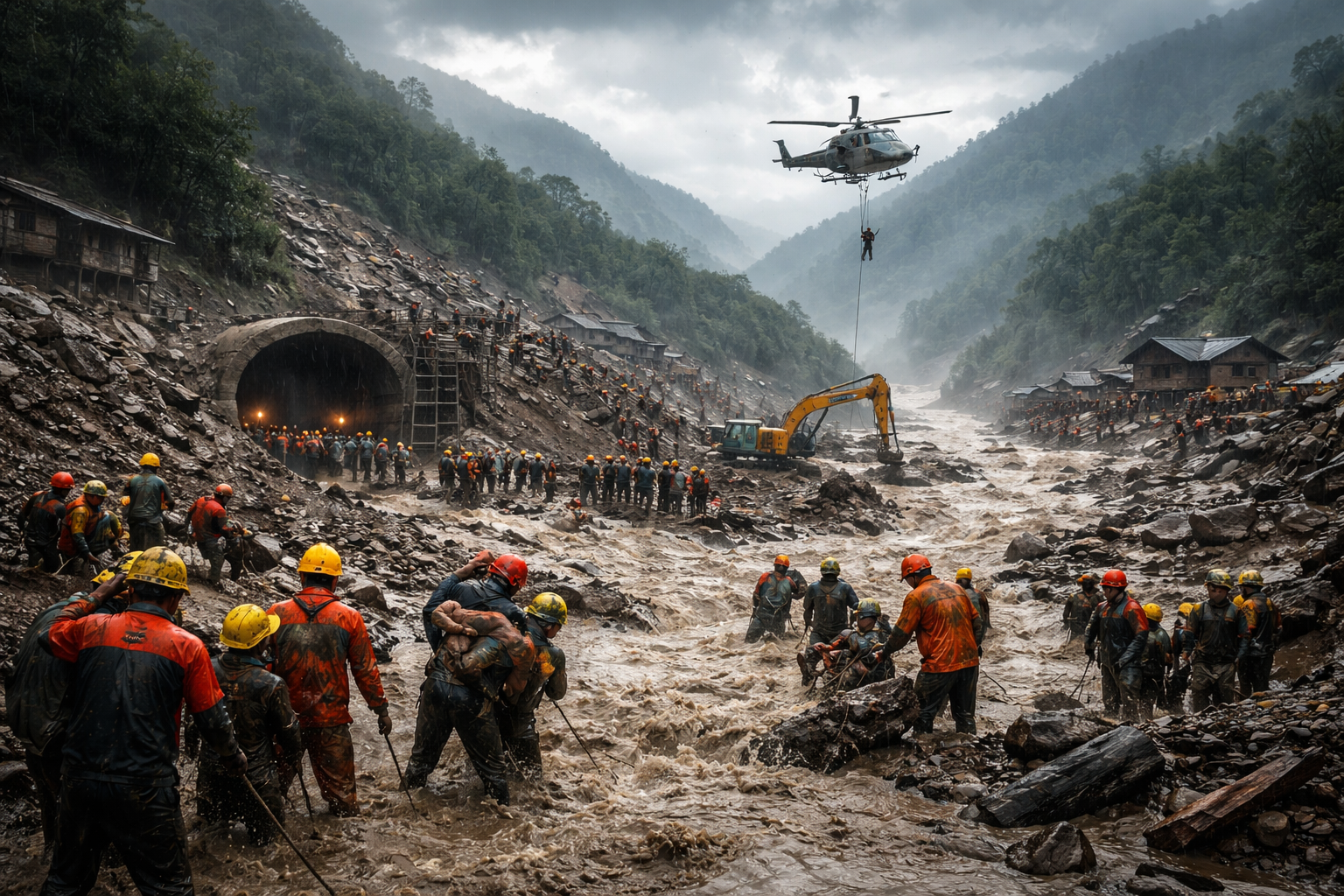
The death toll from catastrophic floods in Nepal’s border region with Tibet has exceeded 1,000, officials reported, as rescue teams race to locate hundreds of workers reportedly trapped in mud-filled tunnels at hydropower construction sites along the Trishuli River.
While 279 people have been rescued from affected sites, more than 3,900 individuals remain unaccounted for, including over 600 workers believed to be sealed underground within the tunnels. Engineers have been attempting to pump air into these subterranean areas to sustain the trapped workers, but successful access has been limited. A recent entry into one tunnel was aborted after no survivors were found.
Rescue Efforts Involve International Collaboration Amid Harsh Conditions
The complex rescue operation is led by a combined team of Chinese and Nepalese military personnel, supported by experts from India, Korea, and Australia. Australian engineer Arnold Dix, assisting remotely, described the terrain as devastated to the point that the hydropower tunnels are difficult to locate amid boulder-strewn rubble, complicating access efforts. The need to excavate and blast through massive boulders larger than houses has slowed progress significantly.
Family members of those missing express fading hope but cling to the possibility that trapped survivors remain alive owing to oxygen systems within the tunnels. One relative told Nepalese media, “I still have a 50% hope that he is alive because there is an oxygen system inside.” Others voiced frustration over the slow pace of operations, emphasizing the urgency as time passes.
Impact on Hydropower Projects and Climate Change Concerns Highlighted
Nepal depends heavily on hydropower, and at least 11 projects either completed or under construction suffered damage from the floods. Authorities have intensified rescue operations, with Nepalese leadership stressing the unprecedented nature of the disaster and drawing attention to the broader risks of climate change affecting the Himalayan region.
In a social media statement, Nepal’s leader emphasized the need to raise international awareness about climate-induced disasters, underlining the increasing risks the nation faces.
Recovery and Identification Efforts Continue Amid Challenging Conditions
Meanwhile, downstream in districts like Chitwan, burial operations are underway to handle the nearly 300 bodies displaced by the floods. Identification efforts are hampered by the conditions, with only 4% of recovered bodies identified so far through DNA testing amid shortages of refrigerated storage.
On the Tibetan side of the border, Chinese authorities reported 16 deaths and 546 missing, though flood footage and casualty details have been heavily censored. Officials there have also taken steps to curtail online speculation regarding the death toll.