

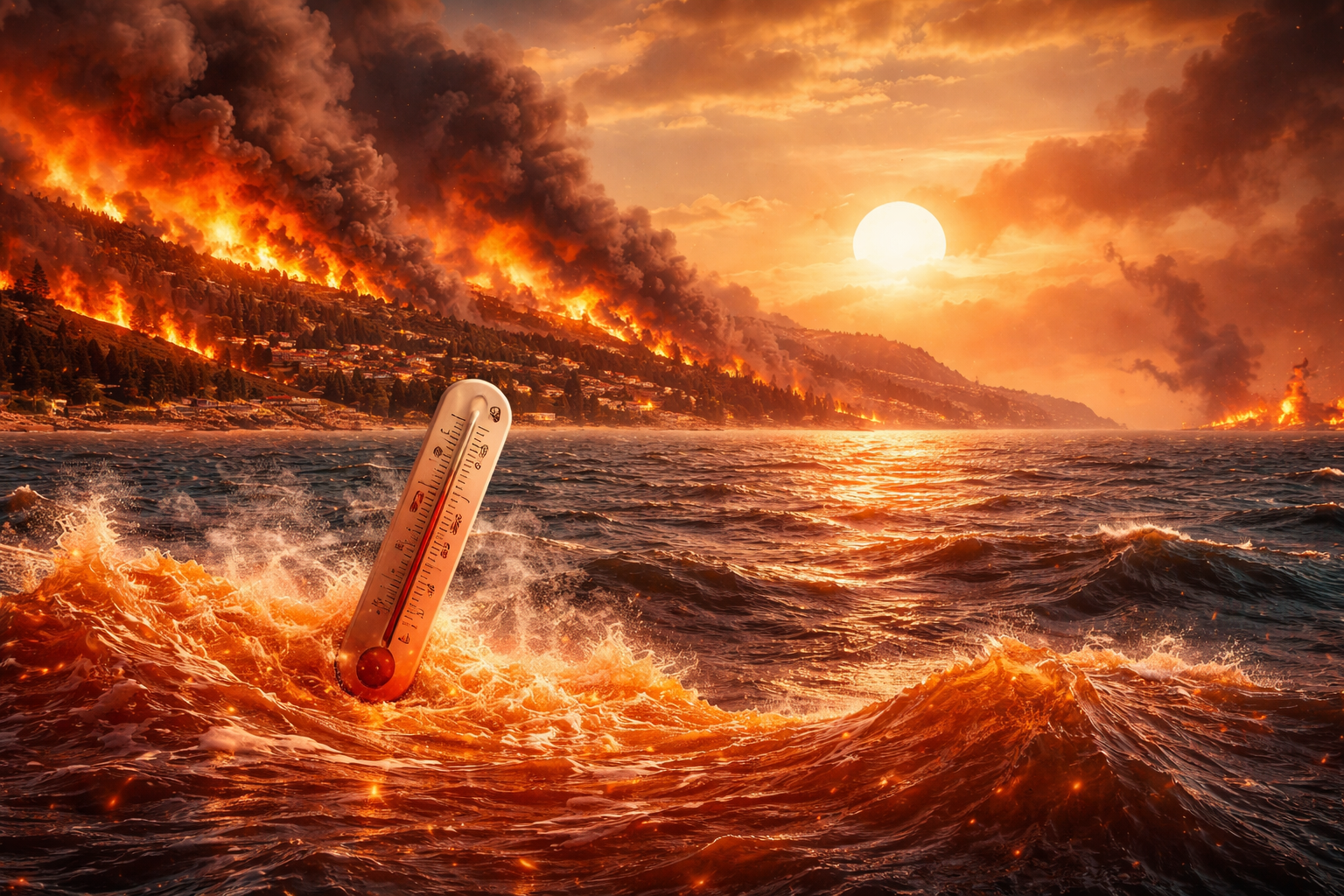
July 2026 recorded the highest global sea surface temperatures on record, driving extreme heatwaves, wildfires, and droughts across Europe
The world’s oceans reached their hottest July surface temperatures ever recorded, intensifying heatwaves and drought conditions in Western and Central Europe. This record warmth has led to devastating wildfires, water shortages, and significant economic losses across the region.
Surface temperatures along the Atlantic coast and western Mediterranean hit unprecedented highs, with Europe experiencing its hottest June-July period on record. These extremes are linked to persistent high-pressure systems trapping heat and exacerbating drought conditions that critically dry soils and reduce natural cooling.
This escalating marine heat and atmospheric warmth have intensified climate impacts driven by fossil fuel pollution. Authorities and scientists warn about the growing risk and long-lasting consequences if adaptive actions are not taken. These findings are according to data from the European Union’s Copernicus climate change service and recent scientific studies.
Marine Heatwaves and Record Ocean Temperatures
The EU’s Copernicus climate change service reported that July 2026 had the warmest global sea surface temperatures outside polar regions ever recorded for July. This broke the previous July record set just in 2023. Along the Atlantic coasts and in the western Mediterranean, sea surface temperatures surged to new highs, driving severe marine heatwaves.
While global surface air temperatures in July 2026 were marginally cooler than July 2024 by just 0.01°C, both months now rank as the joint-second warmest Julys on record. Western Europe endured an exceptionally persistent heatwave that made the first two summer months 2.79°C hotter than usual, shattering previous records and fueling large-scale wildfires.
Impacts of Heatwaves and Drought on Europe
Central Europe has suffered extreme heatwaves, with new national temperature records in countries such as Austria and Slovakia. This extreme heat has dried out vegetation and increased wildfire risks. According to Samantha Burgess, a climate scientist at the European Centre for Medium-Range Weather Forecasts, the summer is a clear example of how climate breakdown intensifies heat extremes and drought, amplifying each other.
As Burgess explains, persistent high-pressure systems trap heat over western Europe, dry soil loses its cooling ability and heat builds up more rapidly. Prolonged drought and heatwaves have severely impacted water supplies, irrigation, and power generation. Notably, Poland had to shut down two coal power plants, and Hungary temporarily stopped operations at its only nuclear plant due to insufficient cooling water.
Economic and Environmental Consequences
Early estimates show the June heatwave alone caused crop losses for grain farmers valued at approximately €2 billion. Experts warn that prolonged drought can compound economic damages across multiple years and sectors. A study led by the CMCC European Institute on Economics found that the mega-drought between 2015-2018 cost Europe around €439 billion, with ongoing effects on agriculture, manufacturing, and construction.
Marta Mastropietro, lead author of the study, highlighted that persistent drought effects accumulate over years and are often underestimated by conventional impact assessments.
Wildfires and Future Risks
Since the start of 2026, about half a million hectares have burned across the EU, according to the European Forest Fire Information System. The hot, dry, and windy conditions have made firefighting more challenging, setting new records for fire severity so early in the year. Víctor Resco de Dios, a forestry engineering professor at the University of Lleida, warns that climate change is increasingly creating environments conducive to mega-wildfires.
Nonetheless, he emphasizes that through vegetation management and urban planning, much of this risk can be mitigated. He cautions, however, that what seems extreme today will be mild in a few decades without decisive action to adapt and reduce climate harms.