
This story is part of Peak, The Athletic’s desk covering the mental side of sports. Sign up for Peak’s newsletter here.
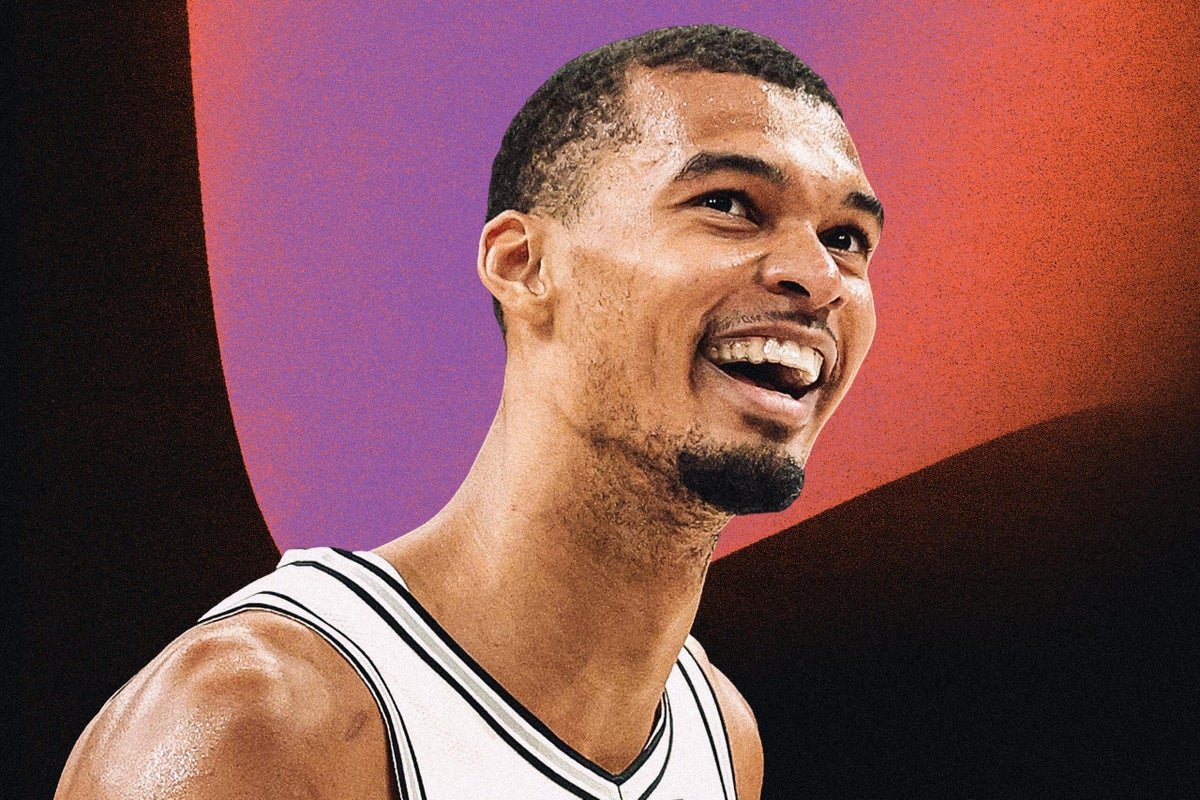
Victor Wembanyama sat on the bench with his San Antonio Spurs teammates, visibly emotional as he watched his team secure a victory over the Portland Trail Blazers in the NBA playoffs.
After the game, a French reporter asked Wembanyama why he believes athletes often struggle to display their feelings.
“Personally,” Wembanyama said, “I refuse to carry the burden of having to hide my emotions.”
When Brad Stulberg, a University of Michigan professor and author of “The Way of Excellence,” heard the comment, he immediately thought of what he calls the “epidemic of nonchalance.” A culture where caring deeply can be mistaken for weakness and emotional investment is often treated as something to hide.
To Stulberg, it’s exactly why Wembanyama’s answer stood out.
Stulberg works in the University of Michigan School of Public Health, where he researches, writes about and teaches human performance. Wembanyama is a particularly fascinating case study.
A 7-foot-4 center from France, Wembanyama has become one of the biggest stars in the NBA in just his third season. And he has done it by wearing his heart on his sleeve, including crying after leading the Spurs to the NBA Finals.
To Stulberg, it underscores a larger idea. He said a lot of people convince themselves they don’t care about something as much as they actually do in the hope that it’ll soften the blow if things fall through.
But he sees that less as confidence, and more as self-protection, or what he calls a “built-in handicap.” The problem, he said, is that protecting yourself from failure or judgment often means holding back from giving 100 percent of yourself.
He views Wembanyama’s willingness to openly care as a competitive advantage. The advantage isn’t necessarily in displaying emotion; it’s in refusing to waste energy hiding it.
“So many athletes and people in general spend so much time and energy on putting up a facade of how they think they should act or how they think other people are going to perceive them,” Stulberg said. “And that’s just wasted time and energy that could be used for competing. Give yourself permission to really lay it on the line. I think so many even elite athletes are self-handicapped in this way.”
Wembanyama has said he channels disappointment, jealousy, anger and passion. Instead of trying to play a certain role, he embraces being himself by following his feelings.
Stulberg said great performers often develop what psychologists call “psychological flexibility”— the ability to experience a wide range of emotions without becoming trapped by any of them. Essentially, it’s avoiding acting on short-term urges.
“It’s the ability a lot of elite performers have,” he said, “where they have this big toolbox of drives and they’re able to match a certain drive to the moment or what’s called for.”
The challenge is recognizing when a particular emotion is helping and when it has started to work against you.
And that’s a balance Wembanyama is still learning.
Stulberg pointed to his ejection for elbowing Minnesota Timberwolves center Naz Reid in the second round of the playoffs as an example. The same emotional intensity that can fuel performance can also become a liability when it takes over. Stulberg recommends small rituals, like a deep breath or short phrase, to interrupt automatic emotional reactions and give yourself a chance to choose a better response.
“It’s practicing responding, not reacting,” he said. “Reacting is rash and very emotionally laden, and responding is more deliberate.”
The potential benefits extend beyond individual performance.
When a team’s best player openly shows how much he cares, it gives others the permission to do the same. Trust, Stulberg said, is built through authenticity. Just as vulnerability strengthens friendships and relationships, it can strengthen teams by creating deeper bonds.
For Stulberg, that’s also where the lesson extends beyond basketball. The same willingness to care can strengthen experiences and ultimately lead to what he calls a “big and textured life.”
In his view, the lows may be lower, but the highs are higher. It is the price for a fuller emotional life.
Holding yourself back, he argues, sacrifices not only growth and potential but also fulfillment, intimacy and love, all in exchange for short-term safety and comfort. He calls that tradeoff a trap.
“You can either go through the motions and be superficially cool but actually boring,” he said, “or you can step into the arena, lay it on the line, care deeply, make yourself vulnerable and fully live your one and only life.
“The world needs more people who have the guts to care.”