
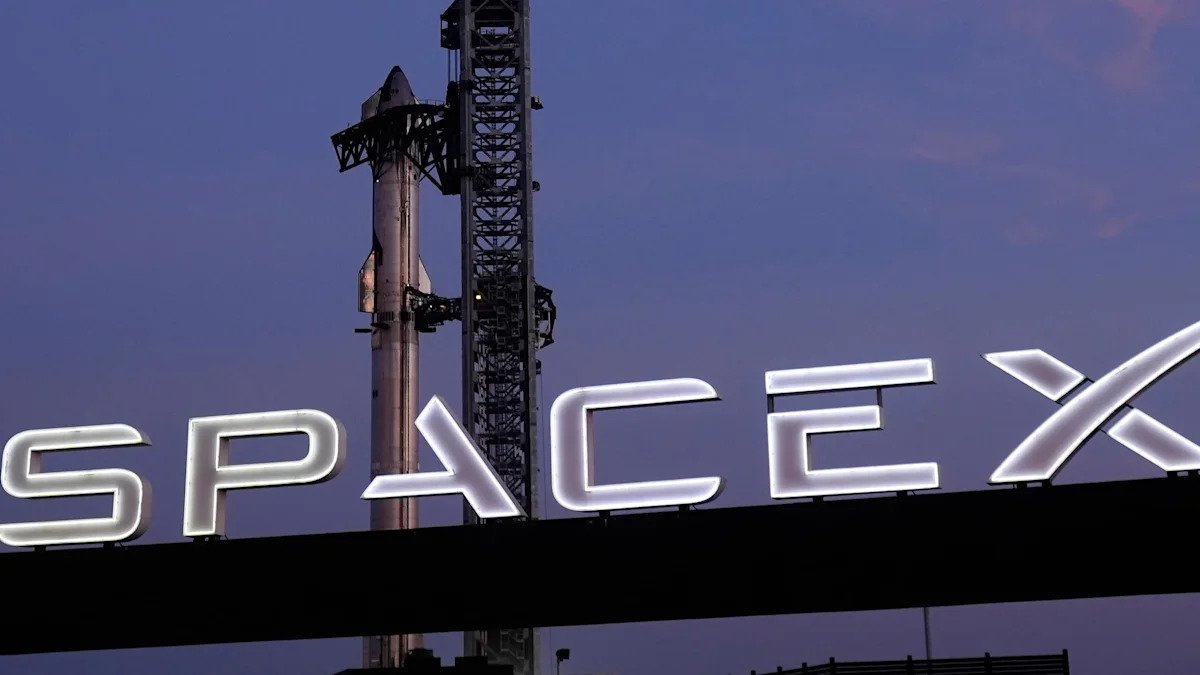
SpaceX (SPCX) stock hit an all-time low on Wednesday, dipping below its market debut price just as rival Blue Origin shores up its capital position.
Shares hit an all-time low of $145.20 in midday trade before closing at $149.29 each, below the $150 market debut price for SpaceX. They were up 1.4% in premarket trading on Thursday, poised to rise back above $150 if the move holds in regular trading.
SpaceX stock tumbled 7% on Tuesday despite the company’s inclusion in the Nasdaq-100 (^NDX). Typically, the addition to a major stock index would prompt buying from ETFs and mutual funds that track the index.
Some analysts and market strategists suggested that the Nasdaq inclusion was already priced into the stock, and recent Nasdaq weakness wasn’t helping matters.
An onslaught of generally positive analyst coverage coming on Tuesday also didn’t help SpaceX stock. Yahoo Finance’s Julie Hyman noted that of the 17 underwriters for SpaceX’s IPO, 12 issued new coverage for the stock, with all 12 giving it a Buy or equivalent rating.
One of the more bullish calls came from Adam Jonas of Morgan Stanley, who initiated SpaceX with an Overweight rating and a $300 price target.
Jonas argued that SpaceX could transform energy into intelligence — data centers using solar power — with “near-monopoly launch economics, the world’s largest LEO (Low Earth Orbit) network, and a fast-scaling AI infrastructure business,” Jonas said, fusing everything into “one infrastructure stack.”
Nevertheless, with most Wall Street price targets in the $200-plus range, SpaceX stock is struggling to push back above $200, last seen on June 16.
As SpaceX enters its “post-honeymoon” phase with the markets, Blue Origin — one of its biggest rivals — is raising money.

The private rocket launch company backed by Amazon’s (AMZN) Jeff Bezos is reportedly raising new money at a $130 billion valuation, the first public fundraise for the company.
As first reported by the New York Times DealBook, the $10 billion raise was backed by $4 billion from Coatue Management, $4 billion from other large investors, and $2 billion from Bezos himself. Bezos had been funding Blue Origin himself over the past 25 years.
Though the fundraise is small in comparison to the $85 billion raised by SpaceX, the new money for Blue Origin speaks to the company’s prospects and positioning within the space industry.
The money comes despite a huge rocket setback earlier this year when one of Blue Origin’s New Glenn rockets exploded during a static engine test, destroying the company’s only launch pad.