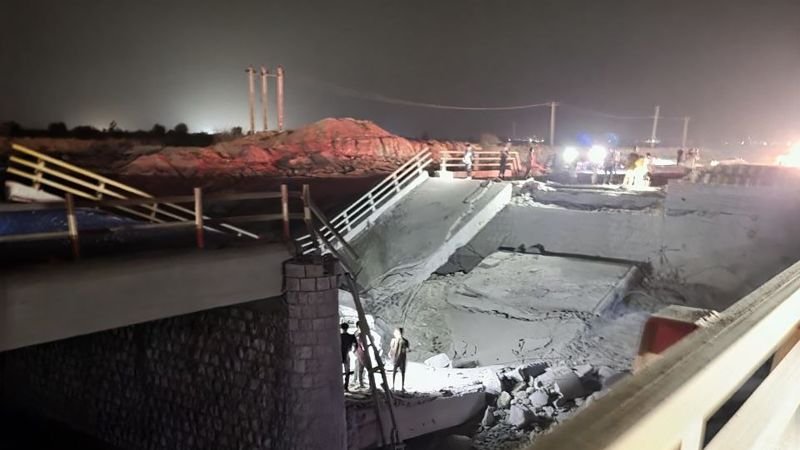
Iran claims to have targeted US facilities and partners across the Middle East on Friday, unleashing what appear to be its largest reprisals since a fragile ceasefire shattered almost a week ago.
US forces have been pounding Iran – sometimes more than once daily – for the past six days. Washington says the renewed strikes are retaliation against Tehran for targeting commercial ships in the Strait of Hormuz, and not keeping its side of the memorandum of understanding that was to be the framework for a lasting peace.
That agreement is now in tatters. And the Iranian military, which the Trump administration has said repeatedly has been decimated, retains its punch.
Tehran could still have thousands of drones and missiles in its arsenal, according to previous CNN reporting, enough to keep up this pace of attacks for a long time.
By early April, the Pentagon said Iranian missile and drone attacks had declined by 90% since the beginning of the war in late February. But there have been no exact numbers of how many missiles and drones Iran had when the war began or how many have since been used or destroyed.
Just before the ceasefire began in April, Tehran still had thousands of drones and roughly half of its missile launchers intact, CNN reported, citing sources familiar with US intelligence.
By late May, Iran had restarted drone production and was replacing missile sites and launchers destroyed earlier in the war, sources told CNN.
Analysts note that Iran doesn’t need a huge inventory of drones and missiles to destabilize the region and keep the Strait of Hormuz effectively shut, cutting off around 20% of the world’s pre-war oil supplies.
And by Thursday evening in the Gulf, Iran’s action over the past six days seemed to be having the desired effects.
Just three ships had transited the Strait of Hormuz in the previous 24 hours, according to open-source data from MarineTraffic.
Before the war, an average of about 110 ships transited the strait daily.