
I must make a confession. Sitting down to watch this World Cup semifinal between Spain and France, I was dreading what would happen.
Les Bleus had looked unstoppable, while La Roja had been winning but rarely impressing. Kylian Mbappé was leading the Golden Boot race with eight goals, while our superstar – Lamine Yamal – had looked up and down and had yet to have a true game-changing performance the entire tournament.
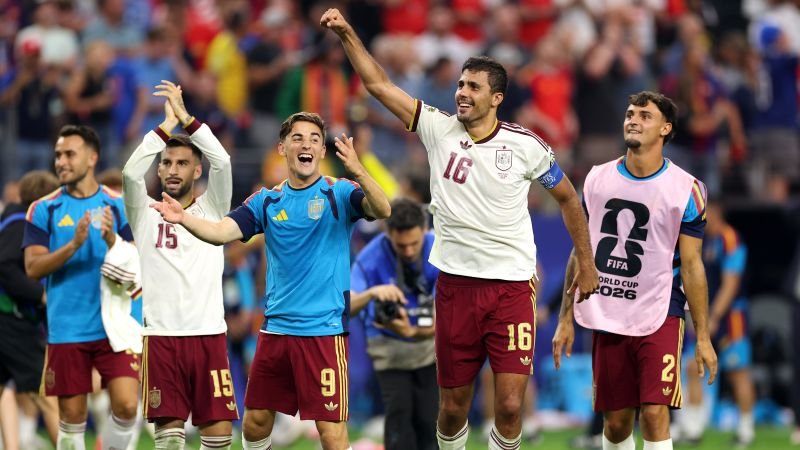
I had resigned myself to a valiant, face-saving loss – that is until the match started in what was a 2-0 win for La Roja.
⚽️ sign up for THE beautiful game by cnn sports ⚽️
- CNN Sports will give you behind-the-scenes reporting from the World Cup, expert analysis and point you towards the biggest storylines of the day. Click here to sign up for the newsletter (it’s free!).
Everything looked familiar as a Spain fan: Dominant possession, strong defense and very little to genuinely worry about. This was alarming for the first few matches of the World Cup – particularly the opener against Cape Verde – but then the team steadily marched onward, either openly or deceptively dominating opponents – with a bit of luck on its side at times – on its way to the semifinals.

The storyline sounded oddly familiar, almost like a rip-off of something I’d heard before, then it hit me: This was Spain at the 2010 World Cup.
Let me bring you up to speed. La Roja entered the 2010 World Cup as one of the favorites, having won the 2008 European Championships and impressing the world with its style of play, particularly with its out-of-this-world midfield – much like Spain in 2026.
The Iberians slipped up big time in their first match of the tournament, being shocked by Switzerland 1-0, bringing back ghosts of tournament failures past for Spanish fans. The manager came out and tried to calm everyone down, saying, “It wasn’t our day … the World Cup hasn’t ended” – much like Spain in 2026.
Cooler heads prevailed and the team began a run of winning matches, mostly by one goal, on its way to the semifinals against a European giant – much like Spain in 2026.
In the semifinal against a traditional boogeyman that La Roja had recently turned the tables on, Germany in this case, Spain won much of the possession and controlled the match for the most part, but the Germans had chances that threatened the Spanish goal but ultimately didn’t break through. I don’t need to repeat what happened in the end.
The parallels of this team’s performances with those of the national heroes of 2010 are uncanny, except there’s just a tad more to them.

This team is evolved from that tiki-taka powerhouse that dominated the sport from 2008 to 2012 and you have to look no further than the 2024 Euros to see how.
Gone was repetitive, break-you-down, possession-based play that many countries and club teams have figured out how to shut down. In its place was dynamic, winger-based, exciting soccer that thrilled the world.
The constant in the Spanish DNA was always a strong midfield and underrated defense that allowed the teams to win in their own unique ways, but the Euro 2024 win had two star names behind it: Lamine Yamal and Nico Williams.
Unfortunately, heading into this year’s World Cup, both our stars on the flanks were injured. Luis de la Fuente brought both of them to North America and has been patient in bringing them back, thankfully.
Unfortunately, in the first match against Cape Verde, the Spain boss tried to keep his Euro 2024 style, despite missing his two weapons, and paid the price – without their pace and ability to make something happen out of nothing, the inevitable disaster happened.
While many (including me) had serious doubts that de la Fuente would be able to adjust – going so far as lamenting the departure of former assistant manager Pablo Amo, who a lot of people said was the real mastermind behind the Euro 2024 win – he has somewhat brilliantly returned to Spain’s roots, while bringing his own touch to the side.
Tiki-taka con un poquitín de magia por las bandas (Tiki-taka with a little bit of magic down the wings).

La tiki-taka: The midfield was the key on Tuesday night, much as it has been throughout this tournament and throughout Spain’s history.
The unit dominated France and caused it an innumerable amount of problems and frustrations, ultimately leading to the mere shadow of the team we had seen earlier in the tournament. Fabián Ruiz and Dani Olmo were immense, but Rodri, in particular, was the main man for La Roja.
The Manchester City star is fully back to his 2024 Ballon d’Or-winning self, marshaling the middle, providing amazing connection between the front and back and even annoying the French players with some gamesmanship near the end.
The defense was solid yet again, behind some inspired play from Aymeric Laporte, Pau Cubarsí, Pedro Porro, Marc Cucurella and Unai Simón – though the Athletic Bilbao keeper probably took about three years off of the lives of many Spain fans with some of his play tonight.

La magia por las bandas: Yamal had an up and down game, but flashes of his genius shone through in the match, including the brilliant play that drew the penalty, which put Spain ahead for good. Williams came on in the 83rd minute and looked quite promising, surely enough for more than a cameo in the final on Sunday.
If Yamal shows up at his full capacity at MetLife, La Roja will have a good chance at earning its second star.
Ultimately, though, what will make this team more than an odd coincidence of 2010 and a full on echo in time is if there’s a victory on Sunday in East Rutherford. What would make it even more uncanny is if it were against another European opponent by yet another one-goal margin (England, looking at you).
But for me and many other Spain fans, a victory is a victory and who cares if we repeat what happened 16 years ago? After all, the only thing we want repeated is the pride and exuberant joy of being world champions again.