

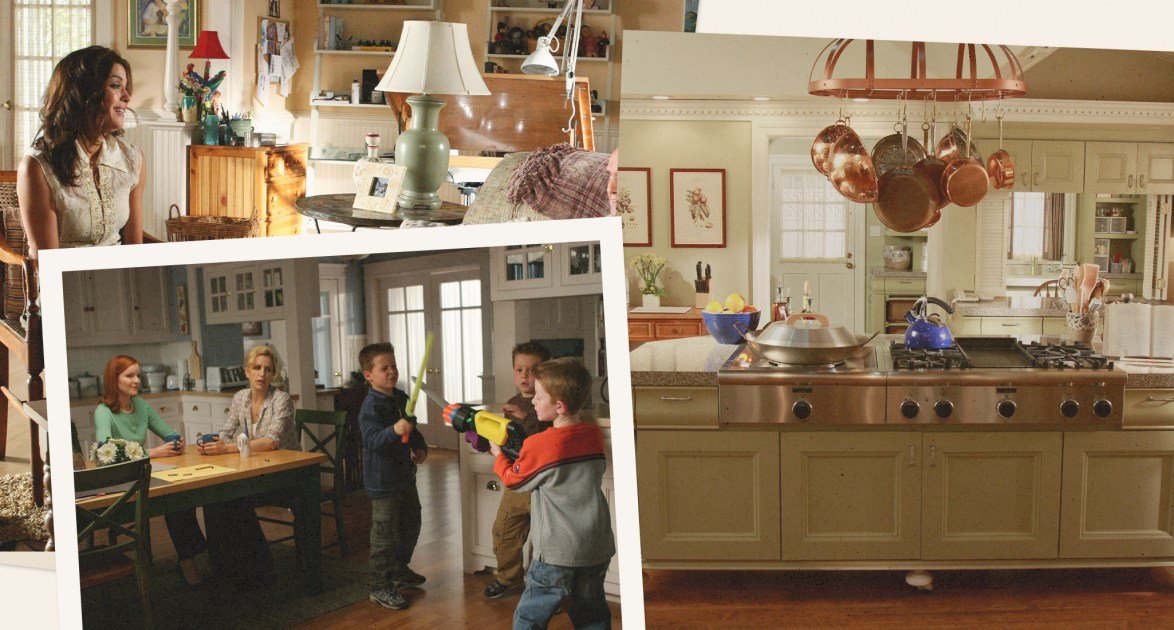
All of this is to say that, nearly two decades later, it’s striking is how these sets now feel prescient. Bree’s polished heritage, Gabrielle’s unapologetic excess, Susan’s cluttered coziness, Lynette’s lived-in pragmatism—they’re all styles that have cycled back into favor because they mirror the full spectrum of how people want to live. Not perfectly styled showrooms, but homes that signal identity, aspiration, even contradiction.
In fact, that’s why Wisteria Lane will always feel relevant. The show didn’t just give us desperate housewives; it gave us a visual language for the roles women were expected to play—and the interiors that framed them. Today, as design culture leans back into warmth, personality and imperfection, these houses feel less like sets from a primetime soap and more like enduring case studies in how our homes tell our stories.