
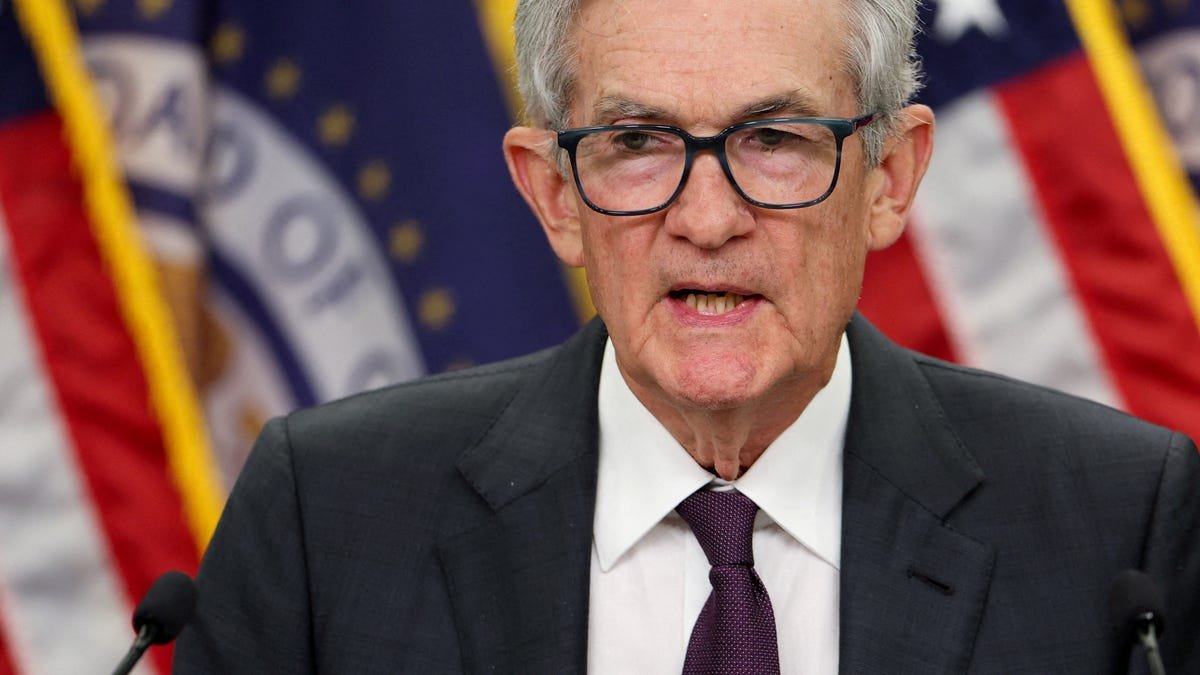
The Federal Reserve is expected to trim interest rates after reports signaled a weakening labor market.


Lisa Cook remains on Fed board ahead rate cut decision
A U.S. appeals court ruled that Federal Reserve Governor Lisa Cook can remain on the board ahead of a key rate policy meeting.
The Federal Reserve is widely expected to announce its first interest rate cut of the year on Sept. 17, potentially ushering in a series of reductions that would lower borrowing rates for businesses and consumers.
Economists and investors anticipate a quarter percentage point cut as reports suggest the jobs market is weaker than previously believed. Economists surveyed by Bloomberg expect one or two more rate cuts to follow in 2025.
The decision comes as President Donald Trump tries to exert greater influence over the central bank, raising concerns over its independence from politics.
After months of pushing Fed Chair Powell for aggressive rate cuts, the president has taken action to stack the Fed’s board of governors with his appointees. He moved to fire Fed Governor Lisa Cook in August, who is set to continue her role amid pending litigation. The Trump administration also worked to quickly push nominee Stephen Miran into an empty slot on the board, with the Senate confirming his appointment on the eve of the Fed’s two-day September meeting.
Powell “MUST CUT INTEREST RATES, NOW, AND BIGGER THAN HE HAD IN MIND,” Trump said Sept. 15 on Truth Social.
The Fed is set to reveal its rate decision at 2 p.m. Eastern Time, with a news conference to follow. Follow along for live updates.
While most economists expect a quarter-point reduction in September, some Fed officials may push for a more aggressive rate cut.
Governors Christopher Waller and Michelle Bowman, Trump appointees who dissented for a cut in July, as well as newly appointed Stephen Miran could dissent for at least a half percentage point cut, according to a note from economist Michael Feroli of JP Morgan.
There’s also a chance a regional Fed president or two vote for steady rates, according to a Sept. 12 note from Deutsche Bank Research economists, who say the decision is “unlikely to be unanimous.”
The meeting has the potential to be the first with three dissenting governors since 1988.
– Bailey Schulz
The U.S. economy added a disappointing 22,000 jobs in August, according to the Bureau of Labor Statistics. The unemployment rate hit 4.3%, the highest level since October 2021, while revisions show the economy shed 13,000 jobs in June, the first month of job losses since December 2020.
Other reports also suggest the jobs market is weakening. The jobs report for July revealed gains for the previous two months were revised down by an eye-popping 258,000. Another report from the Bureau of Labor Statistics published Sept. 9 showed firms hired nearly a million fewer workers than previously estimated in the 12-month period ending in March.
Trump ordered the firing of U.S. Commissioner of Labor Statistics Erika McEntarfer shortly after the weak July jobs report was published, accusing her without evidence of manipulating the data.
– Bailey Schulz, Andrea Riquier
Consumer prices accelerated modestly in August at 2.9%, according to the Labor Department, while core inflation ‒ which excludes more volatile items like food and energy ‒ held steady at 3.1%.
While inflation has cooled significantly since its 2022 peak of 9.1%, it remains above the Fed’s 2% target.
– Bailey Schulz, Andrea Riquier
Wall Street’s main indexes opened subdued on Sept. 17 ahead of the Fed’s widely anticipated decision.
The Dow Jones Industrial Average was up 0.47% Wednesday morning, while the tech-heavy Nasdaq slipped 0.38% and the benchmark S&P 500 was down 0.094%.
The Fed meeting will be a test of Wall Street’s recent rally, with the S&P 500 and the Nasdaq hitting record highs in the last six sessions, boosted by rate-cut expectations and revived enthusiasm around AI-stock-linked trading.
Investors say the resumption of Fed rate cuts can add to Wall Street’s rally, though such a boost would depend on whether lower interest rates could help the U.S. economy avoid a downturn.
– Reuters, Bailey Schulz
Tariffs pose a challenge to the Fed because they are expected to both increase consumer prices and curb growth, leaving the Fed torn between its dual mandate to support stable prices and maximum employment. Recent reports indicate the labor market is weakening while inflation remains above the Fed’s 2% target.
Recent economic data “pushes the FOMC (Federal Open Market Committee) into an uncomfortable position,” Scott Anderson, BMO Capital Markets’ chief U.S. economist, said in a Sept. 11 note.
– Bailey Schulz
The CME FedWatch tool suggests a 94% chance of a quarter percentage point cut in September and 6% chance of a half percentage point cut from the current range of 4.25% to 4.5%.
Fed funds futures markets are betting on three rate cuts total this year. More than 40% of economists in a recent Bloomberg survey agree, although the survey’s median respondent anticipates just two. Those respondents were divided on whether the second would happen in October or December.
– Bailey Schulz
An appeals court on Sept. 15 ruled that Fed Governor Lisa Cook can carry on her duties as she battles President Donald Trump‘s attempt to remove her from the central bank in court.
The Trump administration has accused Cook of committing mortgage fraud by claiming two properties as her primary residence, and says this allows Trump to fire Cook “for cause.” Cook has denied wrongdoing and has not been charged with a crime.
Recent reporting by Reuters showed Cook has claimed her second property as a vacation home, and appears to counter the documents cited by Cook’s critics.
Trump’s unprecedented move to fire Cook – the first Black woman on the Fed’s board – has raised concerns over the central bank’s independence from politics. Trump has demanded the Fed make aggressive rate cuts, and in August said he was expecting to soon have a majority of appointees on its board who would lower interest rates.
– Bailey Schulz
The Senate on Sept. 15 confirmed President Donald Trump’s pick to join the Fed’s board of governors, just one day ahead of the two-day rate decision meeting.
Stephen Miran, chairman of the White House Council of Economic Advisers, is set to fill the empty seat left by former Fed Governor Adriana Kugler, who stepped down from the role in August. Both he and Cook will cast votes at the September meeting.
Miran’s appointment has spurred concerns over the Fed’s independence from politics. Trump has demanded the Fed make aggressive rate cuts, and in August said he was expecting to soon have a majority of appointees on its board who would lower interest rates.
Miran has maintained that he will be committed to preserving the Fed’s autonomy and told lawmakers he is “very independently minded.”
BMO Capital Markets deputy chief economist Michael Gregory expects Miran to call for at least a half percentage point cut.
“Amid the likely decision to cut rates by 25 bps (basis points), we’ll probably see at least one dissenting vote in favour of a larger reduction,” Gregory said in a Sept. 17 note.
– Bailey Schulz
The benchmark federal funds rate has remained unchanged at 4.25% to 4.5% since December, when the Fed last announced a quarter percentage point drop.
– Bailey Schulz
The Fed adjusts interest rates to support stable prices and maximum employment.
When inflation is high, the Fed can raise rates to make borrowing more expensive and cool economic activity. When the labor market is weak, cutting rates can promote economic growth and hiring by making borrowing less expensive.
– Bailey Schulz