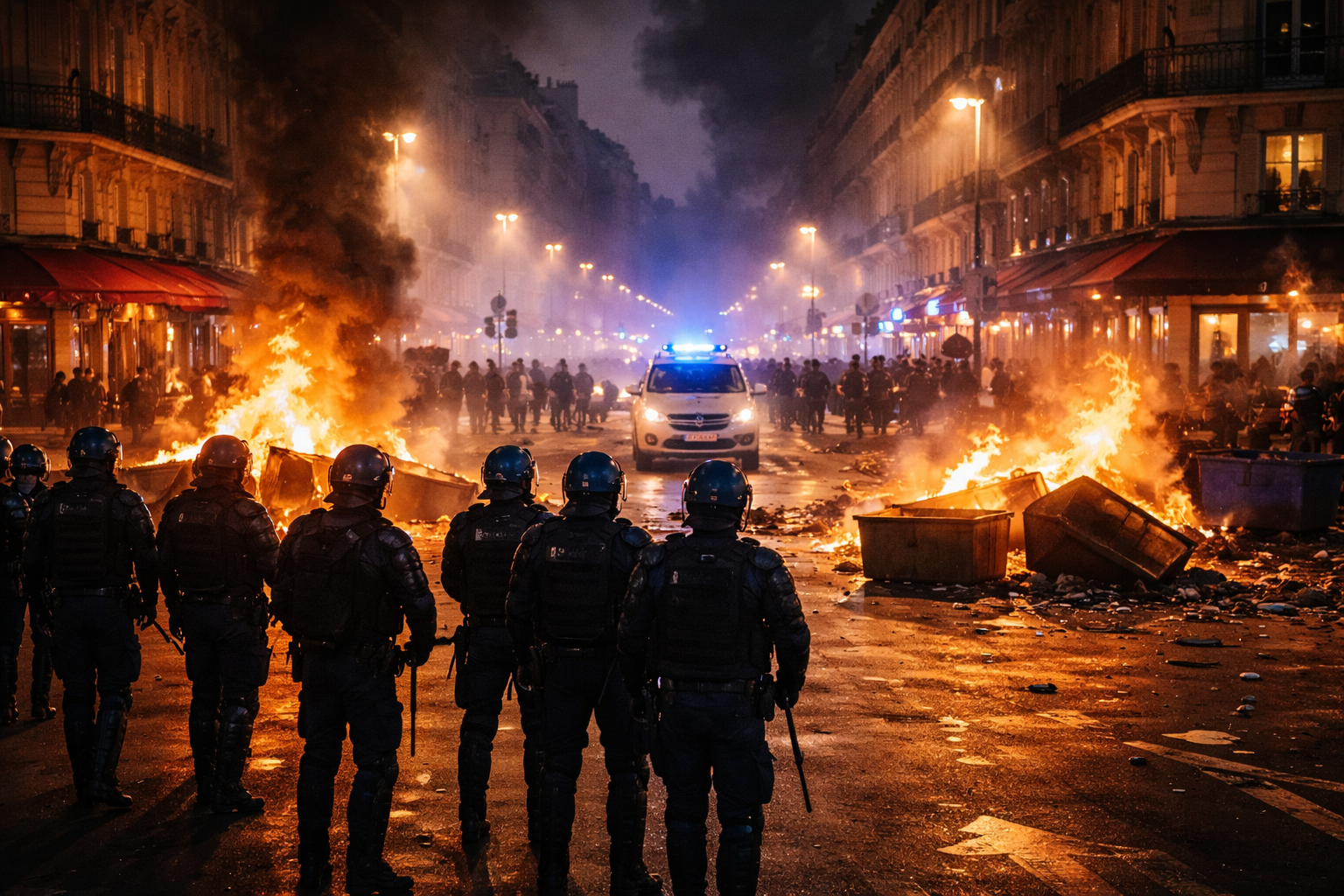
France has introduced partial curfews in multiple cities, including specific areas in Paris, after police lost control during widespread violent protests over the weekend. French officials acknowledged that law enforcement struggled to manage the scale and intensity of demonstrations that escalated into rioting and looting.
After an emergency cabinet meeting, the French prime minister announced that while a full curfew on entire cities was ruled out, local and partial curfews would be enacted where necessary. From Monday night through Tuesday morning, curfews were set from 8 p.m. to 6 a.m. in four northern cities, including Lille, and from 11 p.m. to 6 a.m. in parts of Paris where unrest occurred, such as Place de la République and the Les Halles shopping district.
Details on the Protests and Enforcement Measures
The weekend protests involved an unexpectedly large turnout—over 500,000 demonstrators nationwide—far exceeding police intelligence projections. Initially peaceful, many marches were hijacked by organized groups engaging in riots, with thousands of shops looted and public buildings damaged or set ablaze. Authorities reported around 2,000 stores were ransacked, and more than 2,500 individuals were arrested during the weekend violence, with a majority of detainees being adults. Nearly 70% of those arrested face prosecution.
Police ordered bans on gatherings and demonstrations in designated areas under curfew and called for reinforced operational strategies to respond to the unrest. The interior minister conceded that a lack of anticipation and insufficient police presence contributed to the disorder, stating he had submitted his resignation, which was declined by the president. Instead, he was tasked with overseeing improved transparency and new approaches to intelligence and crowd management.
Government and Local Officials’ Reactions
French President Emmanuel Macron criticized the “unbridled” violence in a televised address but stopped short of declaring a full state of emergency. The mayor of Paris acknowledged the state’s failure to maintain order during the protests and predicted that demonstrations would continue amid unresolved social tensions. Similarly, Marseille’s mayor described the situation as nearly insurrectional and criticized political attempts to deflect responsibility onto far-left groups.
Beyond law enforcement, government officials urged online resale platforms such as Vinted, eBay, Amazon, and TikTok to remove listings for stolen goods linked to the looting. In addition, Marseille independently banned all gatherings and demonstrations on Monday as precautionary measures.
Protests Impact Cultural Sites and Ongoing Unrest
Protesters also targeted cultural landmarks to express opposition to police tactics, blocking entrances to the Louvre Museum and effectively preventing it from opening as scheduled. Leaflets declared pride in blocking one of the world’s largest museums, signaling the depth and spread of the social movement driving the unrest.
The demonstrations were initially sparked by high school students and expanded to include teachers, parents, unions, and workers protesting the high cost of living—issues similarly fueling unrest in several European countries. The ongoing protests mark one of the most violent periods of civil unrest in France in recent years, occurring six months ahead of a critical presidential election and amid mounting economic pressures.