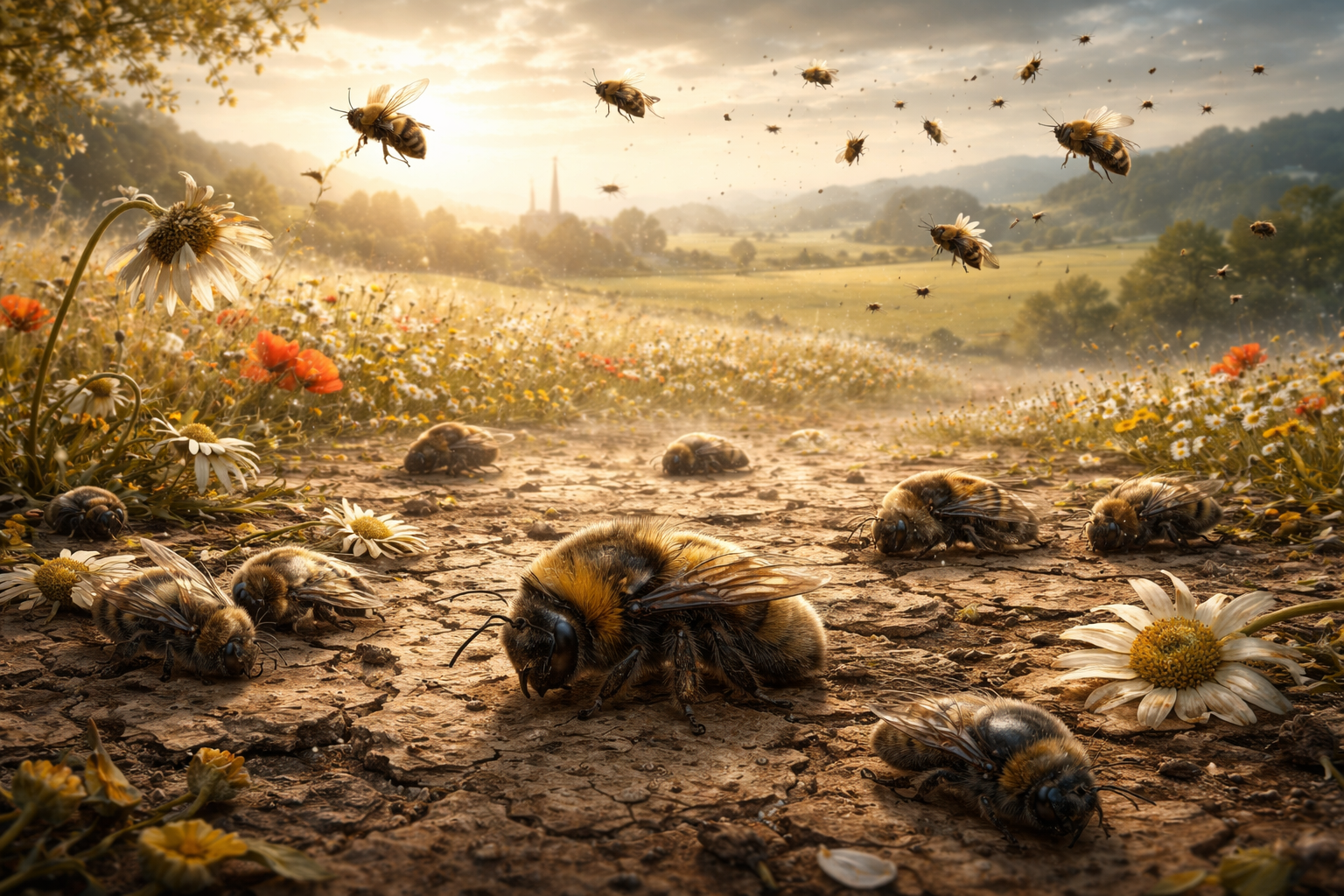
A recent study tracking wild bee and hover fly species across Europe discovered that most wild bee species have declined in the last 100 years, with about half of hover fly species also showing downward trends. This decline spans nearly the entire continent, except for some positive or mixed trends in the Alpine region.
The study, which examined data from 1921 to 2020 and covered 88% of the continent’s bee and hover fly species, found significant drops in species richness particularly in the Atlantic and Continental regions. Researchers warn the losses reflect a reshaping of pollinator communities, driven by the disappearance of sensitive species and survival of only a few resilient ones. Without intervention, they caution that deeper disruptions to ecosystem functions may result.
Key Findings and Regional Variations
Across Europe, the probability of finding many bee species at particular sites has declined, despite 91% of recorded species still being observed in modern surveys. Although approximately 9% of species have not been recorded recently, many of these were historically rare, leading researchers to conclude widespread extinctions have not yet occurred.
The Atlantic and Continental zones witnessed persistent species richness declines, whereas other regions like the Alpine area experienced more mixed or even favorable trends for pollinator populations.
Importance of Pollinators and Ecological Impact
Pollinators such as wild bees and hover flies play a crucial role in ecosystems and agriculture. Nearly 90% of wild flowering plants and more than 75% of key food crops rely partly on animal pollination. The decline in pollinators threatens wildlife diversity and weakens ecosystems’ ability to cope with climate change and environmental stresses.
According to the United Nations Food and Agriculture Organization, this diminishing pollinator population initiates a cascading effect that impacts food security and biodiversity resilience.
Responses from Experts and Upcoming UN Biodiversity Summit
Carlos Martínez-Núñez, an ecologist and lead author from the Spanish National Research Council, emphasized the hidden nature of biodiversity loss. He noted that apparently stable species counts could mask underlying declines, underscoring a critical window to take action before losses accelerate. Martínez-Núñez also warned that current increases in some species do not guarantee their future survival amid intensifying climate change and habitat loss.
Environmental researcher Ainhoa Magrach from the Basque Centre for Climate Change highlighted that the study extends earlier findings from northwest Europe to the entire continent, confirming that many pollinators are experiencing population decreases, although impacts vary regionally.
The study’s release coincides with the 17th UN Biodiversity Conference (COP17) in Yerevan, Armenia. The summit focuses on conserving natural ecosystems, protecting genetic resources, and advancing global biodiversity targets. Despite previous efforts, governments have not met any United Nations targets on nature protection set since 1992. Discussions at COP17 will assess progress toward goals including protecting 30% of land and sea, reforming environmentally harmful subsidies, and restoring degraded ecosystems.