

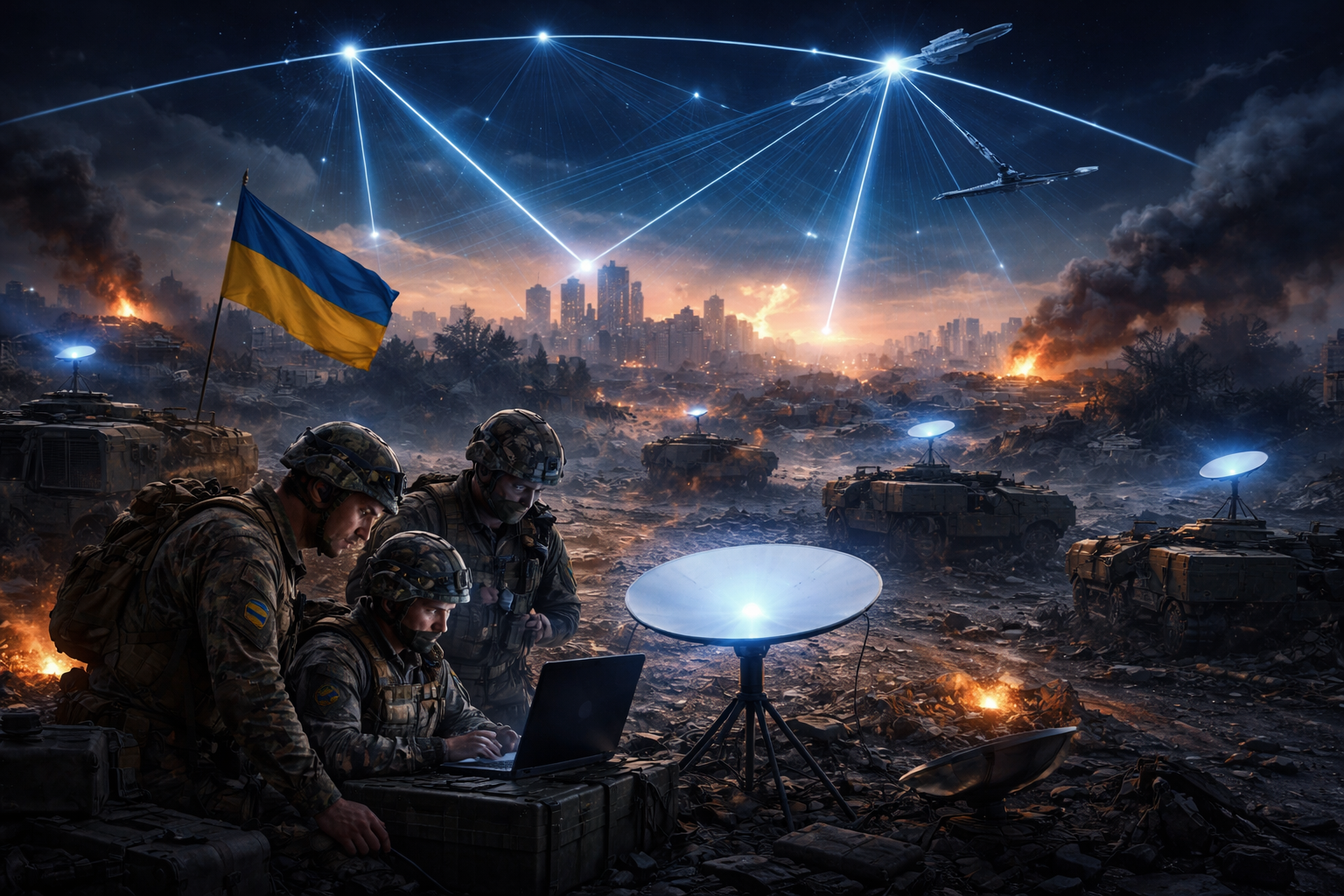
Ukraine heavily depends on Starlink satellite internet systems for battlefield communications, reconnaissance, and drone control amid its ongoing conflict. Recent reports from Kyiv have highlighted disruptions and restrictions on the Starlink service, intensifying worries about the effects of potential further limitations.
Operated by SpaceX, Starlink has become crucial since Russia’s invasion in 2022, providing communication capabilities even when local infrastructure is destroyed or conventional networks are down. The Center for Security Studies at ETH Zurich estimated that approximately 50,000 Starlink terminals were in use by Ukraine’s military in 2025, supporting command coordination and transmitting drone footage in near real-time.
Military and Civilian Distinctions in Starlink Services
Two systems, Starlink and Starshield, are often mentioned interchangeably but serve different functions. Starlink is a commercial satellite internet service, while Starshield is a government-controlled version designed for military and security applications. Current reported restrictions mainly affect the military-oriented Starshield systems, which are subject to U.S. government control rather than SpaceX’s commercial operations.
The Role of Starlink in Drone Warfare and Coordination
Starlink’s internet connectivity is integral to operating ground, naval, and aerial drones used by Ukrainian forces. It enables the transmission of live video and GPS coordinates over long distances, allowing effective reconnaissance and coordinated strikes deep within enemy territory. Restrictions to the system can disrupt drone performance, including reported throttling measures limiting speed to 160 kilometers per hour, which hampers control of drones traveling up to 300 kilometers per hour.
Implications of Potential Service Restrictions
Limiting access to Starlink or Starshield would not only degrade battlefield communications but also impair drone operations and broader military activities. While the Ukrainian defense relies on Starlink, it is also supported by reconnaissance data from Western partners, particularly the United States, supplying extensive intelligence that, combined with the satellite network, enhances operational effectiveness.
Alternative satellite providers exist in Europe, such as Eutelsat and OneWeb, but have yet to be proven at Starlink’s capability level in a wartime environment. The situation underscores the strategic reliance on private technology firms in modern conflicts and illustrates a significant shift in military logistics and communication.