

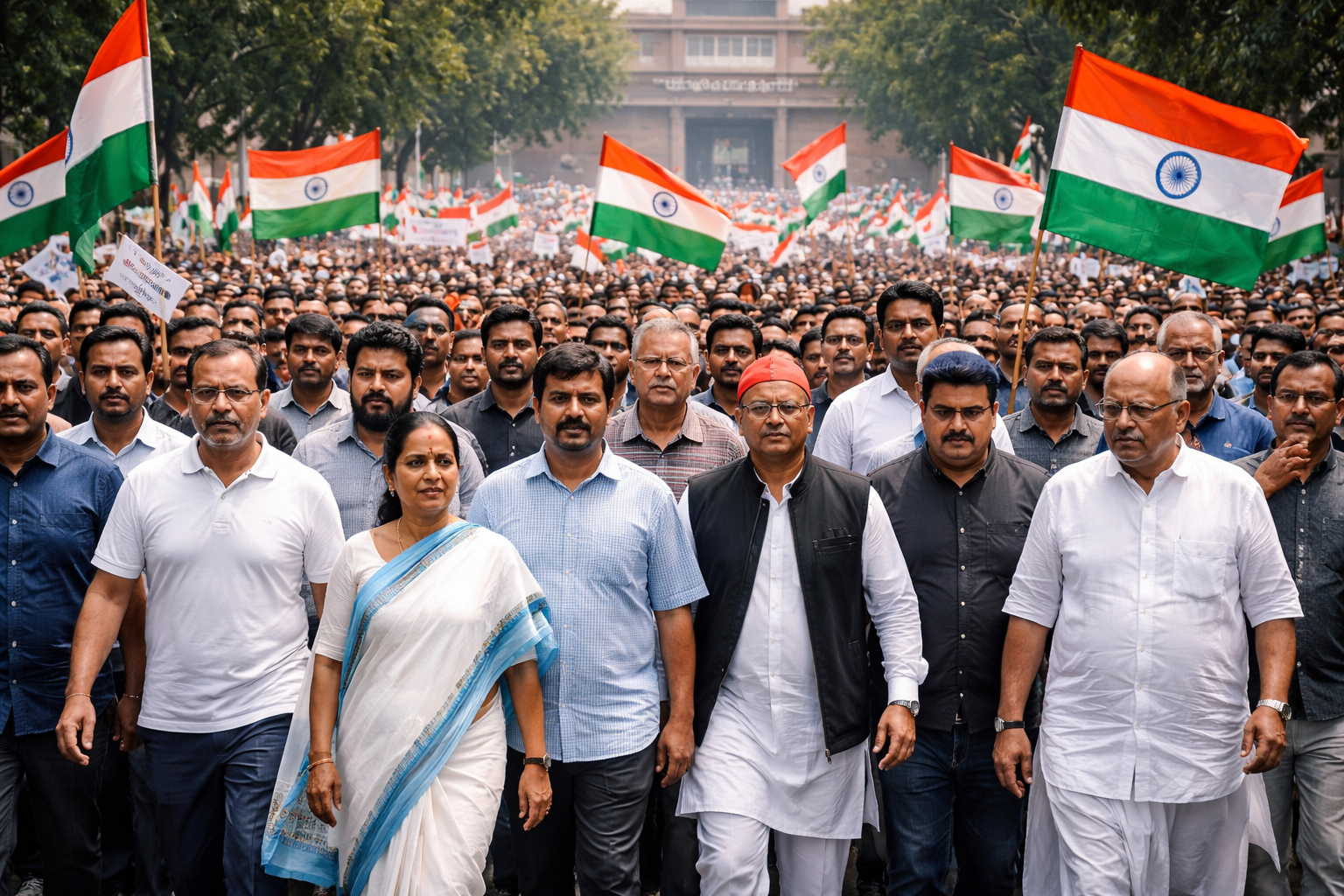
Opposition leaders in India escalated their campaign against Chief Election Commissioner Gyanesh Kumar by organizing a protest march to the Election Commission’s headquarters in New Delhi. The demonstrators called for Kumar’s resignation, accusing him of manipulating voter rolls in a way that could benefit the ruling Bharatiya Janata Party (BJP).
The protest took place with heightened security measures in central Delhi, including barricades and deployment of Rapid Action Force personnel, aiming to contain the opposition’s demonstration. Opposition figures, including Rahul Gandhi and Priyanka Gandhi Vadra, were briefly detained but continued their protest with a sit-in near the Election Commission offices.
These events come amid ongoing allegations that the Election Commission’s Special Intensive Revision exercise has led to the removal of over 130 million names from voter lists, disproportionately affecting minority voters. The Election Commission and the BJP have denied these claims, insisting the revision process is legitimate and targets duplicate, deceased, or relocated voters, as well as foreign illegal immigrants.
Protest Details and Opposition Demands
On October 5, opposition lawmakers attempted to breach security at the Election Commission building, resulting in clashes with police. Rahul Gandhi addressed the press from behind security barricades, characterizing the situation as a fight to protect India’s democracy and criticizing the Election Commission’s impartiality.
The opposition’s march began at Parliament House, with plans to raise their concerns with the country’s president. Congress leader Mallikarjun Kharge described the Election Commission as controlled by the government and called the voter roll changes an act of “vote theft.”
Controversy Over Voter Roll Revisions
Controversy intensified after a report by The Indian Express revealed internal objections from two Election Commissioners regarding changes to voter registrations and data control. These concerns were reportedly not addressed by Kumar, who oversees the three-member commission.
The revisions are feared to disenfranchise millions of voters, particularly from minority communities, prompting protests from opposition parties and youth-led movements. The Supreme Court has taken notice and issued responses from Kumar, the Election Commission, and the government regarding petitions challenging the voter roll revisions.
Government Response and Political Tensions
The BJP has accused the opposition of attempting to disrupt democratic processes through orchestrated protests aiming to unseat the current administration. Party spokesperson Sambit Patra labeled the opposition’s actions as a means to create anarchy and criticized Rahul Gandhi’s leadership role in the demonstrations.
The Election Commission maintains that the voter roll revision is a necessary administrative process to uphold electoral integrity. Kumar, appointed as Chief Election Commissioner in 2025 despite opposition objections, remains at the center of this political dispute.