
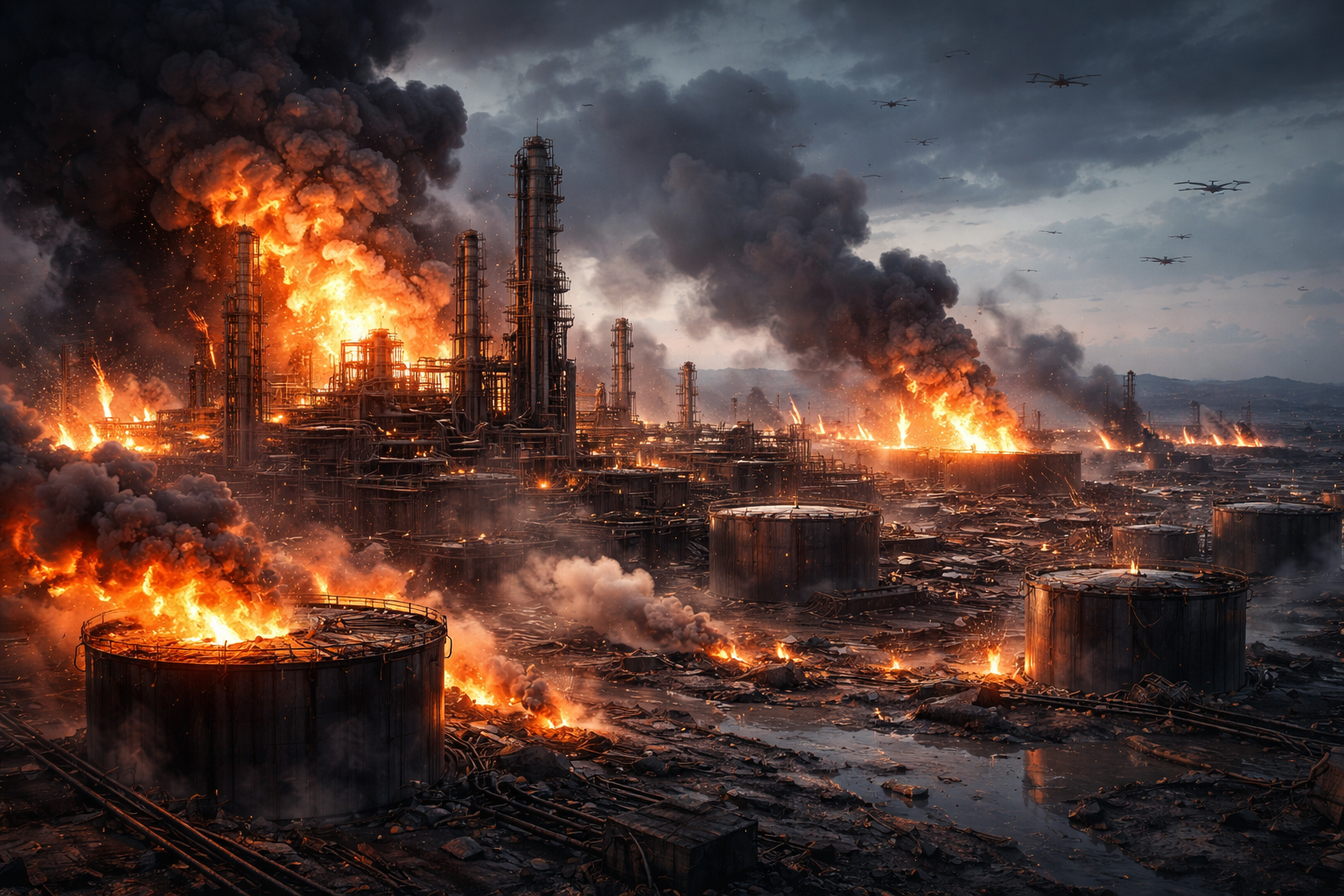
Ukraine announced that more than half of Russia’s oil refining capacity has been destroyed by its long-range missile strikes, dealing a significant blow to Moscow’s economy and its ability to supply military forces amid the protracted conflict.
The Ukrainian defense ministry claimed that attacks on refineries stretching from Moscow to Siberia have caused widespread fuel shortages earlier this year, leading Russian authorities to limit gasoline sales nationwide. Ukrainian Defense Minister Yevhenii Khmara characterized the damage as a “significant blow” to Russia’s aggression capabilities and logistics.
Putin Acknowledges Economic Impact of Strikes
Although Russian officials have not published detailed data on the extent of damage to oil production facilities, Vladimir Putin acknowledged the strikes’ toll during a Valdai Club international forum meeting. Putin estimated that the attacks have cost the Russian economy roughly 1% of its gross domestic product, admitting they partially achieved their goal of harming Russia’s economy by targeting refineries.
Former U.S. president Donald Trump attributed rising gasoline prices partly to these Ukrainian strikes on Russian oil refineries, dismissing earlier concerns related to the Strait of Hormuz.
Ongoing Conflict and Targeted Attacks
Amid intensified hostilities, Russian bombing in the northeastern Ukrainian city of Kharkiv resulted in at least six fatalities and nearly 60 injuries, with emergency responders evacuating residents from damaged housing. Kharkiv, near the Russian border, has faced persistent shelling and drone attacks since the February 2022 invasion.
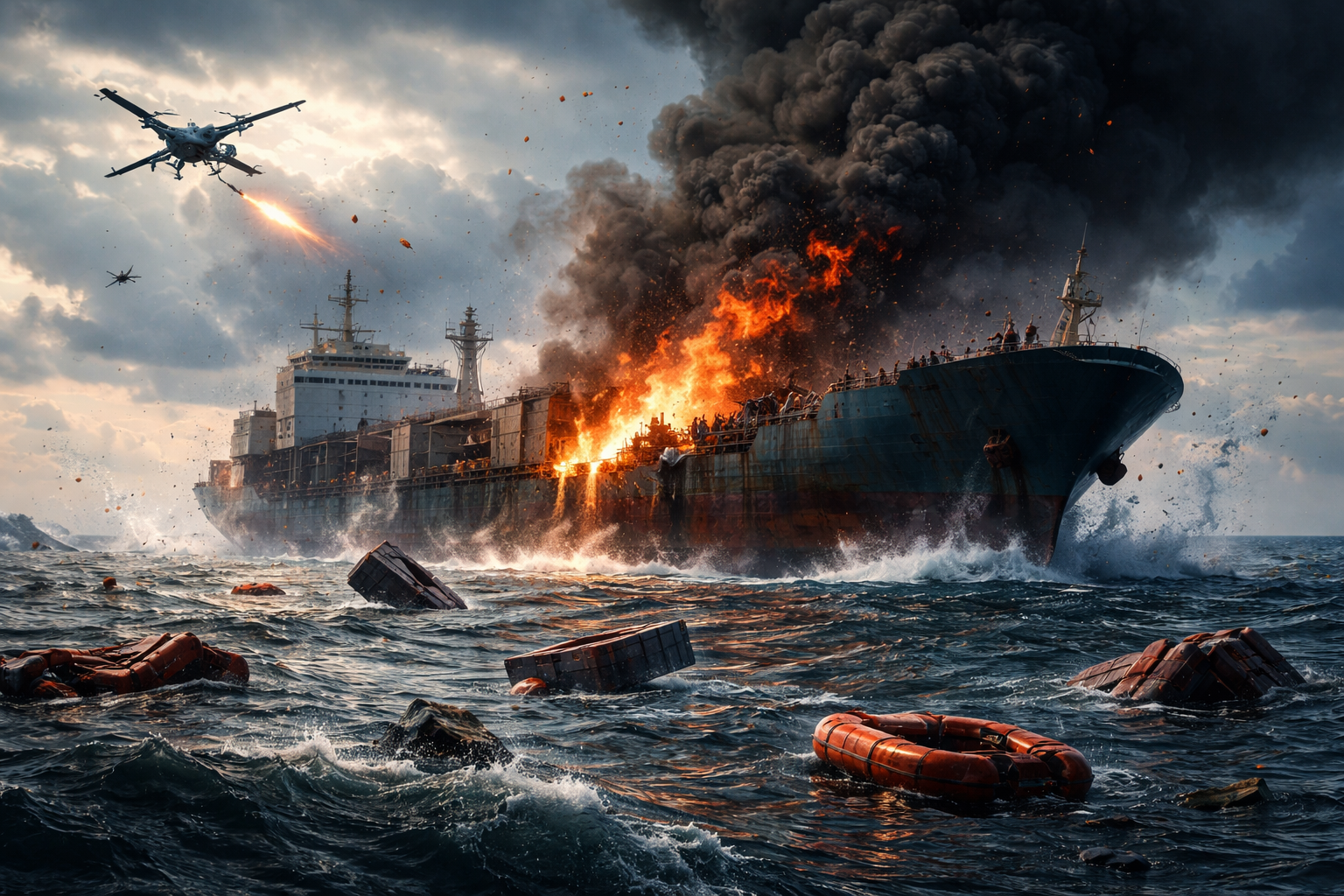
In a separate incident on the Black Sea, Russian drones struck the Turkish-owned grain ship Royad Mammadov, causing it to catch fire and sink off Romania’s coast. Two crew members died and 11 were rescued, as confirmed by Romanian authorities. Ukrainian President Volodymyr Zelenskyy condemned the attack on a civilian vessel transporting corn in neutral waters.
Additional Military Developments and Threats
Ukraine also targeted two facilities at the Russian-occupied Zaporizhzhia nuclear power plant with drone strikes, resulting in the death of a driver delivering supplies. Russian nuclear agency Rosatom officials reported the attacks hit a laboratory building and a radioactive waste processing plant but maintained there was no threat to nuclear safety.
To counter new jet-powered Russian drones, Ukraine has deployed AI-enabled automated turrets capable of intercepting these fast-moving threats. The Ukrainian air force confirmed the successful use of these robot guns against drones such as the Geran-5, highlighting technological advancements in air defense.
Meanwhile, Germany’s foreign intelligence chief warned of an escalating “shadow war” by Russia involving hybrid attacks that risk drawing Germany into direct conflict. EU foreign policy leaders also voiced concern, emphasizing Moscow’s increasing threat to civilian infrastructure and European security.