

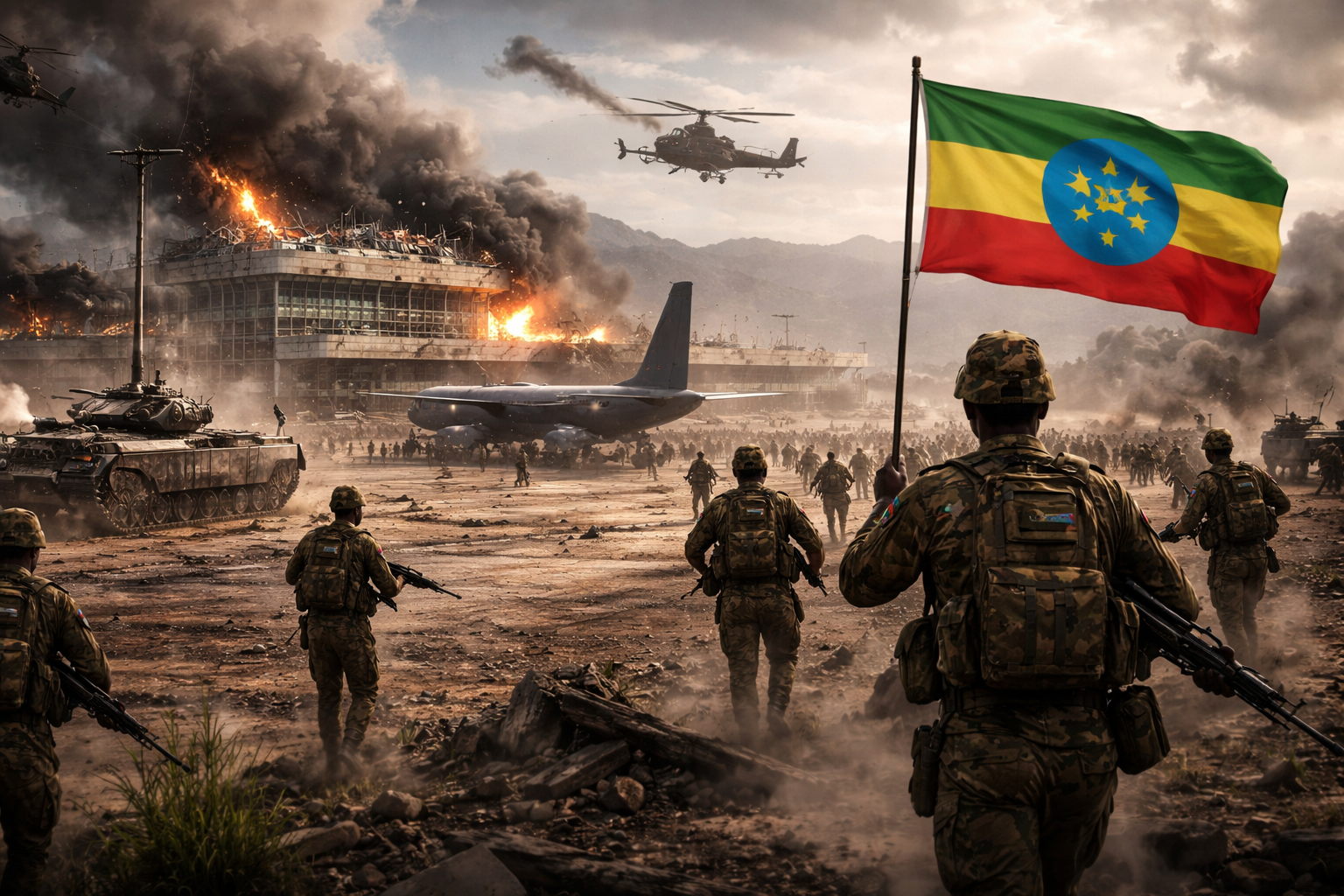
Ethiopian federal forces have reportedly reclaimed Alula Aba Nega Airport in Mekelle, the capital of the northern Tigray region, after it was seized by rebel groups last week. This development marks a significant moment in the region’s ongoing unrest, which is the most severe since the civil war ended in 2022.
According to anonymous government sources cited by multiple news agencies, including the Associated Press, the Ethiopian military confirmed full control over the airport. Rebel groups, including the Tigray People’s Liberation Front (TPLF), have been withdrawing from parts of the city as government forces advance.
The current status of Mekelle remains unconfirmed officially, with both sides yet to release definitive statements. Communication disruptions and limited media access complicate independent verification.
Strategic Setback for TPLF
The loss of the airport would represent a setback for the TPLF, which has dominated the Tigray region since earlier this year following the ousting of a government-appointed administration. The group had taken control of the airport on September 23 and launched a series of offensives in neighboring regions Afar and Amhara, initially gaining ground before facing recent pushbacks.
Despite recent losses, TPLF leader Debretsion Gebremichael vowed to continue guerrilla-style attacks reminiscent of tactics used after rebels lost control of Mekelle in 2020. The TPLF remains opposed to the current federal government, with the conflict’s history including a civil war that resulted in over 600,000 deaths.
Regional Implications and Diplomatic Strains
The conflict’s resurgence in northern Ethiopia has increased concerns about wider instability in the Horn of Africa. Ethiopia recently severed diplomatic ties with Eritrea, a country accused by Ethiopia of supporting the Tigray rebels—allegations denied by Eritrea, Sudan, and Egypt.
In response to rising tensions, the African Union has urged restraint among all parties. Debretsion characterized the conflict as regional, emphasizing competition for control over the Red Sea, a point of broader geopolitical contention.