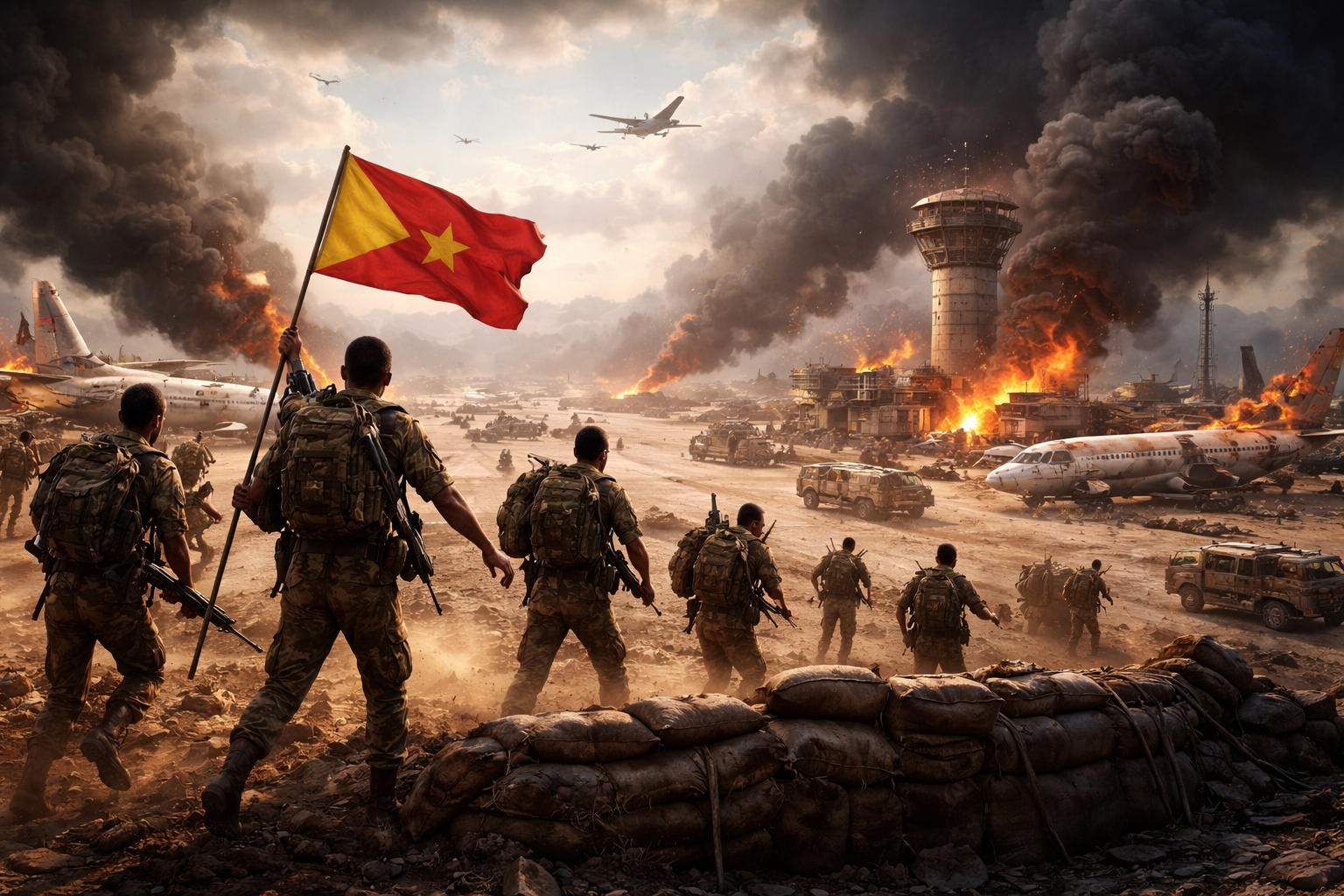
Rebels from the Tigray People’s Liberation Front (TPLF) reportedly took control of key regional airports in Tigray, northern Ethiopia, including Mekelle Airport, without resistance. The developments come amid new clashes with government forces in the neighboring Afar and Amhara regions, marking a significant escalation in the ongoing conflict.
According to eyewitness accounts and government statements, the TPLF has launched offensives not only in Tigray but also in adjacent areas, triggering concerns about a possible return to widespread violence in the region. Ethiopian Airlines has canceled flights to Mekelle, along with Axum and Shire airports, citing the deteriorating security situation.
Background of the Conflict
The TPLF governed Ethiopia from 1991 until 2018 before being replaced in power by the current administration. The replacement sparked a civil war between the TPLF and federal forces from 2020 to 2022, with the African Union estimating approximately 600,000 deaths and over 1 million displaced during that period.
Although a peace agreement was signed in Pretoria, peace remains fragile. Renewed military actions, including drone strikes by government troops and troop mobilizations by TPLF forces, have undermined stability.
Recent Developments and Political Context
Just days before the latest clashes, the TPLF entered an “Alliance for Survival” with other groups aimed at ousting the current government led by Prime Minister Abiy Ahmed. The prime minister’s party secured reelection in June through a vote boycotted by major opposition factions.
Government sources have accused the TPLF of alliances with Eritrean forces and other armed groups, allegations the TPLF denies. Following the airport seizures and regional offensives, an advisor to the Ethiopian leadership described these events as deeply troubling.
Responses from Both Sides
The Tigray regional government stated that their forces have been ordered to defend the region and counter what it calls a genocidal invasion, indicating ongoing defensive engagements. Meanwhile, state entities continue monitoring the fluid security conditions in the affected areas.
This resurgence in fighting raises concerns about a humanitarian crisis worsening in Tigray and neighboring regions, which have already suffered from prolonged conflict and displacement.