

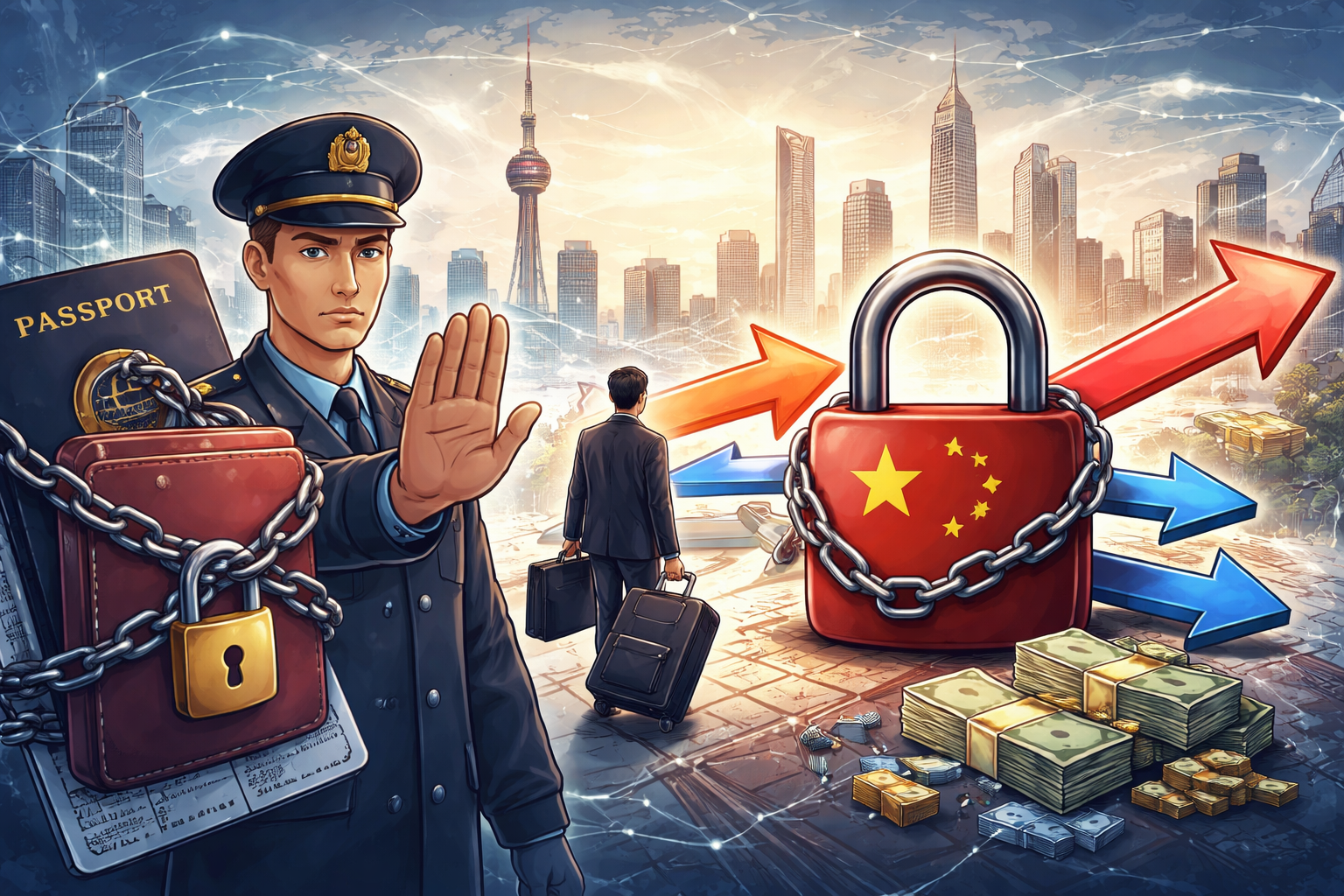
China has introduced stringent travel regulations aimed at preventing its top technology engineers, founders, and specialists from leaving the country when their expertise involves sensitive sectors like batteries, rare earth materials, or artificial intelligence. The new entry and exit restrictions highlight Beijing’s growing concern over protecting its industrial and technological assets amid mounting economic difficulties.
Authorities now have the power to restrict departures if a person’s knowledge is deemed a threat to China’s technological security, reflecting a broader policy shift that also includes tightened outbound investment controls and restrictions on posting technical staff overseas. These measures signal Beijing’s efforts to curb capital flight and stem the loss of skilled personnel during a period of economic strain, experts say.
Key Developments and Economic Strains
Amid ongoing concerns about economic weakening and significant outflows of wealth, Chinese officials have ramped up enforcement to prevent entrepreneurs and tech talent from moving abroad. The move echoes past accusations from the United States and the European Union that China has been involved in technology transfer through recruitment, espionage, and cyberattacks. Now, China aims to stop the reverse flow of valuable technology and expertise.
Economic indicators underline these tensions, with a property market crash dampening domestic consumption, record lows in bank lending, and a notable year-on-year decline in new car sales.
Impact on Tech Companies and Talent Mobility
One prominent case involves the artificial intelligence company Manus, which relocated its headquarters from Beijing to Singapore last year to circumvent U.S. investment restrictions and pursue international expansion. Chinese authorities blocked the attempted acquisition of Manus by Meta in December and prohibited its founders from leaving China.
In addition, rumors—unconfirmed by either Huawei or Chinese officials—circulated regarding the possible departure of Huawei’s founder and his CFO daughter. These incidents illustrate the heightened scrutiny and travel limitations affecting China’s tech sector.
Capital Flight and Responses
Estimates from Bloomberg Intelligence suggest that nearly $1 trillion in Chinese wealth exited the country last year, marking the largest outflow of “hot money” since tracking began in 2006. While the official foreign exchange quota for individuals remains $50,000 per year, enforcement has tightened against unofficial transfer channels and intermediaries who facilitate capital movement abroad.
Analysts warn that these stringent controls may backfire by encouraging more sophisticated workarounds and further eroding confidence, potentially deepening economic troubles.
Legal and Diplomatic Considerations
Foreign companies and expatriates face challenges navigating the new rules as visa filings must be complete and truthful to avoid potential entry bans lasting up to five years. The U.S. State Department has issued warnings urging increased caution in mainland China, citing exit bans without transparent legal processes and the risk of unjust detentions.
Overall, China’s efforts to consolidate control over its high-tech industries and talent come at a time of pronounced economic vulnerability and global geopolitical tensions.