

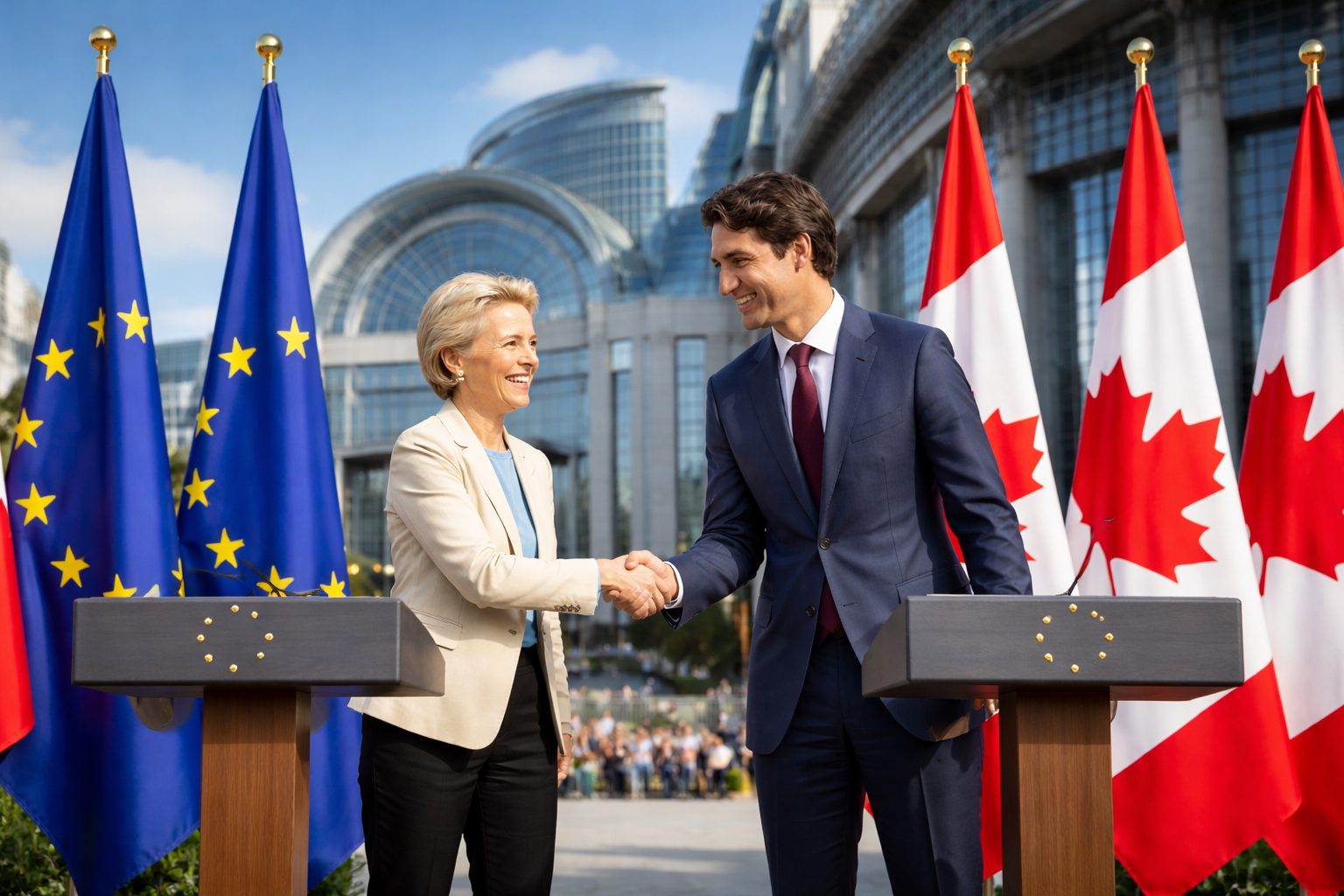
European Commission President Ursula von der Leyen suggested that Canada could become the European Union’s first-ever associate member, a proposal signaling significant political and trade implications. The idea was presented during her annual State of the Union address in the European Parliament in Strasbourg, where she detailed strategies to reform the EU single market, enhance innovation, and respond to global geopolitical threats.
This proposal would mark an unprecedented move for the EU, creating a unique partnership framework with Canada that extends beyond standard trade agreements. It reflects growing interest in strengthening economic ties with middle powers and diversifying access to critical raw materials and rare earth elements, an area where Canada has strategic reserves.
Strategic Benefits and Trade Developments
Von der Leyen’s offer points to a mutually beneficial alignment: the EU seeks diversification away from China, which dominates the market for critical raw materials, while Canada is seeking new markets beyond the United States, especially given past trade tensions. Experts highlight that this enhanced relationship could accelerate negotiations on a trade deal focusing on these key resources, positioning Canada distinctively compared to the UK, which has distanced itself from the EU amid Brexit.
Mark Carney is scheduled to address the European Parliament on the proposal, offering further insights on the associate membership concept and its implications for transatlantic partnerships.
Broader EU Strategies and Challenges
Von der Leyen’s speech emphasized the EU’s precarious position in an openly hostile world, addressing threats such as Russia’s ongoing aggression in Ukraine and rising hybrid security challenges in Europe. She called for the creation of a European Security Council to coordinate rapid and unified security responses among member nations.
Additionally, the Commission president confirmed plans to enhance climate preparedness amid unprecedented weather patterns, tighten social media regulations to protect children, and limit underage access to such platforms. She also criticized the glorification of war criminals in Serbia, reaffirming the non-negotiable adherence to EU values.
Implications and Next Steps
The associate membership proposal with Canada marks a noteworthy pivot in the EU’s external relations and trade policy, setting the stage for closer cooperation on critical economic sectors and geopolitical alignments. As Canada and the EU consider these prospects, the UK’s position in European trade and resource partnerships may experience new pressures.
Further discussions, including Mark Carney’s upcoming parliament address, will be closely watched for developments that could reshape North American and European economic and political ties.