

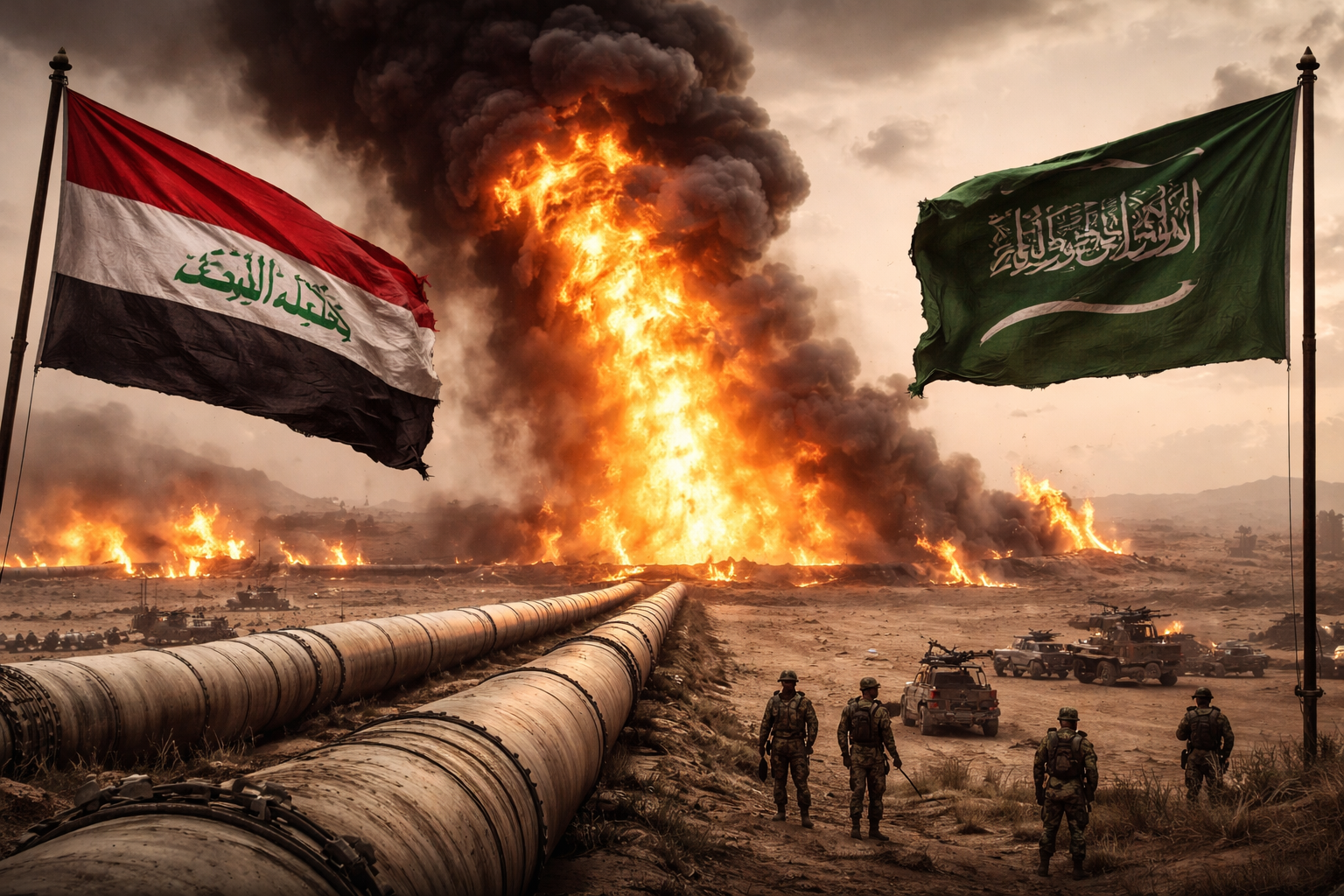
Iraq’s government confirmed on Saturday that attacks on a critical Saudi oil pipeline on Friday night were launched from Iraqi territory. Saudi Arabia responded by shutting down the pipeline as a “precautionary measure” following the drone strike the previous day.
Riyadh emphasized it would not retaliate immediately, instead offering Baghdad a chance to implement necessary actions to address the situation, according to official statements.
Uncertainty Surrounds Perpetrators Behind the Pipeline Attack
No group has publicly taken responsibility for the attacks. The Popular Mobilization Forces (PMF), an Iran-supported alliance of Iraqi militias that are officially integrated into Iraq’s security infrastructure, denied involvement. However, some members of these militias occasionally operate independently without central Iraqi government control.
Additionally, U.S. leadership suggested that Iran was “probably” behind the pipeline attack, while downplaying tensions involving the Houthis, an Iran-backed militia operating in Yemen. The Houthis have maintained a blockade on Saudi Arabia since July and recently captured the Red Sea port city of Mokha. Although the Houthis have targeted vessels in the Red Sea in solidarity with Palestinians in Gaza, they claimed no intention to escalate such attacks as they advance along Yemen’s coast.
Iraq Faces Pressure Over Iran-Aligned Militias
Washington has been urging Iraq to disband Shiite militias aligned with Iran amid rising regional conflicts. Baghdad has issued a deadline of September 30 for disarmament, coinciding with the planned withdrawal of residual U.S.-led coalition forces from the country. Nonetheless, several militias have vowed noncompliance with this order.
The influential Kataib Hezbollah militia has strongly criticized the disarmament policy, demanding guarantees that U.S. forces will not return to Iraq and advocating measures to eliminate American influence within the country’s political and economic spheres.