
Volkswagen approves cutting 50,000 more jobs in its largest ever restructuring
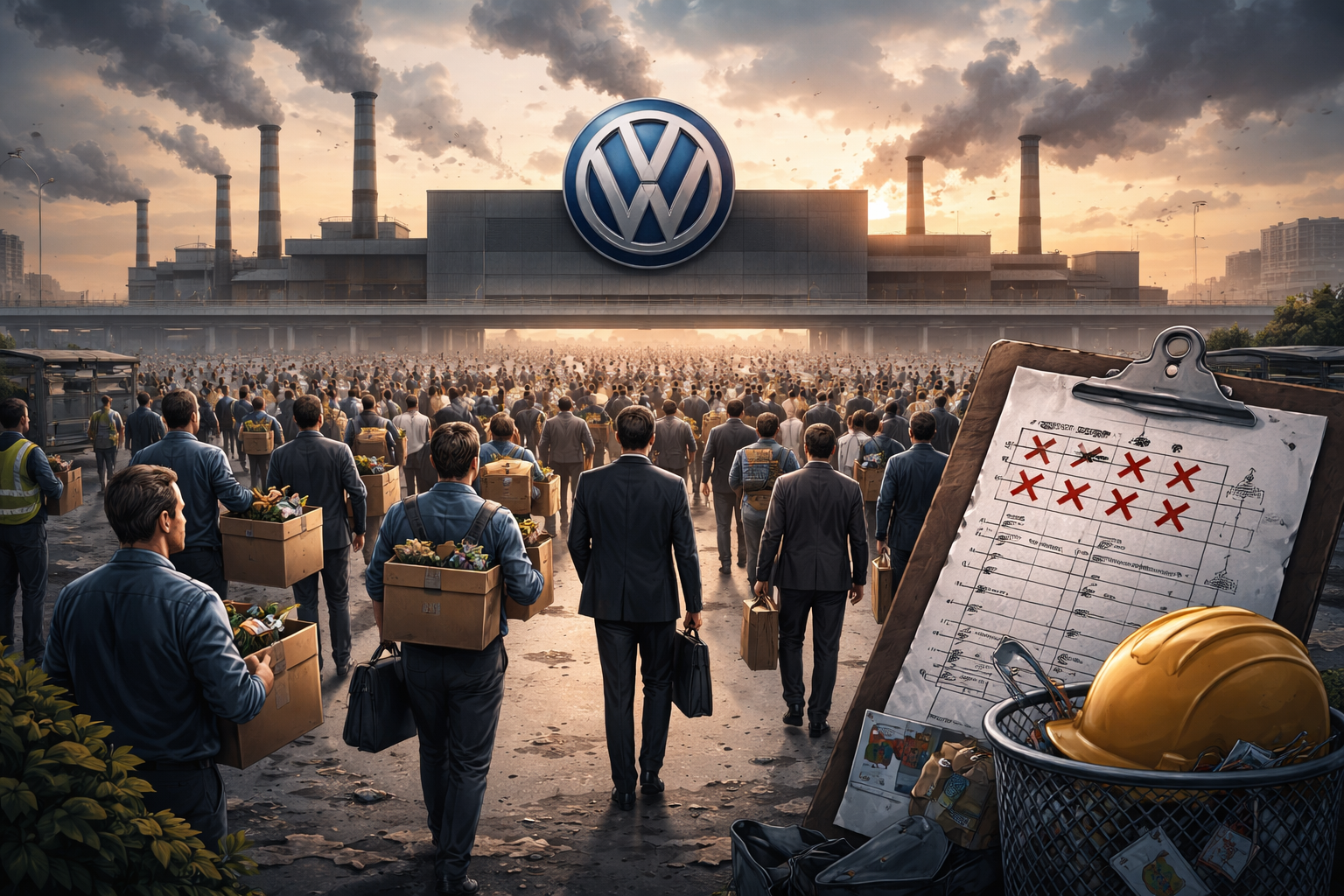
Volkswagen has agreed to further reduce its workforce by 50,000 employees as part of a historic restructuring effort aimed at addressing fierce competition and declining profitability. This decision, announced after recent negotiations with union leaders and supervisory board members, marks a pivotal step in reshaping the automaker’s future.
The plan includes a staged shutdown of production at four German plants—Emden, Zwickau, Hanover, and Audi’s Neckarsulm site—between 2031 and 2034, with no specified plans beyond that timeline. Altogether, Volkswagen intends to cut 100,000 jobs, accounting for roughly 15% of its global workforce of over 650,000 employees, making it the largest restructuring ever seen in the automotive industry.
Key details of the restructuring plan
The agreement was reached during a supervisory board meeting involving shareholders, unions, and state representatives, overcoming a significant challenge faced by Volkswagen’s leadership. Oliver Blume, the company’s chief executive, had prepared for a potential confrontation with unions if talks failed but secured approvals instead.
The deal includes a sweeping cost-cutting program designed to reduce workforce levels in line with market realities. Volkswagen will also slash the number of car models produced by half across its brands, including Bentley, Audi, Skoda, Seat, Porsche, Cupra, and Lamborghini. This streamlining responds to overcapacity concerns in Europe, where Volkswagen currently produces an estimated 500,000 vehicles that lack market demand.
Reactions and further commitments
IG Metall, the company’s largest union, described the accord as a compromise preventing an escalating conflict, securing a temporary reprieve for the threatened plants in exchange for workforce reductions. Christiane Benner of IG Metall and Daniela Cavallo, chair of Volkswagen’s General and Group Works Councils, emphasized the need for swift implementation of concrete solutions based on the compromise.
Blume highlighted plans for significant investment, referring to a “three-figure billion sum” that will strengthen Volkswagen’s iconic brands and enhance competitiveness over the coming years.
Context amid increasing pressures
The restructuring is a response to growing challenges including rising competition from Chinese automakers, decreasing sales in China, and tariffs in the United States. Volkswagen has struggled with declining profits and overproduction in Europe for years, with attempts to repurpose the Osnabrück plant into a defense factory shelved following opposition from Qatari investors.
Financial analysts praised the restructuring plan, with Deutsche Bank calling it a “fundamental breakthrough” and Citi describing it as a “brave and rational plan.” Early trading saw Volkswagen’s shares rise around 8%, reflecting investor approval.