
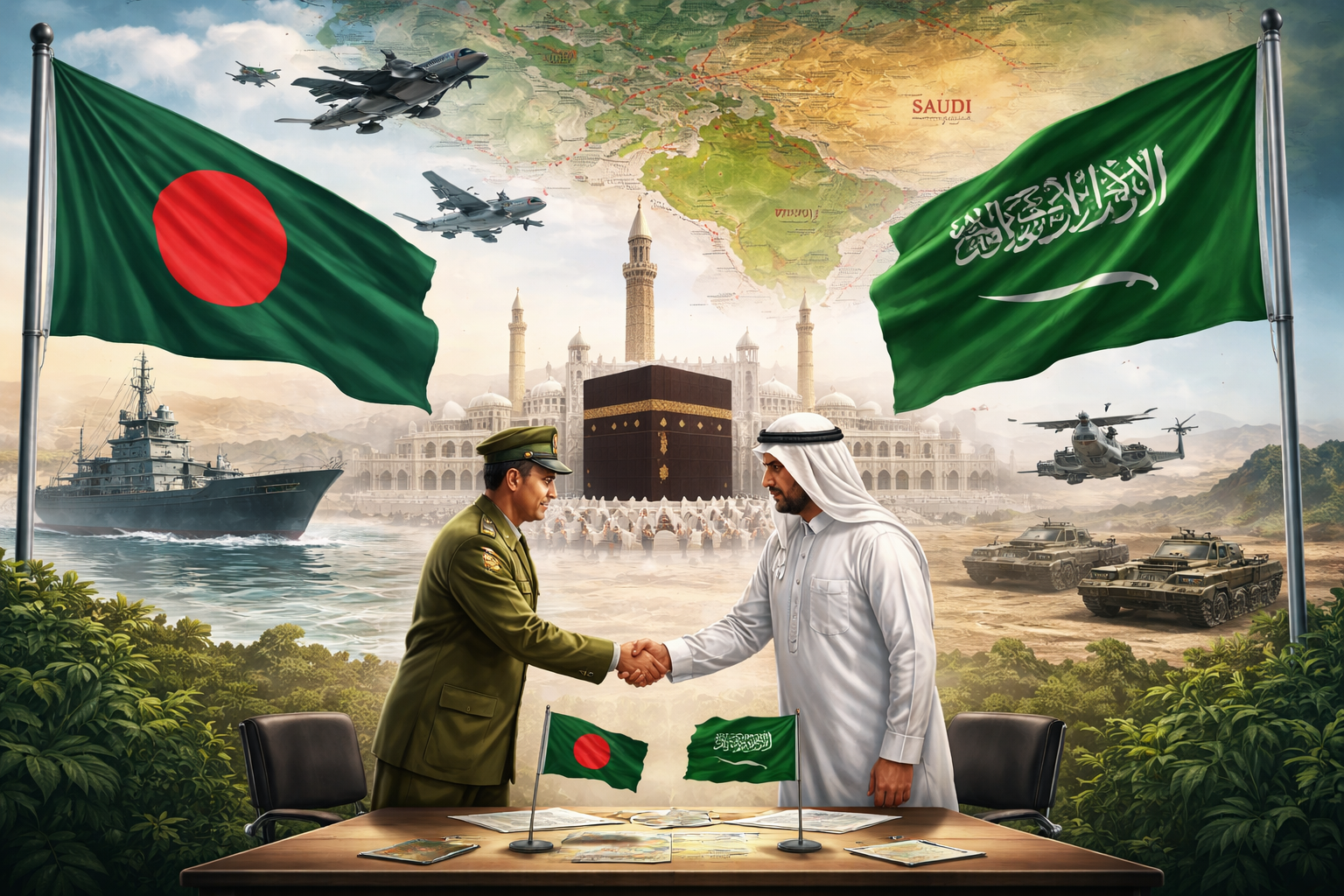
Bangladesh has yet to receive an invitation to join the Mecca Joint Defense Agreement, a mutual defense pact signed last month by Saudi Arabia, Turkey, and Pakistan. The pact aims to strengthen collective deterrence against aggression, treating an armed attack on any member as an attack on all. While the Bangladeshi government views the agreement favorably, it has not formally considered membership, emphasizing that any decision would depend on the intentions of current members.
Experts note that joining the pact could complicate Bangladesh’s foreign relations, particularly with its neighbor India, given the longstanding rivalry between India and Pakistan. The evolving geopolitical dynamics in South Asia, especially after significant domestic political changes in Bangladesh, contribute to the cautious stance on this issue.
Context and Potential Impact on Regional Relations
The Mecca pact is seen by analysts as a strategic step to balance power in the Middle East and South Asia. Bangladesh shares extensive historical, cultural, and economic ties with India, including a long shared border. However, relations between Dhaka and New Delhi have grown tense since a major uprising in 2024 resulted in the overthrow of former leader Sheikh Hasina, a close ally of India, who now lives in exile there. The current Bangladesh government led by the Bangladesh Nationalist Party expresses a positive view of the pact but awaits formal invitations before considering membership.
India has voiced concerns over the pact’s implications for its national security and is monitoring developments closely. The security of India’s eastern frontier and the Siliguri Corridor remains a key strategic concern, especially if Pakistan’s influence in Bangladesh increases.
Geopolitical Considerations and Strategic Choices for Bangladesh
Political science experts highlight that the pact’s primary role is to enhance bargaining power and maintain influence relative to neighboring countries rather than direct military conflict. Pakistan’s interest in integrating Bangladesh into the pact appears influenced by geographic and political factors. Bangladesh must carefully define its position regarding potential conflicts between India and Pakistan to avoid diplomatic pressures.
Some former diplomats advise Bangladesh to refrain from joining such alliances, emphasizing the country’s historical nonalignment in military pacts over the past five decades and the lack of geographical connection to the Middle Eastern region covered by the Mecca agreement.
Potential Benefits and Risks of Joining the Pact
There is a viewpoint that being part of an international security agreement could aid Bangladesh in modernizing its defense capabilities and accessing military technology. Although the pact does not explicitly address economic relations, security frameworks often lead to linked economic benefits, according to experts.
Conversely, there are concerns that membership could restrict Bangladesh’s geopolitical flexibility. Maintaining a balanced foreign policy, engaging in United Nations peacekeeping missions, and sustaining economic ties across multiple countries are seen as vital considerations that could be affected by joining the pact.