

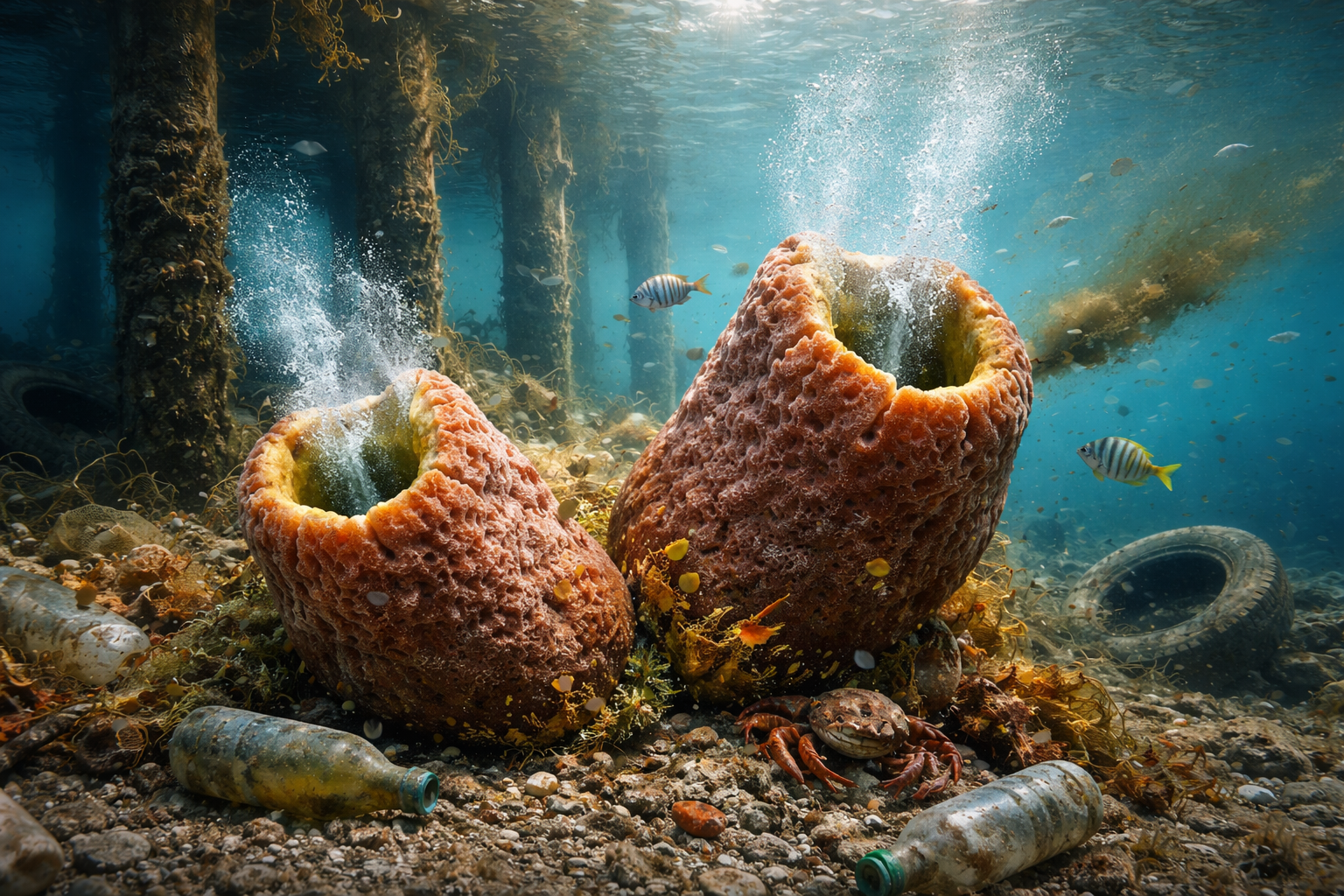
Researchers transplanted five sponge species into Marina Palamós, a heavily polluted harbor on Spain’s Costa Brava, to test their ability to survive and potentially filter pollutants. The chicken liver sponge (Chondrosia reniformis) was the only species to flourish, with 92% of specimens surviving over 15 months in the hostile environment.
The sponge’s remarkable durability was accompanied by signs of ecological recovery, including the unexpected arrival of red starfish in the area. These findings suggest that sea sponges, long overlooked compared to corals, could serve as natural bioremediation agents in disturbed marine environments like harbors.
Experiment Details and Results
Manuel Maldonado, a sponge biologist at the Spanish National Research Council, led the study starting nearly two years ago. The team selected five common coastal sponge species that were good survivors but not sensitive or protected, ensuring safe handling and transplantation.
Collected about 30 kilometers south of the harbor, the sponges were transplanted into polluted waters and monitored by Maldonado’s student, Carlota Escarré. Divers inspected the sponges every 20 to 64 days, noting health, growth, and reproduction over 15 months.
While other species like leather and stinker sponges shrank and died, almost all chicken liver sponges survived, with some reproducing asexually and increasing their numbers from 24 to 40.
Implications for Marine Restoration
Sea sponges have survived for at least 600 million years and have long been known as ecosystem engineers that filter water, cycle nutrients, and provide habitats for marine life. This study highlights their potential to help renaturalize harbors, which are typically plagued by pollutants, invasive species from ships, and noise disruption that hinder biodiversity.
Marine biologists like Andreu Santín Muriel emphasize that sponges offer more ecosystem services than corals but have received less investment due to their lower public appeal. This research could boost efforts to incorporate sponges in marine conservation and pollution management.
Next Steps and Cautions
Maldonado’s team plans to continue long-term monitoring and investigate the sponge’s microbiome, which may enable it to cope with pollution. They also propose studying combinations with other filter feeders such as oysters to enhance bioremediation.
However, other experts caution that results may vary depending on local conditions, as it remains unclear whether the chicken liver sponge would survive in harbors outside the Mediterranean like those in the United States.
Overall, this localized but promising research underscores the potential of marine organisms naturally adapted to environmental stress to aid in cleaning and restoring polluted aquatic habitats.