

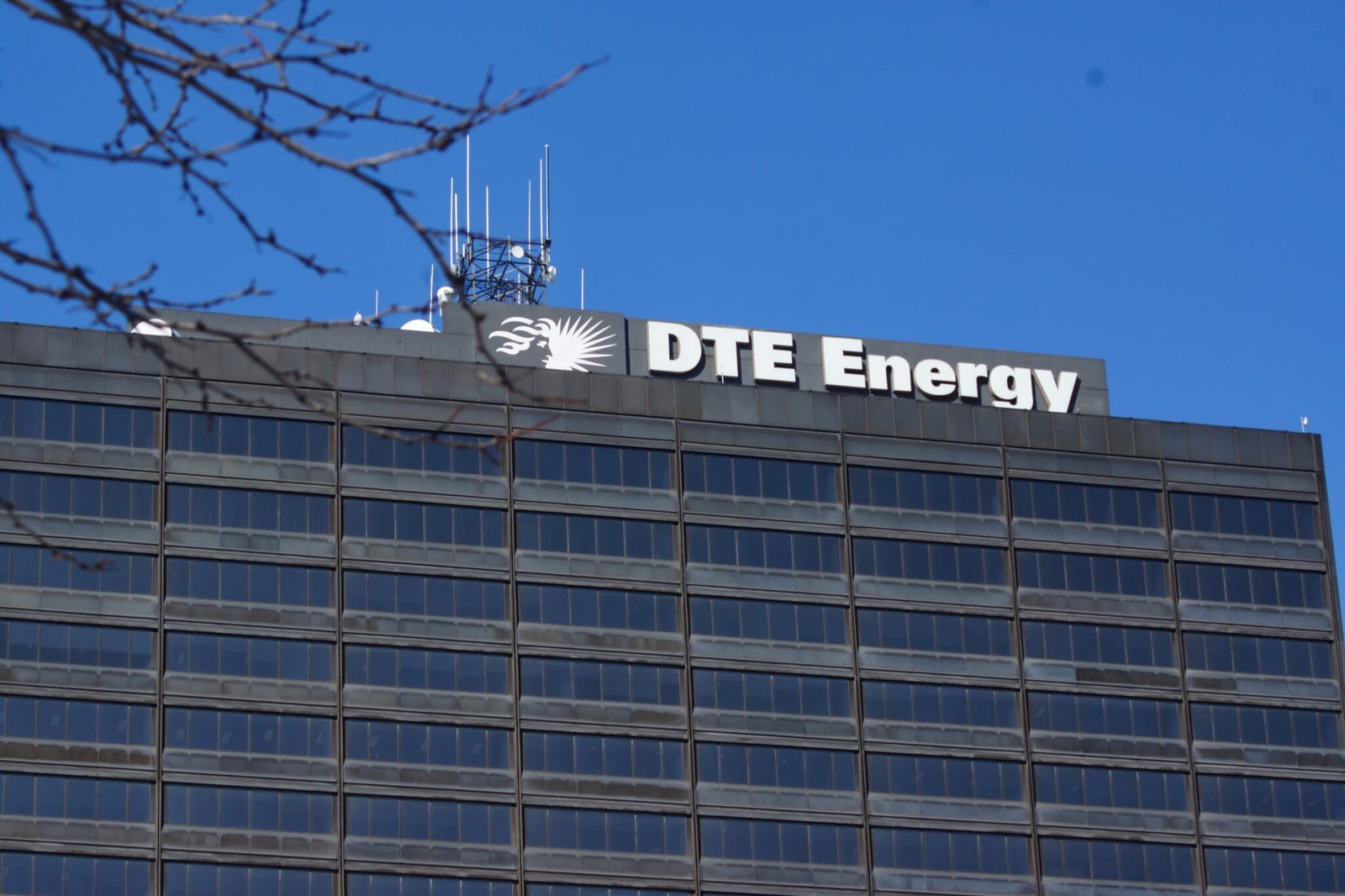
DTE Energy did not pay current federal income taxes for the twelfth consecutive year in 2025 despite reporting $1.54 billion in profits, according to public documents reviewed by Michigan Advance.
The Detroit-based utility, which is currently seeking a 9.7% electric rate hike, has reported receiving hundreds of millions of dollars in tax cuts over the last 12 years in federally mandated public reports.
Of the 13 publicly traded Michigan-based companies on the Fortune 500 list, DTE Energy is the only one that reported U.S. profits but did not pay current federal income taxes in 2025. Corporations generating profits in the United States are generally subject to U.S. taxes.
DTE Energy communications director Dan Miner confirmed to Michigan Advance that the company has not paid net federal income taxes since 2013, citing tax breaks from its investments in infrastructure and clean energy.
“DTE Energy is one of the largest investors in Michigan, with billions of dollars invested annually to strengthen energy infrastructure, expand cleaner energy, and support economic growth across the state,” Miner said in a statement. “These utility investments generate federal tax benefits that the company passes on to its customers.”
He noted that DTE is “among the largest property tax payers” in the state.
“In 2025, DTE paid more than $450 million in property taxes that fund local schools, public safety and other essential community services,” Miner said.
DTE is one of several companies to benefit from President Donald Trump’s sweeping changes to U.S. tax law.
The 2017 Tax Cuts and Jobs Act reduced the corporate income tax rate from 35% to 21% and expanded tax cuts, which were then extended by the One Big Beautiful Bill, passed by Congress in 2025. Reuven-Avi Yonah, a law professor at the University of Michigan and former consultant to the U.S. Department of Treasury, told the Advance that Trump’s reforms are working as intended – to cut taxes for America’s wealthiest.
“The big winners were the rich and multinationals,” Avi-Yonah said.
DTE Energy
DTE’s latest tax break comes as the company seeks a $474 million rate hike, which would increase residential customers’ bills by nearly 10%. The company announced plans to request a rate hike in February, five days after the Michigan Public Service Commission had approved a $242 million hike for the company. DTE formally submitted its latest request to the commission in April.
The MPSC, a panel appointed by Gov. Gretchen Whitmer, has approved over $1 billion in annual revenue increases for DTE, the state attorney general’s office said, “despite continued reliability and affordability concerns.” DTE has said it will not request a hike for another two years if the latest request is approved.
Matthew Gardner, a senior fellow at the Institute on Taxation and Economic Policy, a nonpartisan think tank, said that states generally rely on federal calculations as a starting point for their own taxation for the sake of efficiency. That means that every time Congress passes new federal tax breaks, Gardner said it can shrink state revenue as well – but states can choose to “decouple” from parts of the federal calculation.
Michigan has moved to exclude some federal provisions from its calculations.
Other Michigan companies
According to ITEP, 316 companies collectively avoided paying $147 billion in federal income taxes last year partly due to the One Big Beautiful Bill. The institute found 88 profitable corporations that paid no federal income taxes at all.
Among Michigan-based Fortune 500 companies, DTE Energy stood out as the only company that reported U.S. profits while paying no current federal income taxes.
Three other Fortune 500 companies headquartered in Michigan also paid no current federal income taxes in 2025, but none reported profits in the United States. Two of the three companies reported foreign profits.
BorgWarner, an auto parts manufacturer in Livonia, reported a net loss in the U.S. but $701 million in foreign profits. Meanwhile, Whirlpool, a multinational home appliances manufacturer headquartered in Benton Charter Township, reported $569 million in foreign profits while garnering a net loss in the U.S.
Whirlpool and BorgWarner did not respond to repeated requests by phone and email for comment.
CMS Energy, the parent company of Consumers Energy, paid a tax rate of 2.59%, according to ITEP. CMS reduced its taxable income because of another Trump-era tax break called depreciation deduction, a credit widely expanded last year, which allows companies to write off expensive purchases.
Consumers Energy spokesperson Matt Johnson told the Advance that its tax benefits also benefit customers. He noted that the company has a $24 billion investment plan over five years to support clean energy and infrastructure improvements.
“At Consumers Energy, our investments in infrastructure improvements equate to about 75 cents of every customer dollar going directly back into securing the grid and improving reliability,” Johnson told Michigan Advance in a statement. “These infrastructure and renewable investments qualify for federal tax credits and accelerated tax depreciation provided by Congress in the Internal Revenue Code which benefit our customers and lower federal cash taxes paid to the IRS.”
Future of corporate taxes
In addition to rewriting parts of the tax code, the Trump administration has also slashed the federal workforce, including at the Internal Revenue Service.
“The IRS just does not have the capacity anymore to keep up and to continue these audits of large corporations,” said Jennifer Bird-Pollan, a law professor at Wayne State University. She noted that the agency had enforced “at least some level of compliance” before 2025.
While a new administration after Trump could bring back the full government’s workforce, other changes will be harder to reverse in the wake of the One Big Beautiful Bill. Bird-Pollan noted that even when Democrats have held control of Congress and the White House, they have previously opted to extend expiring tax cuts to avoid bad publicity.
Bird-Pollan also pointed to major political donors who have a vested interest in lowering taxes.
“History suggests that once these things are in place, even if the political winds change and the opposite party is in power, it’s very difficult to impossible to undo,” Bird-Pollan said.