
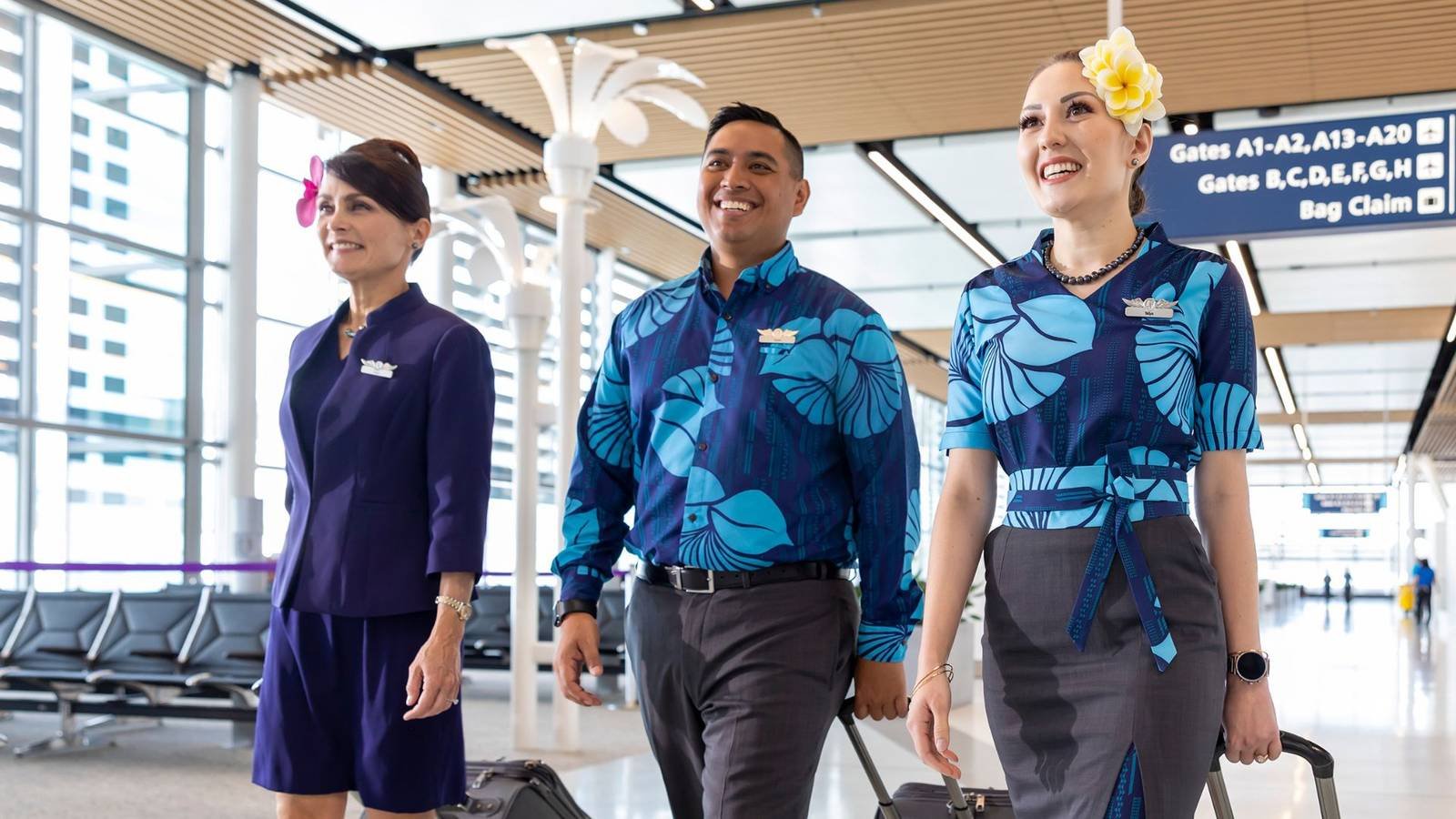
The integration of Hawaiian Airlines into the wider structure of  Alaska Airlines under Alaska Air Group is beginning to surface visible changes in day-to-day operations, particularly for crew members working international long-haul routes from
  Seattle-Tacoma International Airport (SEA). According to West Hawaii Today, around 250 flight attendants originally trained in Hawaiian’s service culture have been told that signature uniform elements, such as floral hairpieces, lei, and aloha shirts, will not always be permitted on certain flights marketed under Alaska’s branding.
While the adjustment may appear cosmetic, it reflects a deeper structural effort to manage two distinct airline identities within a single corporate system. Executives are attempting to preserve the separate reputations of Alaska and Hawaiian while aligning operational standards across fleets, crews, and customer-facing procedures. The result is an early example of how branding decisions can directly affect employee expression during large-scale airline consolidation.
Managing The Alaska Airlines & Hawaiian Airlines Merger

The strategy being pursued by Alaska and Hawaiian relies on maintaining clearly differentiated passenger experiences even as backend operations are merged. Rather than immediately blending the two airlines into a single, uniform product, management has chosen to keep branding separate by route, aircraft type, and market served.
On long-haul international services operated from Seattle, often using Boeing 787-9 Dreamliners, the onboard experience is presented as Alaska-branded service. In these cases, cabin appearance rules follow Alaska’s standard guidelines, which are generally more neutral and less culturally expressive than Hawaiian’s traditional uniform practices. This creates situations in which Hawaiian crew members are working flights that reflect a different visual identity from the one historically associated with their airline.
However, the separation is not absolute. Routes connected directly to Hawaii still allow Hawaiian cultural elements, even when aircraft or scheduling systems are shared. This selective application shows how the company is trying to draw a line between “Hawaii-facing” service and broader international operations, rather than eliminating Hawaiian branding. Alisa Onishi, managing director of Hawaii marketing for Hawaiian and Alaska, commented on the move in a statement obtained by West Hawaii Today.
“We had to make difficult decisions that will be hard for our employees to adjust to, but ultimately as we explain why we are making these decisions the employees will understand.”
Cultural Expression & Workforce Tension

For many long-time employees of Hawaiian Airlines, uniform traditions carry meaning that extends beyond appearance policy. The use of flowers in hair and other cultural touches has been part of the airline’s identity for decades and is closely associated with its reputation for hospitality rooted in Hawaiian culture and local symbolism.
Catch what other flight trackers miss
Emergency squawks, holds, NOTAMs — live signals, no signup.
Open tracker
Catch what other flight trackers miss
Emergency squawks, holds, NOTAMs — live signals, no signup.
Open tracker
As a result, the new restrictions have created frustration among some Seattle-based crews who were reassigned to international routes. Many of these staff members joined the widebody operation voluntarily through internal bidding, and they now find themselves adapting to different presentation standards depending on the branding of the flight they are assigned to.
Company leadership has acknowledged that it was not a straightforward decision to make, but argues that consistency in branding is necessary while the integration process continues. They have positioned the policy as temporary, tied to the current phase of operational alignment, rather than as a permanent removal of Hawaiian identity from the workforce.
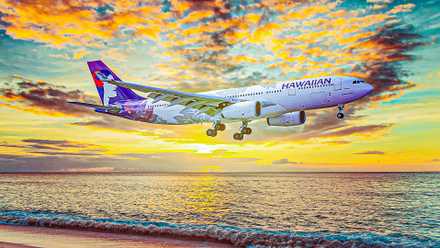
Hawaiian Airlines Retires Its Iconic “HA” Flight Code & Adopts Alaska Airlines’ “AS”
Apart from this change, today will also see the airline finally join Alaska Airlines in the oneworld alliance.
Balancing Integration With Brand Distinction

The broader consolidation under Alaska Air Group is advancing through multiple stages, including the already completed move to a shared reservation system and the planned transition toward a single operating certificate. These steps are designed to streamline operations while still allowing each airline to retain a recognizable public image.
Beyond uniforms, both carriers continue to maintain different onboard service philosophies. Hawaiian Airlines has traditionally highlighted Hawaii-based food and beverage partners and island-inspired hospitality elements, while Alaska Airlines leans on suppliers and branding tied to the Pacific Northwest. These differences remain part of the customer experience even as the companies share infrastructure behind the scenes.
Looking forward, executives are attempting to refine a model that keeps both identities intact without creating operational confusion. Plans for updated uniform programs and future design input from Hawaiian cultural creators suggest that some elements of heritage may be reintroduced in structured ways. Still, the current debate over appearance rules highlights the central challenge of the merger: maintaining two recognizable brands while steadily moving toward a unified airline system.